

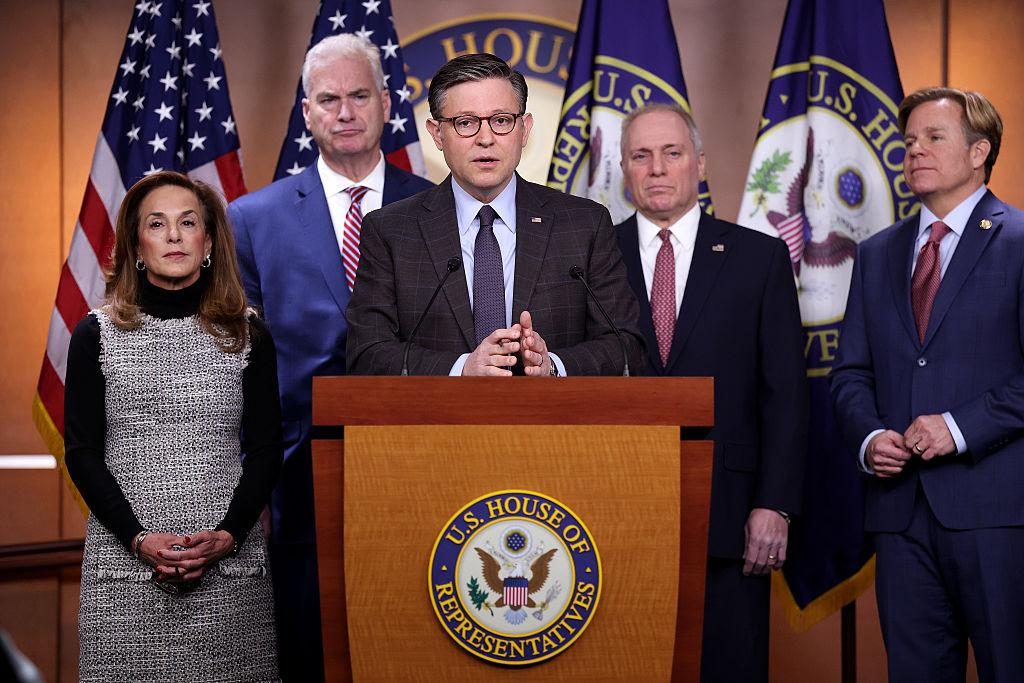
Mike Johnson as Speaker of the House: Leadership Tested in a Divided Congress
A Speakership Defined by High-Stakes Decisions
When Mike Johnson assumed the role of Speaker of the House, he inherited not just the ceremonial gavel, but one of the most complex leadership challenges in modern American politics. The position demands balancing competing factions, managing legislative priorities, and negotiating with both the Senate and the White House—all under intense public scrutiny.
Recent developments surrounding the renewal of surveillance powers under the Foreign Intelligence Surveillance Act (FISA) have brought Johnson’s leadership into sharp focus. What unfolded on Capitol Hill illustrates both the power and the limitations of the Speaker’s office in a deeply divided political environment.
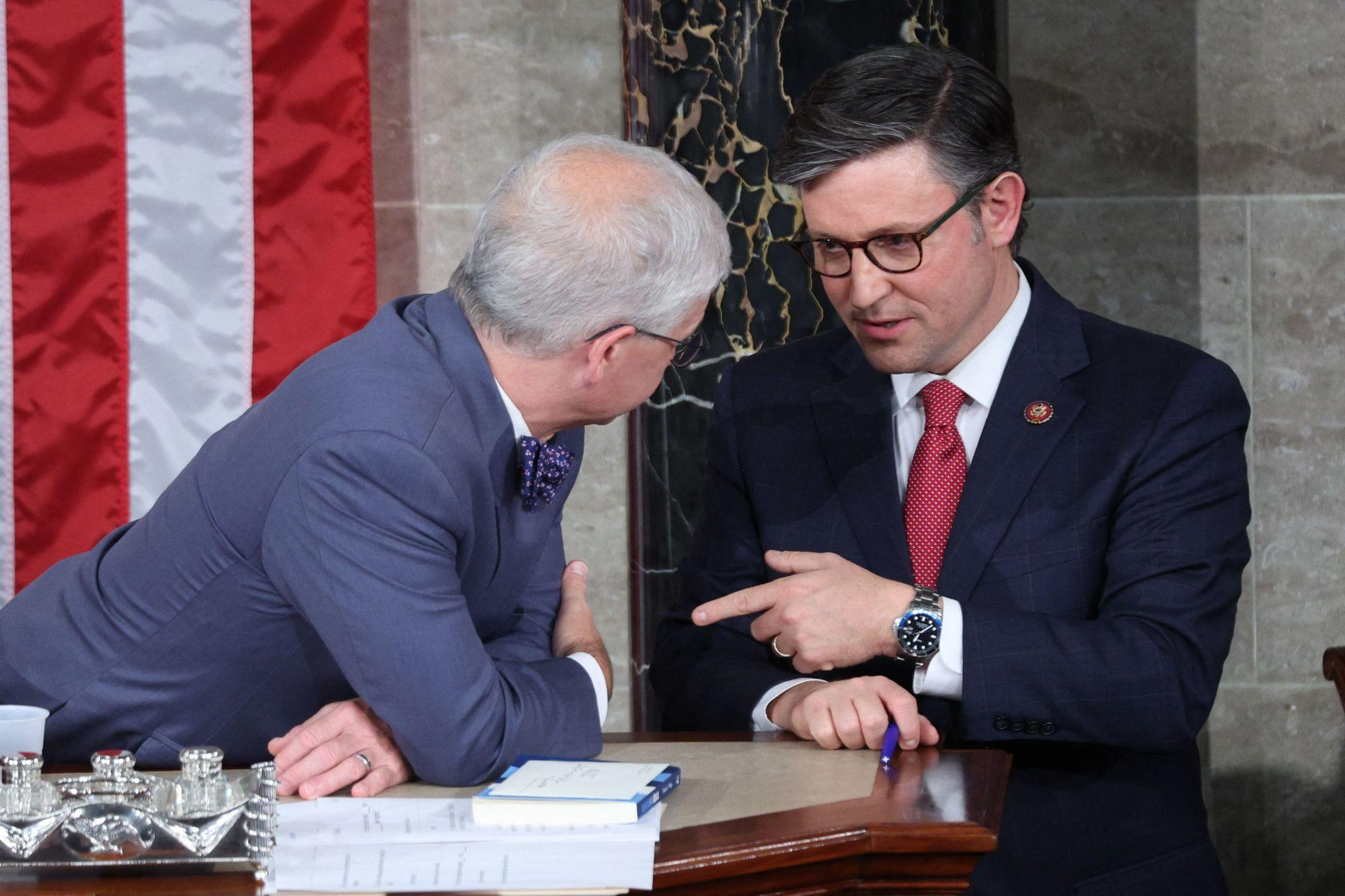
The FISA Battle: A Crucial Test of Authority
At the center of the current political storm is Section 702 of FISA, a controversial surveillance authority that allows U.S. intelligence agencies to monitor foreign communications. The provision has long been defended as essential to national security, while critics argue it risks infringing on civil liberties.
As the program approached expiration, Johnson attempted to guide the House toward a long-term solution. His preferred approach aligned with broader Republican leadership goals: a multi-year extension that would preserve intelligence capabilities while introducing reforms to address privacy concerns.
However, the effort quickly unraveled.
A bloc of approximately 20 Republicans broke ranks, joining a broader coalition of dissenters that included both conservative privacy advocates and members favoring a different legislative approach. Their opposition proved decisive, blocking procedural votes and preventing the bill from advancing.
The result was a legislative impasse.
A Last-Resort Compromise
Faced with a looming deadline and no viable path forward, Johnson and House leadership pivoted to a short-term solution. In a late-night session, lawmakers approved a temporary extension of the program until April 30.
The decision was described as a stopgap measure—an acknowledgment that consensus had not been reached but that immediate expiration could carry significant risks.
Johnson himself struck a cautious tone after the vote:
“We were very close tonight.”
The temporary extension now moves to the Senate, buying lawmakers additional time to negotiate a more durable agreement.
Internal Divisions Within the GOP
The failure to pass a long-term renewal exposed deep fractures within the Republican Party. These divisions are not new, but the FISA debate intensified them in a highly visible way.
Several key fault lines emerged:
1. National Security vs. Civil Liberties
Some lawmakers emphasized the importance of maintaining surveillance capabilities, particularly in light of global security threats. Others insisted on stronger safeguards, including warrant requirements before accessing Americans’ data.
2. Clean Extension vs. Reform Package
While figures aligned with Donald Trump pushed for a “clean” extension without changes, others demanded structural reforms as a condition for support.
3. Process and Timing Concerns
Criticism also emerged over how the legislation was handled. Lawmakers expressed frustration at last-minute proposals and rushed votes, with one remark capturing the tension:
“Does anybody actually know what the hell is in this thing?”
These divisions ultimately left Johnson unable to consolidate enough support within his own party—a core requirement for effective House leadership.
Pressure from the White House and Leadership Circles
The White House played an active role in the debate, lobbying Republican lawmakers to support a longer-term extension. High-level officials, including intelligence leaders, engaged directly with members of Congress, emphasizing the importance of the program.
Behind the scenes, negotiations were intense. Outreach included direct calls to lawmakers and meetings aimed at securing votes. Yet, despite these efforts, resistance persisted.
Some Republicans argued that the administration’s engagement came too late, contributing to the breakdown in negotiations.
At the same time, Democratic leaders remained skeptical of a straightforward extension, signaling that bipartisan cooperation would not be guaranteed.
The Stakes: Security, Privacy, and Political Credibility
The debate over FISA is not merely procedural—it carries significant implications across multiple domains:
National Security
Supporters argue that Section 702 is critical for monitoring foreign threats, including terrorism, cyberattacks, and espionage. Officials warn that weakening or allowing the program to lapse could hinder intelligence operations.
Civil Liberties
Critics counter that the program allows government agencies to access Americans’ communications without a warrant, raising constitutional concerns that have persisted for nearly two decades.
Legislative Credibility
For Johnson, the episode raises questions about the Speaker’s ability to unify the House and deliver on key priorities. The inability to pass a major national security measure reflects the broader challenges of governing with a narrow majority.
Beyond FISA: Johnson’s Broader Legislative Agenda
While the surveillance debate dominates headlines, it is only one part of Johnson’s broader agenda as Speaker.
In a recent press conference, he highlighted Republican economic policies, particularly the “Working Families Tax Cuts,” framing them as a central achievement of the current Congress. He emphasized outcomes such as:
- Lower taxes and larger refunds
- Increased take-home pay for working families
- Expanded tax benefits for small businesses
Johnson stated:
“Lower taxes, bigger refunds, and more money in the pockets of hard-working Americans.”
These remarks reflect his effort to maintain focus on economic messaging even as legislative challenges mount.
What Happens Next?
The immediate future of the FISA program remains uncertain.
With the temporary extension in place, lawmakers have a limited window—just weeks—to negotiate a long-term solution. GOP leaders hope this period will allow them to bridge internal divisions and craft a proposal that can pass both chambers of Congress.
However, several risks remain:
- Continued GOP infighting could stall progress
- Democratic skepticism may complicate bipartisan support
- Time constraints increase the likelihood of another short-term fix
As one observer noted, the House delays have left “barely any time” for the Senate to act.
A Speakership Under Pressure
The FISA episode underscores a broader reality: the modern Speakership is less about unilateral control and more about coalition management. In a narrowly divided House, even small factions can wield outsized influence.
For Mike Johnson, this moment represents both a challenge and an opportunity. Successfully navigating the next phase of negotiations could reinforce his leadership. Failure, however, may deepen perceptions of instability within the House.
Conclusion: Leadership in an Era of Fragmentation
Mike Johnson’s tenure as Speaker of the House is unfolding in an era defined by political fragmentation and high-stakes policymaking. The battle over FISA renewal reveals the structural constraints of the role, where authority depends as much on persuasion and compromise as on formal power.
The coming weeks will test whether Johnson can transform a temporary fix into a lasting agreement—or whether the divisions exposed in this debate will continue to shape his speakership.


