


Honor Confirms Robot Phone Launch Window as Race for AI-Powered Smartphones Intensifies
Honor has officially confirmed that its long-rumored Robot Phone will launch in Q3 2026, ending months of speculation about whether the ambitious device would actually make it to market. The announcement positions the Chinese smartphone maker at the center of one of the industry’s boldest experiments in mobile hardware innovation.
The futuristic handset, which combines artificial intelligence, robotic motion systems, and cinema-focused imaging technology, is expected to debut sometime between July and September 2026. The confirmation came during Cannes China Night at the Cannes Film Festival, where Honor once again showcased the device publicly and demonstrated some of its imaging capabilities.
What began as a concept device teased in late 2025 has now evolved into one of the most closely watched smartphone launches of the year. Honor is positioning the Robot Phone as more than just another flagship handset — the company calls it “the next evolution of mobile filmmaking and AI hardware innovation.”
The latest developments suggest that Honor is attempting to redefine what a smartphone can physically do in an era where most devices increasingly resemble one another.
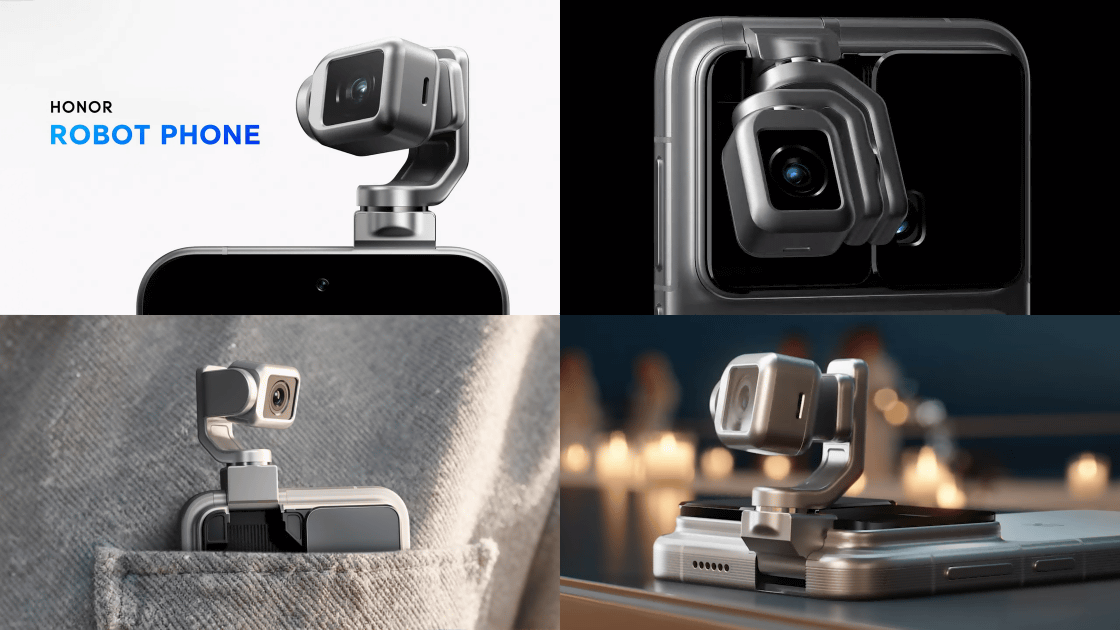
From Concept to Commercial Product
The Robot Phone first gained global attention when Honor previewed the device at Mobile World Congress 2026 in Barcelona. At the time, many observers questioned whether the unusual design was simply a publicity stunt or an actual commercial product.
Unlike conventional smartphones, the Robot Phone features a robotic camera module mounted on a movable gimbal system. The camera can physically rotate, track subjects automatically, stabilize footage in real time, and respond to movement with AI-assisted motion control.
Honor later displayed the device at CES and other international technology events, although early demonstrations kept the hardware behind glass or away from direct hands-on access. That changed during Cannes China Night, where attendees reportedly interacted with the phone more directly.
The company’s growing willingness to publicly demonstrate the device has strengthened confidence that the Robot Phone is nearing commercial readiness.
According to Honor CEO Li Jian, the Robot Phone will officially debut in the third quarter of 2026. The executive described it as “the world’s first robotic device” and linked the project to Honor’s broader ambitions in imaging technology and AI hardware.
He stated:
“It was officially announced to everyone that Honor ROBOT PHONE, the world’s first robotic device, will launch in the third quarter! Pour the imaging science that has accumulated for hundreds of years into Fangcun mobile devices and use China’s smart manufacturing to empower Chinese films to bravely climb to the top of art, and jointly create the glory of our world.”
The Camera System Is the Main Attraction
At the center of the Robot Phone is its unusual robotic camera arm.
Honor has confirmed that the device includes a 4DoF (four degrees of freedom) gimbal system combined with three-axis stabilization technology. The camera system is designed to behave more like professional filming equipment than a standard smartphone sensor.
Reports indicate that the phone will include a 200MP primary camera mounted directly onto the robotic stabilization mechanism.
The system reportedly supports:
- AI subject tracking
- Real-time movement prediction
- Automatic framing adjustments
- Stabilized cinematic video recording
- SpinShot capture modes
- One-handed motion controls
Honor says the phone can recognize subjects, anticipate movement, and adjust camera angles automatically while filming.
In practical terms, the Robot Phone is attempting to merge smartphone photography with the capabilities of standalone filming tools such as handheld gimbals and compact cinematic cameras.
That focus on video creation is no coincidence.
ARRI Partnership Signals Serious Filmmaking Ambitions
One of the biggest announcements surrounding the Robot Phone is Honor’s partnership with ARRI, the legendary cinema camera company known for the Alexa camera series used across major Hollywood productions.
Honor confirmed that the Robot Phone will become the first device to benefit from the Honor-ARRI collaboration announced earlier this year.
ARRI stated that:
“Core elements of ARRI Image Science are being integrated directly” into the Robot Phone’s camera experience.
Honor added that the built-in gimbal system would enable “complex, stabilized tracking shots.”
This collaboration is significant because ARRI cameras are considered among the gold standard tools in professional filmmaking. The company’s imaging systems have been used in blockbuster films and major cinematic productions for more than 15 years.
By partnering with ARRI, Honor appears to be targeting content creators, filmmakers, vloggers, and professional video users rather than focusing solely on traditional smartphone consumers.
The move also reflects a wider trend in the smartphone industry: companies increasingly competing on camera systems and creator-focused features instead of raw processing power alone.
Honor Wants Smartphones to Become “Embodied AI”
The Robot Phone is not simply about camera hardware.
Honor has repeatedly described the device as part of a broader AI vision that blends physical motion, machine learning, and interactive hardware.
The company refers to the concept as “embodied AI interaction.”
Unlike traditional smartphones, which rely entirely on touchscreens and software interfaces, the Robot Phone introduces physical motion as part of the user experience.
Demonstrations and promotional materials have shown the device:
- Tracking users across rooms
- Rotating toward subjects automatically
- Reacting to movement
- Adjusting framing dynamically
- Moving rhythmically to music
- Using multimodal AI perception systems
Honor describes the Robot Phone as “a new species of smartphone.”
The company believes future mobile devices will become more expressive, physically interactive, and capable of responding intelligently to their environments.
Whether consumers embrace that vision remains uncertain, but the concept undeniably separates Honor from competitors in an increasingly saturated smartphone market.
Competing in a Crowded Premium Smartphone Season
The Q3 2026 launch window places the Robot Phone directly against some of the biggest smartphone releases expected this year.
Industry analysts expect Honor’s device to compete for attention alongside:
- Apple’s rumored foldable iPhone
- Samsung’s Galaxy Z Fold 8 and Galaxy Z Flip 8
- Google’s Pixel 11 lineup
- Other premium AI-focused flagship devices
That timing could either help or hurt Honor.
On one hand, the Robot Phone’s radically different design may stand out during a crowded release cycle dominated by iterative hardware updates.
On the other hand, unconventional devices often struggle to convince mainstream buyers that experimental features justify premium pricing.
Questions also remain unanswered regarding:
- Battery life
- Durability
- Long-term reliability
- Software optimization
- Repairability
- Global availability
- Pricing
So far, Honor has kept most technical specifications under wraps.
The company has only promised that more details will be revealed “very soon.”
Why the Robot Phone Matters Beyond Honor
Even if the Robot Phone never becomes a mass-market blockbuster, its importance could extend beyond sales numbers.
The smartphone industry has spent years refining largely similar designs built around flat touchscreens and incremental camera improvements. Foldables briefly disrupted that pattern, but many companies are now searching for the next major hardware category.
Honor’s Robot Phone suggests one possible direction: AI-powered devices with physical movement and adaptive hardware.
If successful, the concept could influence future developments in:
- Mobile filmmaking
- AI-assisted photography
- Robotic hardware integration
- Dynamic user interfaces
- Smart tracking systems
- Wearable-style smartphone interactions
The project also reflects growing competition among Chinese smartphone manufacturers to lead innovation rather than follow trends established elsewhere.
Honor, once a Huawei sub-brand, has increasingly attempted to establish its own identity through aggressive experimentation in AI, imaging, and hardware engineering.
The Robot Phone may ultimately become one of the boldest examples of that strategy.
A Smartphone Industry Looking for Its Next Big Leap
The smartphone market has entered an era where innovation is harder to define.
Processing power improvements have become incremental. Camera quality across premium devices is increasingly similar. Most modern flagship phones already exceed the needs of average users.
That environment creates pressure for manufacturers to pursue more experimental ideas.
Honor’s Robot Phone represents one of the clearest attempts yet to reimagine the smartphone as something more dynamic and physically interactive.
Whether consumers see it as revolutionary technology or an ambitious gimmick remains to be seen.
But after months of speculation, one thing is now certain: the Robot Phone is no longer just a concept.
Honor has officially committed to launching it before the end of September 2026.


