


Dutch Royals on the Global Stage: What Willem-Alexander, Máxima, and Rob Jetten Represent Today
A Strategic Royal Visit Amid Global Attention
In April 2026, Willem-Alexander and Máxima Zorreguieta Cerruti undertook a high-profile working visit to the United States—one that, while not classified as a formal state visit, carried clear diplomatic weight.
The timing was deliberate. Their arrival in Washington came just weeks before Charles III and Queen Camilla’s scheduled state visit, placing the Dutch monarchy at the center of a broader sequence of transatlantic engagements. This layered diplomatic choreography reflects a renewed emphasis on European–American relations at a symbolic and political level.
On April 13, the Dutch royal couple were welcomed at the White House by Donald Trump and First Lady Melania Trump, marking a key moment in their itinerary.
A Visit That Blends Symbolism and Policy
Although labeled a “working visit,” the structure of the trip reveals a deliberate mix of ceremonial symbolism and substantive engagement.
Earlier in the day, the King and Queen visited Philadelphia, where they toured Independence Hall and viewed the Liberty Bell. This stop aligned with the ongoing “American 250” celebrations, commemorating the United States’ milestone anniversary of independence.
The visit to these historic landmarks served a dual purpose:
- Reinforcing historical ties between the Netherlands and the United States
- Positioning the Dutch monarchy within a narrative of shared democratic heritage
Later that evening, their presence at the White House—complete with a formal dinner—added a layer of political significance, even in the absence of official state visit protocols.
King Willem-Alexander’s remark, “Thank you for having us,” captured the tone of the visit—measured, diplomatic, and carefully aligned with protocol.
The Human Dimension: A Monarch Who Still Flies
One of the more distinctive elements of the visit lies in the personal image of the Dutch King. Continuing a long-standing tradition, Willem-Alexander co-piloted the aircraft that brought the royal couple to the United States.
This detail is not trivial. It reinforces a broader narrative:
- A modern monarch with technical expertise
- A leader who maintains a connection to everyday professions
- A symbolic bridge between tradition and contemporary identity
His reflection on flying—“You can completely disengage and concentrate on something else”—offers insight into how he balances the demands of monarchy with personal discipline.
Queen Máxima’s Soft Power Influence
While the King’s role emphasizes continuity and leadership, Queen Máxima’s presence highlights cultural diplomacy and social engagement.
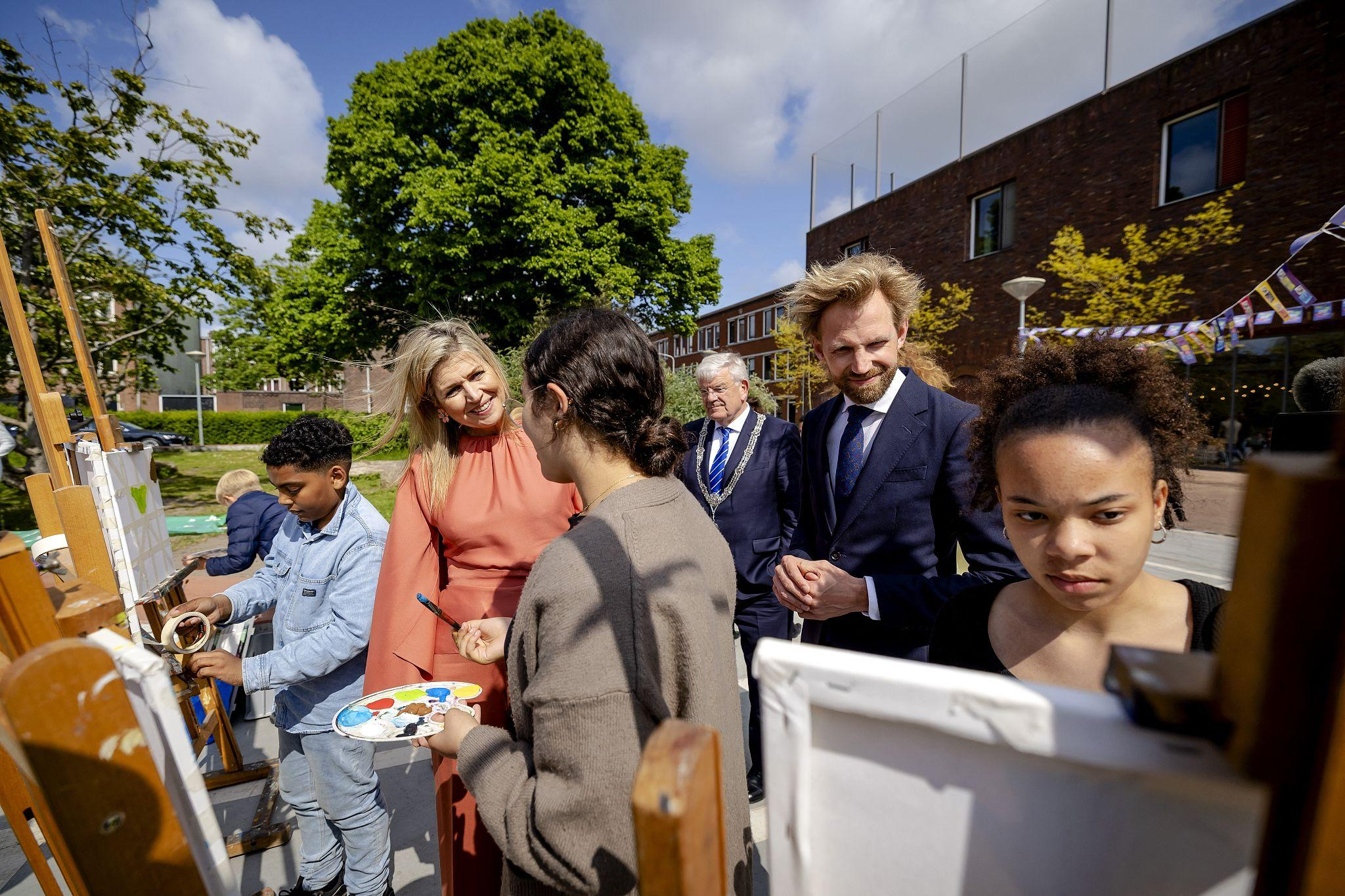
During the U.S. visit, she demonstrated a notably accessible and personable approach. In Miami, she engaged directly with students, discussing art and creativity while participating in informal conversations.
When asked a lighthearted question about a royal accessory, she responded with humor:
“I left it at home,” she said with a smile.
This interaction reflects a broader strategic function:
- Humanizing the monarchy
- Building rapport with younger generations
- Expanding influence beyond formal political spaces
Her engagements extended beyond education into economic dialogue. Discussions in Miami focused on trade relations, logistics, employment, and talent development between the Netherlands and Florida.
Economic and Cultural Diplomacy in Practice
A key component of the visit involved structured discussions on bilateral trade and investment.
These discussions addressed:
- The investment climate
- Opportunities in logistics and supply chains
- Workforce development and talent exchange
Such topics indicate that the visit was not purely symbolic—it functioned as a platform for economic diplomacy, aligning royal visibility with national commercial interests.
This approach reflects a broader European trend where monarchies play an active role in promoting international business relations.
Where Rob Jetten Fits Into the Broader Context
Alongside the monarchy, figures like Rob Jetten represent the political dimension of the Netherlands’ global positioning.
As a prominent Dutch political leader, Jetten embodies:
- Policy direction within the Netherlands
- Engagement with issues such as energy, sustainability, and international cooperation
- A modern political counterpart to the monarchy’s diplomatic role
While not directly part of the U.S. visit described, his presence in the broader narrative underscores how Dutch influence operates through a dual system:
- The monarchy: symbolic, cultural, and diplomatic
- Political leadership: legislative, strategic, and policy-driven
This dual structure allows the Netherlands to maintain a balanced international profile—combining tradition with progressive governance.
A Visit Framed by Global Timing
The timing of the Dutch visit is particularly significant. It precedes the anticipated U.S. state visit by King Charles and Queen Camilla, creating a sequence of high-level European engagements in Washington.
This sequence suggests:
- Renewed emphasis on transatlantic alliances
- Strategic use of ceremonial diplomacy
- Increased visibility of European leadership in global affairs
It also positions the Netherlands as an active participant in shaping these relationships, rather than a passive observer.
Conclusion: A Modern Monarchy in Motion
The April 2026 visit by King Willem-Alexander and Queen Máxima illustrates how contemporary monarchies operate within a complex global environment.
Their roles extend beyond ceremony:
- Facilitating diplomatic relationships
- Promoting economic cooperation
- Engaging directly with communities and cultural institutions
At the same time, figures like Rob Jetten ensure that these symbolic efforts are supported by substantive policy frameworks.
Taken together, the Dutch approach reflects a coordinated model of influence—one that integrates tradition, governance, and global engagement.


