


Bryce Cotton Ranking: Why the Six-Time NBL MVP Remains the Standard Everyone Else Is Chasing
Bryce Cotton’s ranking in Australian basketball is no longer just a weekly debate about form. It has become a broader conversation about legacy, value, national identity and where one of the NBL’s most decorated modern players now sits in the sport’s hierarchy.
The latest spark came from a short but significant update: “Bryce Cotton is FINALLY a Boomer 🏀🇦🇺”. The post framed Cotton’s long-awaited connection with Australia’s national basketball identity as an emotional milestone, asking fans to “Find out just how much it means to the six-time NBL MVP to be wearing the green & gold.” The reaction was immediate and warm, with supporters posting messages such as “Well done congratulations about time” and “Love your work Bryce 👏👏❤️❤️”.
But the phrase “Bryce Cotton ranking” carries more than one meaning. It refers to his place in MVP races, his standing among current NBL stars, his proximity to all-time greats, and now his relevance to the Boomers conversation. Across all of those categories, Cotton remains near the top — and in some, he is the benchmark.
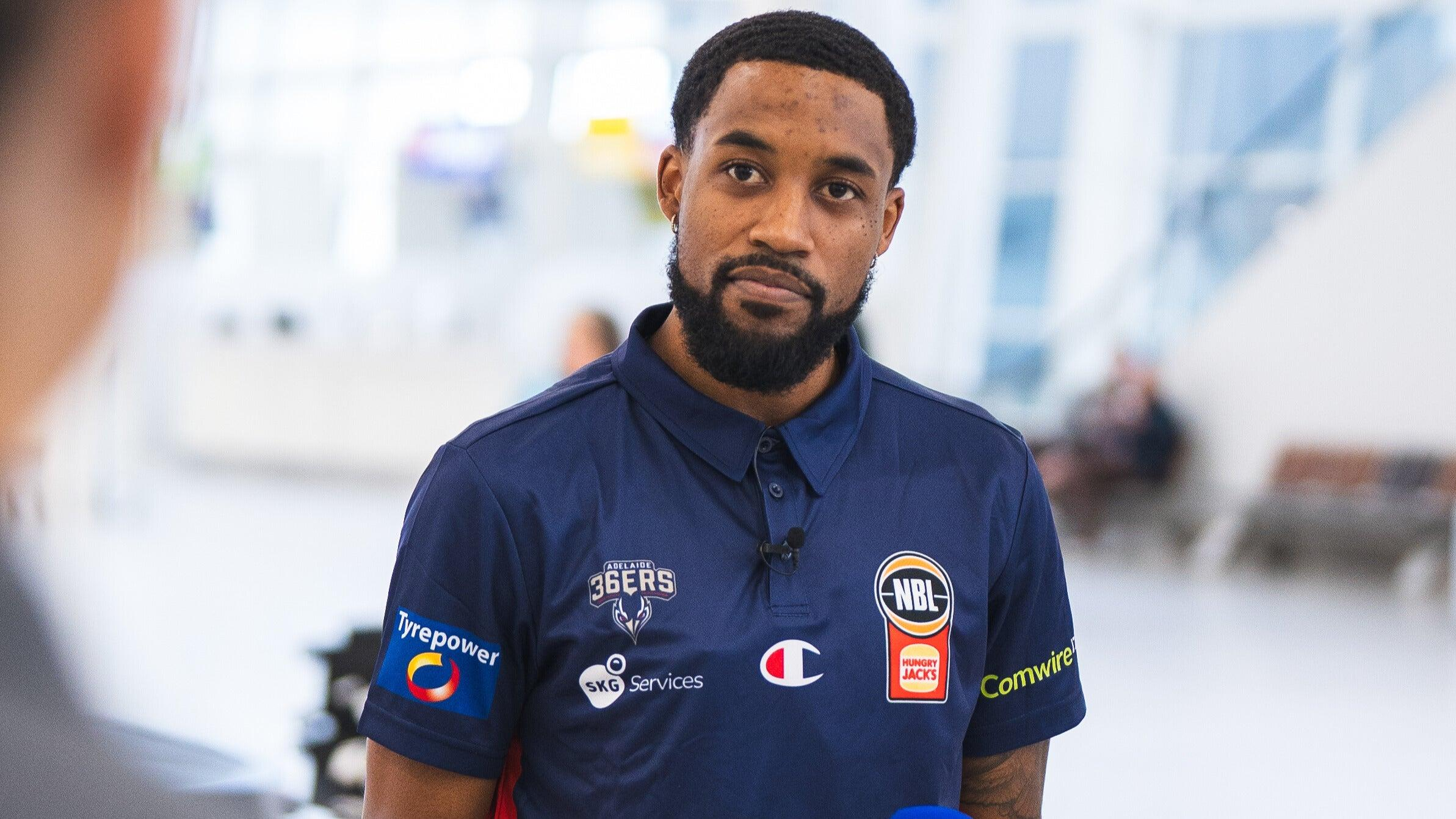
The Ranking Debate Starts With One Simple Fact: Cotton Is Still No. 1
In the NBL MVP Power Rankings after Round 12 of NBL26, Cotton was listed at No. 1, ahead of Kendric Davis, Nathan Sobey, JaVale McGee and Parker Jackson-Cartwright. That position was not presented as a narrow advantage. It was framed as the clearest case in the competition, with Cotton described as being on track to claim a sixth MVP award and move within one of Andrew Gaze’s all-time record of seven.
At that stage, Cotton was leading the Adelaide 36ers to a dominant 14-3 record, with the team riding a seven-game winning streak. The 36ers’ run included major wins over Melbourne United, the Perth Wildcats and the South East Melbourne Phoenix — the kind of victories that strengthen an MVP case because they connect individual brilliance to team success.
His numbers explained why he sat at the top: 26.6 points, 7.6 assists, 3.3 rebounds and 2.3 steals per game, while shooting 45 per cent from the field and 40 per cent from three-point range. Just as important was the evolution of his playmaking. Cotton’s 7.6 assists per game ranked second in the NBL, only 0.1 behind Parker Jackson-Cartwright.
For a player long known as one of the league’s most dangerous scorers, that passing growth changed the tone of the ranking discussion. Cotton was no longer just carrying an offence through shot-making. He was controlling the full shape of games.
From Scorer to System: Why Cotton’s Value Has Expanded
The strongest argument for Cotton’s ranking is not simply that he scores more than almost everyone else. It is that he has become the organizing force of a winning team.
Over a five-game stretch during Adelaide’s rise, Cotton averaged 24.8 points and 10.6 assists per contest. That shift mattered because it showed he was not only dominating personally; he was elevating the players around him. Isaac Humphries returned to career-best form, while Zylan Cheatham benefited from a larger and more productive role.
That is where Cotton’s ranking separates him from many high-usage stars. The MVP conversation often rewards statistical output, but it becomes more convincing when the player’s production clearly improves the whole roster. Cotton’s case does both. He gives Adelaide elite scoring, late-game shot creation, spacing, passing and defensive disruption.
The phrase used in the ranking analysis captured the point directly: “Quite simply, this is what the ‘Most Valuable Player’ looks like.”
The Closest Challenger: Kendric Davis Keeps the Race Honest
Cotton’s ranking at No. 1 did not mean the rest of the league lacked elite challengers. Kendric Davis, ranked No. 2 in the MVP Power Rankings, was presented as the clearest threat.
Davis’ Round 12 performances helped the Sydney Kings climb into fourth place. Against the Perth Wildcats at RAC Arena, he produced 38 points, eight assists and five rebounds, shooting 56 per cent from the field and 53.8 per cent from three-point range. That scoring total was noted as the second-highest by an opposition player at RAC Arena, behind Jerome Randle’s 40-point performance in NBL17.
He followed it with 26 points, six assists and three rebounds in an overtime win over Melbourne United, scoring four of Sydney’s eight points in the extra period. For the season, Davis was averaging 23.3 points, 5.1 assists and 4.1 rebounds, with his improved impact on winning reflected by a +5.4 plus-minus.
That is why the Cotton-Davis comparison remains central to any “Bryce Cotton ranking” discussion. Davis brings electricity, shot-making and a rising team profile. But Cotton’s advantage has been the total package: more proven MVP history, more complete control of Adelaide’s system and a stronger position in the league-wide hierarchy.
The Wider Top Five: Why Cotton Still Stands Apart
Nathan Sobey, JaVale McGee and Parker Jackson-Cartwright all added depth to the ranking conversation.
Sobey was ranked third while producing what was described as the best all-around season of his NBL career. He averaged 21.5 points, four assists, 3.5 rebounds and 1.8 steals per game for South East Melbourne Phoenix, while also recording a career-best +4.6 plus-minus.
McGee, ranked fourth, was putting together a dominant individual season for the Illawarra Hawks, averaging 22.3 points, a league-leading 10.3 rebounds, two assists, 2.1 blocks and 1.3 steals per game on 59 per cent shooting. But the Hawks’ weaker team record limited his MVP rise.
Jackson-Cartwright, ranked fifth, remained one of the league’s premier guards, averaging 17.2 points, 7.7 assists, 4.5 rebounds and 1.6 steals per game. He led the league in assists at 7.7 per game, just ahead of Cotton’s 7.6.
Each player had a clear case for elite status. But Cotton’s ranking remained stronger because his résumé combined individual output, team dominance, efficiency, playmaking growth and historical significance.
The Historical Layer: Cotton Is Chasing Andrew Gaze Territory
Cotton’s ranking cannot be separated from history. The Round 12 MVP analysis noted that a sixth MVP would move him within one of Andrew Gaze’s all-time record of seven. It would also make Cotton the first Adelaide 36ers player since Jerome Randle in the 2016–17 season to win the honor — the same season Cotton entered the league.
The possible three-peat also carried historical weight. Winning a third consecutive MVP would make Cotton only the second player in NBL history to achieve that feat.
That is why his ranking debate has shifted from “Is he the best player this season?” to “Where does he sit among the greatest NBL players ever?” The comparison with Gaze is unavoidable because the numbers are now close enough to make it real.
Cotton is not merely collecting awards. He is building a legacy that forces every future discussion of NBL greatness to include his name near the top.
Becoming a Boomer Adds a New Dimension
The recent “Bryce Cotton is FINALLY a Boomer 🏀🇦🇺” update adds another layer to his ranking. Wearing the green and gold is not an NBL award, but it changes how the public frames his place in Australian basketball culture.
For years, Cotton’s dominance was viewed mainly through a club lens: Perth Wildcats, Adelaide 36ers, MVP awards, scoring titles and championship-level performances. Becoming a Boomer places him in a national conversation. It connects his individual success to Australia’s broader basketball identity.
That matters because player rankings are not only built from statistics. They are shaped by symbolism. Cotton wearing the green and gold signals recognition beyond the NBL club ecosystem. It suggests that his long-term contribution to Australian basketball has reached another stage.
The fan reaction reflects that feeling. “Well done congratulations about time” captures the sense that many supporters believed this moment was overdue. “Love your work Bryce 👏👏❤️❤️” reflects the affection he has earned through consistency, professionalism and performance.
Derek Rucker’s Top 15 Shows the Competition Around Cotton Is Evolving
Another ranking conversation came through Derek Rucker’s Top 15, where much of the attention focused on who claimed the No. 1 spot between Adelaide’s Bryce Cotton and Sydney’s Kendric Davis. That framing confirms that Cotton remains at the center of the league’s top-player debate, even as new names rise around him.
The same ranking also highlighted Sydney’s Jaylin Galloway, who entered the Top 15 for the first time after a strong championship series. During the Hungry Jack’s NBL26 Championship Series, Galloway averaged 15.2 points and 3.6 triples per game, while shooting 55.6 per cent from the field. He was also used, alongside Matthew Dellavedova, Makuach Maluach and Torrey Craig, as a primary defender on Cotton during the series.
Rucker praised Galloway’s rise, saying: “At number 14 [on my list] is Jaylin Galloway,” and “[He had a] brilliant Championship Series, and because of that, he has catapulted himself into the Top 15 for the first time.”
He added: “He has the ability to be the best two-way player in the NBL, [and is] a real threat to reappear in the NBA.”
That matters to Cotton’s ranking because it shows the league is not static. New challengers are emerging. Defensive schemes are being built around him. Rising stars are being evaluated partly by how well they can handle him. In that sense, Cotton remains the reference point.
Why “Bryce Cotton Ranking” Has Multiple Answers
There is no single ranking that fully captures Cotton’s position. The answer depends on the frame.
In the NBL26 MVP race, he was ranked No. 1 in the Power Rankings. In broader league debates, he remains one of the top names alongside Kendric Davis. In historical terms, his six MVP status places him within reach of Andrew Gaze’s record. In Australian basketball culture, his arrival as a Boomer gives him another level of relevance.
What makes Cotton unusual is that he scores highly in every category. Some players dominate a season but lack historical depth. Others have legacy status but are no longer at the top of current rankings. Cotton continues to bridge both worlds.
He is still an active weekly problem for opponents, still the face of MVP debates, still lifting teammates, still shaping championship conversations and now stepping into the green and gold.
What Comes Next for Cotton’s Standing?
The next stage of Cotton’s ranking story will be shaped by three questions.
First, can he continue to maintain elite production as opponents design more aggressive defensive coverage around him? The evidence so far suggests he can, especially because his playmaking has become a larger weapon.
Second, can Adelaide continue translating his brilliance into winning? MVP rankings reward value, but sustained team success gives that value greater force.
Third, how will his Boomers chapter influence his public legacy? National team involvement can deepen a player’s connection with fans and expand the meaning of his career beyond club achievements.
The ranking debate is therefore not finished. If anything, it has become more interesting.
Conclusion: Cotton Is No Longer Just Ranked — He Is Measured Against History
Bryce Cotton’s ranking sits at the intersection of present dominance and historical greatness. He has been ranked No. 1 in the NBL MVP race, discussed alongside Kendric Davis in top-player debates, recognized as a six-time MVP, and now celebrated as finally becoming a Boomer.
The numbers are powerful: elite scoring, high-level assists, strong efficiency and defensive production. The context is just as important: Adelaide’s winning record, his influence on teammates, his proximity to Andrew Gaze’s MVP mark and his growing national significance.
For now, the simplest answer to “Bryce Cotton ranking” is this: he remains at the top of the current NBL conversation, and he is already deep inside the all-time one.


