

Brahim Díaz and the Fine Margins of a Champions League Exit
A Night in Munich That Captured His Role at Real Madrid
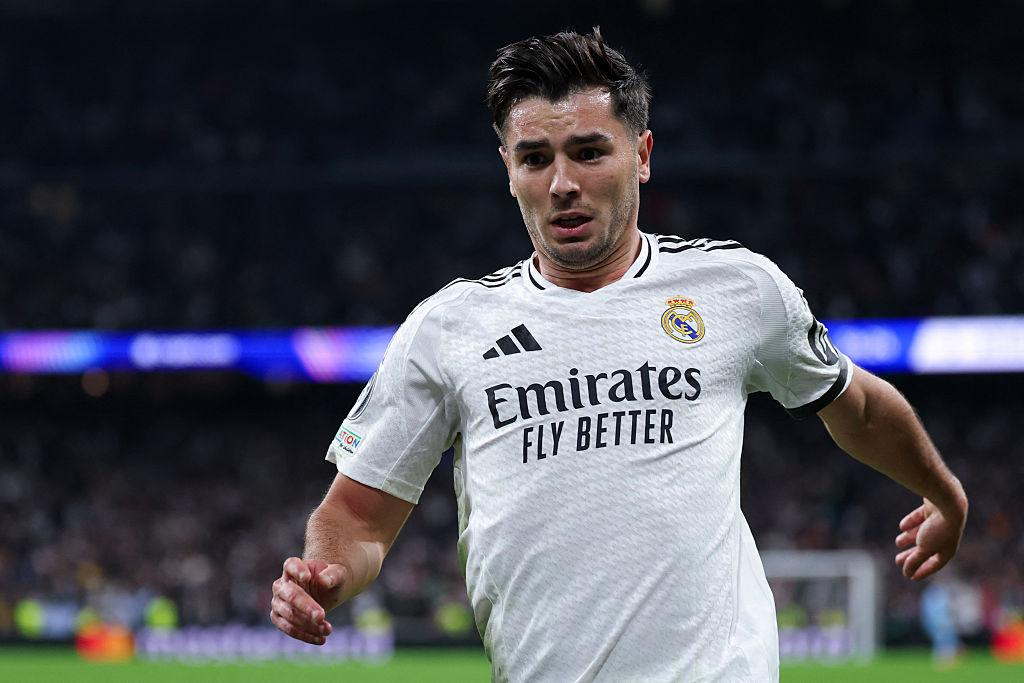
In elite European football, a player’s influence is not always measured by goals or assists. Sometimes, it is defined by positioning, movement, and the subtle moments that shape the rhythm of a match. That nuance was on display when Brahim Díaz started for Real Madrid in their UEFA Champions League quarter-final second leg against Bayern Munich on April 15, 2026.
The match at the Allianz Arena delivered one of the most dramatic nights of the season—an end-to-end encounter that ultimately saw Bayern progress with a 6–4 aggregate victory. For Díaz, the night was emblematic of his evolving role: trusted to start on one of football’s biggest stages, yet still searching for decisive influence in defining moments.
Selected to Start: A Tactical Statement
When Real Madrid head coach Álvaro Arbeloa named his starting XI, Díaz’s inclusion alongside Kylian Mbappé and Vinícius Júnior signaled a clear tactical intention—mobility, technical control, and fluid attacking transitions.
Real Madrid’s lineup featured:
- Lunin
- Alexander-Arnold
- Militão
- Rüdiger
- Mendy
- Díaz
- Bellingham
- Valverde
- Güler
- Mbappé
- Vinícius
Díaz operated in a midfield-attacking hybrid role, tasked with linking play and exploiting pockets of space between Bayern’s lines. His positioning was central to Madrid’s counter-attacking structure, particularly in a match where tempo shifted rapidly.
A Match Defined by Chaos and Momentum
The contest itself unfolded at extraordinary speed. Real Madrid surged into the game early, with Arda Güler scoring within seconds, setting the tone for a high-intensity encounter.
By halftime, the scoreline reflected the volatility:
- Multiple lead changes
- Five first-half goals
- Aggregate parity restored at 3–3
However, the second half introduced a decisive turning point. After Díaz was substituted around the hour mark, his replacement, Eduardo Camavinga, received two yellow cards in quick succession, leaving Madrid with ten men.
From that moment, Bayern seized control. Late goals sealed the tie, confirming their progression and ending Madrid’s campaign.
Díaz’s Performance: Subtle Influence, Limited Impact
From an analytical standpoint, Díaz’s performance was controlled but understated. He maintained positional discipline and contributed to Madrid’s structure, yet struggled to impose himself in decisive attacking phases.
Key observations from the match:
- Spatial awareness: Díaz operated effectively between Bayern’s midfield and defensive lines
- Ball progression: Short combinations helped Madrid transition through pressure
- Final-third impact: Limited penetration and no decisive contributions
He was substituted shortly after the 60-minute mark, a decision that reflected the need for tactical adjustment rather than individual failure.
In high-level knockout football, such margins are critical. The absence of a defining moment—whether a key pass, shot, or defensive intervention—can shape both perception and outcome.
The Broader Context: Díaz Among Europe’s Elite
Díaz’s inclusion in a Champions League quarter-final starting XI underscores his standing within one of the world’s most competitive squads. At Real Madrid, attacking depth is significant, with players like Mbappé, Vinícius, and Bellingham commanding central roles.
Within this ecosystem, Díaz occupies a flexible position:
- Rotational starter in major competitions
- Tactical option for positional fluidity
- Creative link between midfield and attack
His international profile has also expanded, representing Morocco and contributing to a growing generation of North African talent competing at the highest level.
Real Madrid’s Exit and Structural Questions
Madrid’s elimination raised broader questions beyond individual performances. The match exposed several structural issues:
- Defensive vulnerability under pressure
- Disciplinary instability, highlighted by multiple red cards in the campaign
- Reliance on moments rather than sustained control
Coach Arbeloa acknowledged the emotional toll of the defeat, emphasizing pride in the players’ effort while expressing frustration over key decisions that influenced the outcome.
The result also ends Madrid’s pursuit of another European title, reinforcing the competitive intensity at this stage of the tournament.
What This Means for Brahim Díaz
For Díaz, the match represents both opportunity and challenge.
Positives:
- Trusted to start in a high-stakes Champions League fixture
- Demonstrated tactical intelligence and adaptability
- Continued presence in Madrid’s core rotation
Areas for Development:
- Greater influence in decisive moments
- Increased attacking output (goals, assists, key passes)
- Assertiveness in high-pressure situations
At 26 years old, Díaz is entering a phase where consistency and impact must align. The technical foundation is evident; the next step is translating involvement into measurable outcomes.
Looking Ahead: A Career at a Crossroads
Elite football careers often hinge on nights like Munich—games where margins are narrow and narratives shift quickly. For Díaz, this performance does not diminish his trajectory, but it sharpens the expectations around him.
With Bayern advancing to face Paris Saint-Germain in the semi-finals, the spotlight moves forward. Yet for Real Madrid and Díaz, the focus turns inward—toward refinement, adaptation, and the pursuit of greater control in decisive matches.
Conclusion
Brahim Díaz’s role in Real Madrid’s Champions League exit illustrates the complexity of modern football evaluation. Not every performance is defined by visible metrics; some are measured in structure, balance, and missed opportunities.
In Munich, Díaz was part of a team that competed fiercely but ultimately fell short in a match shaped by discipline, timing, and late-game execution. His challenge now is clear: evolve from a reliable contributor into a decisive figure when the stakes are highest.


