

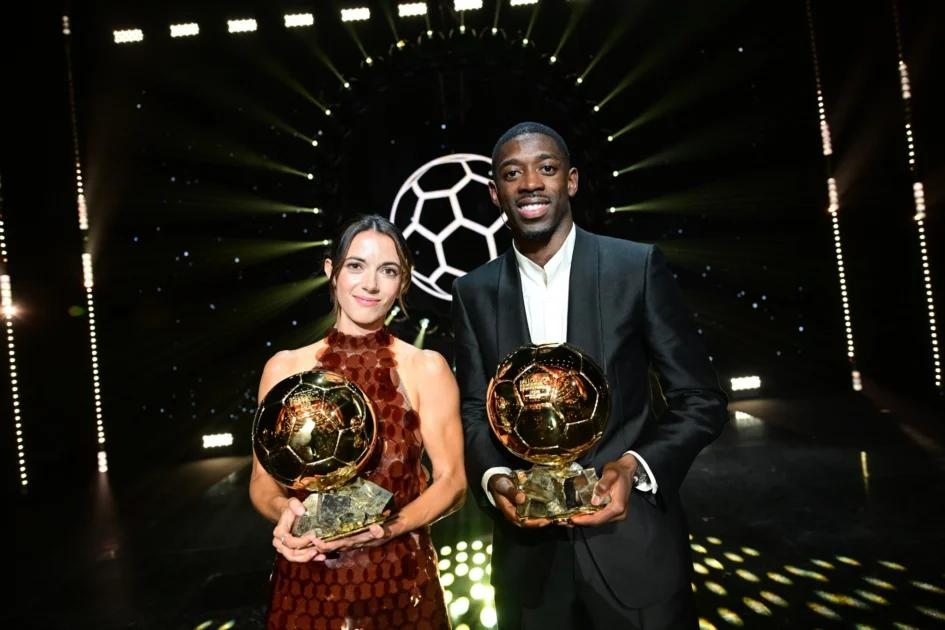
Ballon d’Or Latest Ranking: Why Harry Kane Leads a Wide-Open 2026 Race
The Ballon d’Or race has entered one of its most intriguing periods in years. For much of the modern era, the award felt like a private contest between Lionel Messi and Cristiano Ronaldo, two generational figures whose dominance turned football’s most prestigious individual prize into a familiar annual debate. But that predictability has faded. Different winners have emerged, new tactical leaders have forced their way into contention, and the 2026 race is being shaped by a rare combination of club form, international ambition, and the looming influence of the World Cup.
The latest ranking places Harry Kane at No. 1, ahead of Bayern Munich teammate Michael Olise and Arsenal midfielder Declan Rice. Behind them are some of football’s biggest names: Ousmane Dembélé, Lamine Yamal, Kylian Mbappé, Khvicha Kvaratskhelia, Vitinha, Erling Haaland, Pedri, Lionel Messi, Bruno Fernandes, Luis Díaz, Vinicius Junior and Raphinha.
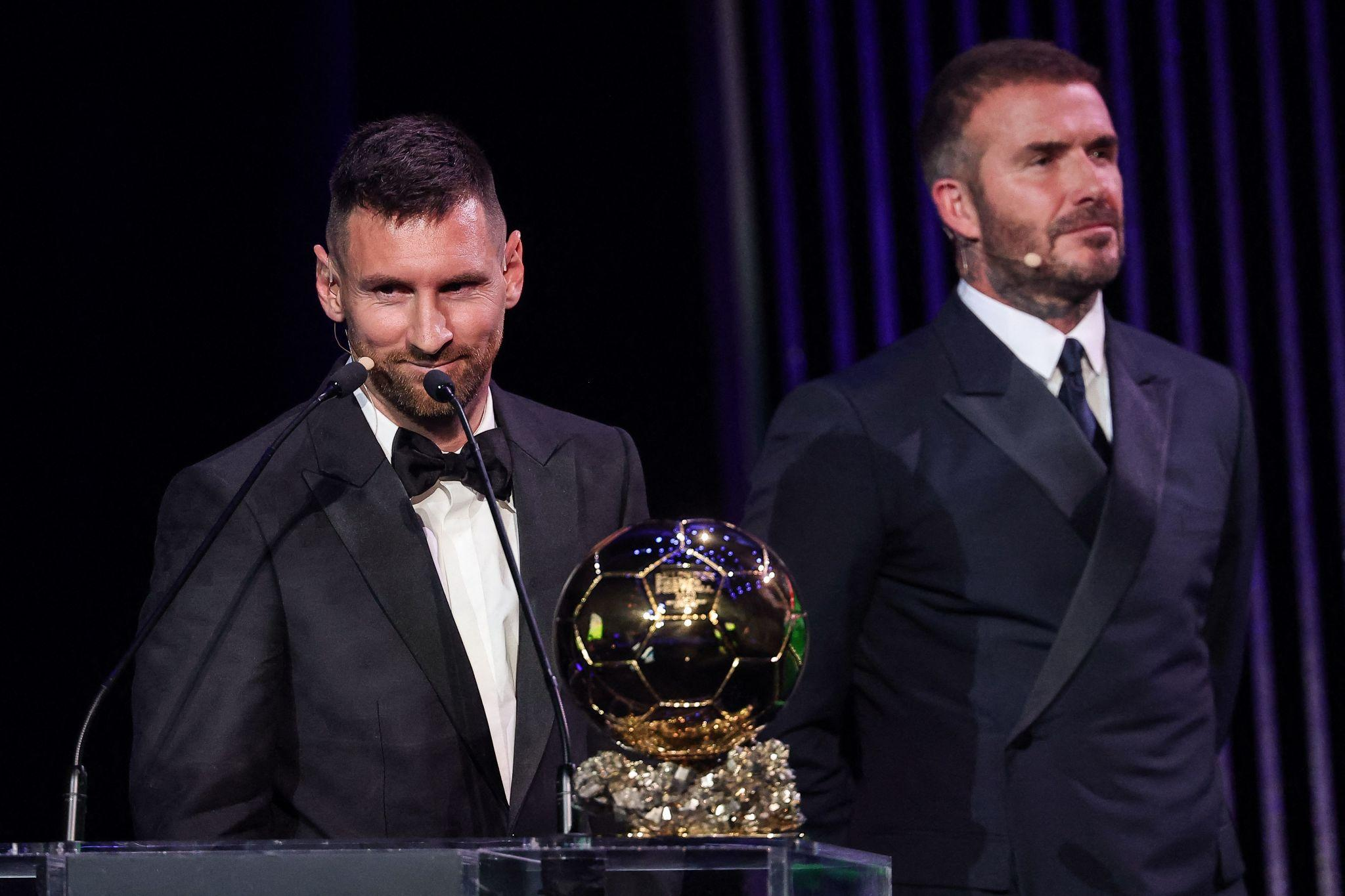
A Race Defined by the World Cup
The 2026 Ballon d’Or is not just another club-season award race. The World Cup is expected to have a major impact on the final vote, especially because recent history has shown how powerful a defining international campaign can be.
Luka Modrić’s 2018 triumph was boosted by Croatia’s run to the World Cup final, while Lionel Messi’s 2023 victory was inseparable from Argentina’s historic success in Qatar. That precedent matters. In a World Cup year, even outstanding club form may not be enough unless it is matched by a memorable summer on the biggest stage.
That is why the top of the ranking is so England-heavy. Kane and Rice both have strong club narratives, but their Ballon d’Or cases could become far more compelling if England go deep at the World Cup. The same applies to France stars Dembélé, Mbappé and Olise, Portugal’s Vitinha and Bruno Fernandes, Spain’s Lamine Yamal and Pedri, and Argentina’s Messi.
Harry Kane: The Front-Runner With a Career-Defining Opportunity
Harry Kane’s position at the top of the latest Ballon d’Or ranking reflects more than just goals. It reflects a shift in how the football world is viewing his career.
For years, Kane’s individual brilliance was often weighed down by questions about team trophies. He was admired as an elite striker, but the lack of major silverware became part of the conversation around him. That narrative has changed at Bayern Munich, where back-to-back Bundesliga titles and continued record-breaking performances have strengthened his claim to be one of the finest centre-forwards of his generation.
The ranking frames the question sharply: has football finally stopped underestimating Kane’s all-time status? His scoring record, playmaking intelligence and consistency have long been clear. What has changed is the silverware context around him.
If Kane continues to deliver for Bayern and then leads England to a major World Cup campaign, his Ballon d’Or case becomes difficult to ignore. External power rankings have also placed Kane at or near the top of the 2026 race, with several outlets describing him as the man to beat.
Michael Olise: The Artist Rising Fast
Second place belongs to Michael Olise, a player whose rise has been one of the most exciting developments in European football. His case is built around style, productivity and the sense that he is moving rapidly toward global superstar status.
Olise is described as a future Ballon d’Or winner in the making. Whether 2026 arrives too early for him remains uncertain, but his form for Bayern Munich has already placed him among the most watchable wide players in the game. His appeal is not only statistical. Ballon d’Or voters have historically responded to players who combine decisive output with elegance, imagination and technical beauty.
That matters for Olise. His game is easy on the eye, but it is not decorative. At Bayern, he is part of a powerful attacking unit alongside Kane and Luis Díaz, and his performances for France could become vital if he carries that form into the World Cup. Recent reporting around Bayern has also underlined how highly he is valued at the club, with his status as a top Ballon d’Or contender increasingly discussed across European football.
Declan Rice and the Midfielder’s Ballon d’Or Revival
Declan Rice at No. 3 is one of the most interesting features of the ranking. In another era, a defensive or box-to-box midfielder might have struggled to enter the Ballon d’Or conversation unless attached to a major international triumph. But the voting climate has changed.
Rodri’s 2024 win helped reshape perceptions of what a Ballon d’Or winner can look like. His words after receiving the award captured that shift: “Today is not a victory for me, it is for Spanish football,” he said. “For so many players who have not won it and have deserved it, like [Andrés] Iniesta, Xavi [Hernández], Iker [Casillas], Sergio Busquets, so many others. It is for Spanish football and for the figure of the midfielder.”
Rice benefits from that wider reappraisal. His case is not based on flair alone but on influence: leadership, control, intensity, composure and big-game temperament. If Arsenal win the Premier League, reach or win the Champions League final, and England mount a serious World Cup challenge, Rice could become the face of a historic year.
The ranking also notes that central midfielders have gained greater recognition recently, with a central player finishing in the top three in three of the last four editions. That trend gives Rice a realistic path.
Dembélé, Yamal and Mbappé: France and Spain’s Elite Threats
Ousmane Dembélé sits fourth as the reigning Ballon d’Or winner. His start to the 2025–26 season was reportedly disrupted by injuries and inconsistency, but his resurgence in the Champions League has kept him firmly in contention. The key question is whether he can become the defining figure for France at the World Cup rather than one star among many.
Lamine Yamal, ranked fifth, may be the most fascinating long-term name on the list. He is already viewed as a generation-defining talent, and if he were to win in 2026, he would become the youngest Ballon d’Or winner. His injury issues have complicated the campaign, but his return to form gives Spain another potential match-winner.
Kylian Mbappé, at No. 6, remains impossible to overlook. Many expected him to have won the Ballon d’Or already after his explosion at the 2018 World Cup. His output for Real Madrid continues to be elite, and his World Cup pedigree is beyond question. The challenge is silverware: if Madrid fall short in major competitions, even another brilliant individual season may not be enough.
The PSG Cluster: Kvaratskhelia and Vitinha Stay in the Frame
Paris Saint-Germain remain heavily represented in the race. Khvicha Kvaratskhelia is ranked seventh, and Vitinha eighth. Their profiles are very different, but both reflect PSG’s transformation into a team built around multiple high-impact stars rather than one overwhelming figure.
Kvaratskhelia’s case is based on pure attacking brilliance. He brings unpredictability, balance, speed, strength and two-footed danger. The obstacle is Georgia’s failure to qualify for the World Cup, which denies him the global platform available to many rivals.
Vitinha’s argument is more cerebral. He finished third in the 2025 Ballon d’Or vote after his role in PSG’s domestic and European dominance. As a tempo-setter, he offers control rather than spectacle, but his importance is immense. If Portugal make a deep World Cup run, his candidacy could rise quickly.
Haaland, Pedri and Messi: Three Very Different Routes to Glory
Erling Haaland is ninth, which feels low for a striker who continues to score at a frightening rate. The ranking acknowledges that he might already have won the award had Messi not produced a legendary World Cup campaign in 2022. Norway’s return to the World Cup stage gives Haaland a rare chance to build an international narrative around his club dominance.
Pedri, in 10th, represents the modern midfield artist. The comparison to Xavi and Andrés Iniesta is unavoidable, not because he has matched their full careers, but because his current level invites discussion among the best central midfielders in the world. Spain’s World Cup prospects could heavily influence whether he moves higher.
Then there is Messi, ranked 11th. At 39, he is not in the race because of club football alone. His case depends almost entirely on Argentina. If he leads the defending champions to another World Cup title, he could become the frontrunner for a ninth Ballon d’Or. The ranking notes that Argentina are aiming to become the first team since Brazil in 1962 to retain the World Cup.
The Outsiders With Real Cases
Bruno Fernandes, Luis Díaz, Vinicius Junior and Raphinha round out the top 15, but none should be dismissed.
Fernandes remains the creative brain of Manchester United and Portugal. Thierry Henry’s assessment captures his unique intelligence: “He doesn’t play football,” Henry said, “he thinks it.”
Luis Díaz has stepped into a bigger role at Bayern Munich after leaving Liverpool in 2025, bringing direct running, finishing and energy to a dominant side. His Ballon d’Or hopes may be complicated by internal competition from Kane and Olise.
Vinicius Junior’s 2024 disappointment, when he lost to Rodri and Real Madrid’s boycott of the ceremony caused controversy, remains part of his story. His brilliance is unquestioned, and Brazil’s World Cup performance could revive his claim.
Raphinha, ranked 15th, is presented as a player with unfinished Ballon d’Or business after finishing fifth in 2025 despite a major role in Barcelona’s domestic treble. If Barcelona again build their season around him, he could climb.
What the Latest Ranking Really Tells Us
This ranking is not just a list of names. It reveals the forces shaping modern football recognition.
The Ballon d’Or is no longer purely a goalscorer’s award, though Kane, Haaland and Mbappé remain central to the race. It is no longer reserved only for Champions League winners, though European success still matters. It is increasingly about narrative: who defines the year, who delivers in the decisive matches, and who becomes the face of club and country at the right time.
That is why the 2026 race feels so open. Kane leads because he has the most complete current storyline: elite numbers, major trophies, Bayern dominance and England’s World Cup potential. Olise follows because he looks like football’s next great aesthetic superstar. Rice is third because modern voters are finally rewarding midfield authority.
But the World Cup can rewrite everything. A Messi miracle, a Mbappé masterclass, a Yamal breakthrough, a France run led by Dembélé or Olise, or an England triumph inspired by Kane and Rice could dramatically change the final order.
Conclusion: Kane Leads, but the Race Is Far From Over
The latest Ballon d’Or ranking places Harry Kane in pole position, but the 2026 award remains one of the most unpredictable in recent memory. Bayern Munich have three serious contenders in Kane, Olise and Díaz. France have multiple stars capable of dominating the World Cup. Spain’s new generation is led by Yamal and Pedri. England may have its strongest individual award hopes in years through Kane and Rice.
For now, Kane is the front-runner because his season carries the strongest blend of production, trophies, reputation and opportunity. But in a World Cup year, the Ballon d’Or is rarely settled early. The player who owns the summer may ultimately own the golden ball.


