
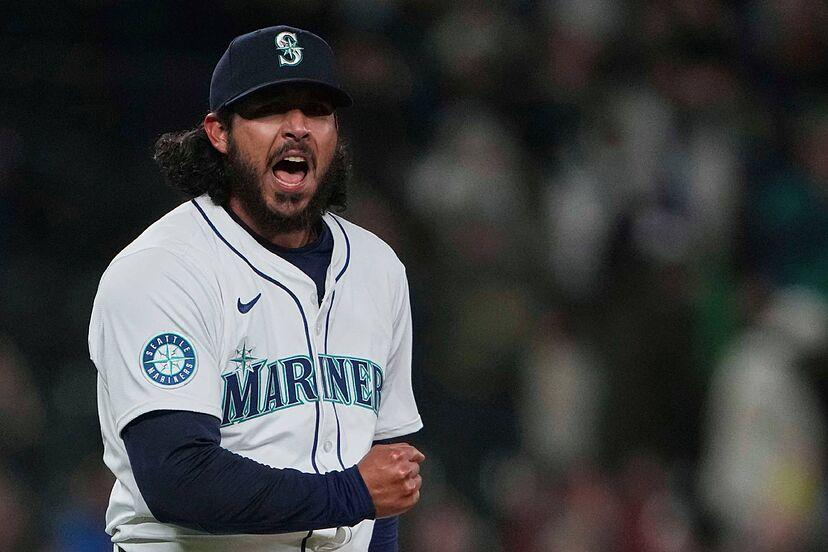
Andrés Muñoz: A Closer Under Pressure — Inside Baseball’s Most Volatile Role
In Major League Baseball, few roles are as unforgiving—or as revealing—as that of a closer. For Andrés Muñoz, the 2026 season has already provided a sharp reminder of that reality. One inning, one outing, or even a handful of pitches can reshape perception, confidence, and momentum.
What unfolded in San Diego on April 15, 2026, was not simply a blown save or a bad night. It was a case study in the volatility of elite relief pitching—and a moment that places Muñoz at the center of early-season scrutiny.
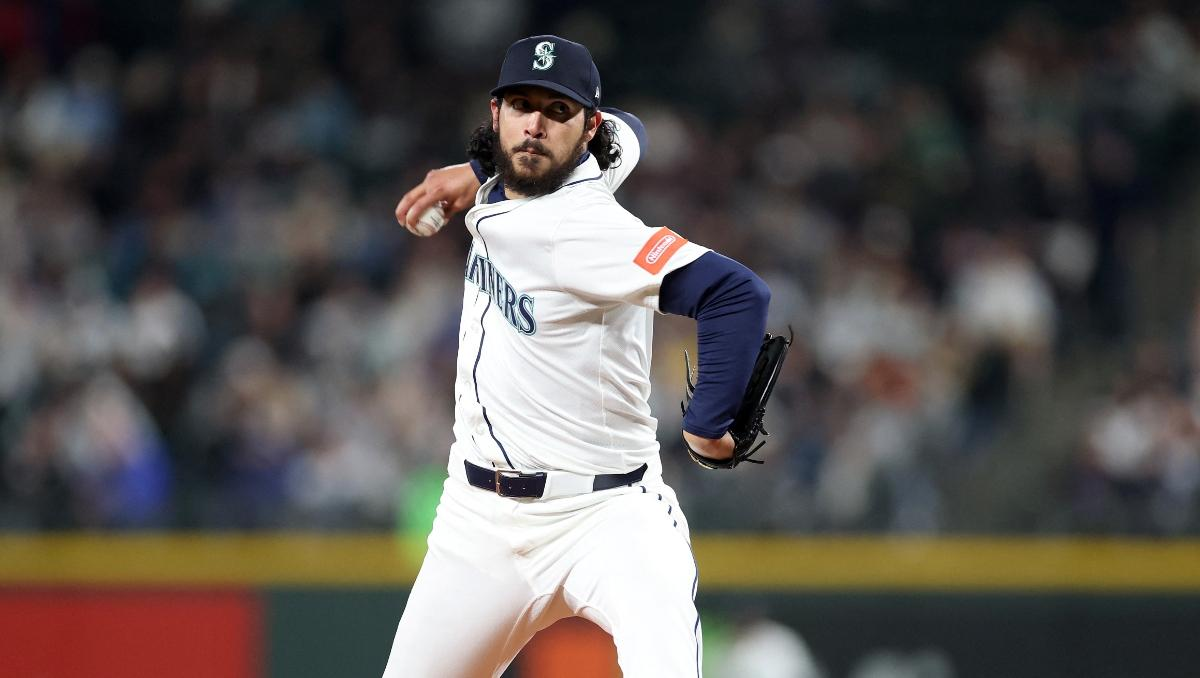
The Ninth-Inning Collapse That Defined the Night
The Seattle Mariners entered the ninth inning against the San Diego Padres with a commanding 6–2 lead. With Muñoz on the mound, the expectation was routine: close out the game, secure the win, and move on.
Instead, the inning unraveled rapidly.
A leadoff walk to Manny Machado opened the door. What followed was a sequence of soft-contact hits, missed locations, and mounting pressure. Despite recording one strikeout, Muñoz struggled with command, falling behind hitters and allowing traffic to build on the bases.
The Padres capitalized. By the time Muñoz exited, the inning had spiraled beyond recovery. The final blow came from Jackson Merrill, whose two-run double completed a dramatic 7–6 walk-off victory.
From a four-run cushion to defeat in a single frame, the collapse was as abrupt as it was consequential.
What Went Wrong: Command, Contact, and Context
At a technical level, the breakdown can be traced to a combination of mechanical inconsistency and situational pressure.
Muñoz’s outing featured:
- Difficulty locating both fastballs and sliders
- A noticeable increase in walks—five of his last 11 batters faced across recent outings
- Non-competitive pitches early in counts, allowing hitters to remain disciplined
This lack of command forced him into hitter-friendly counts. Even when contact was weak—such as bloop hits and slow grounders—it proved sufficient to sustain the rally.
Manager Dan Wilson summarized the challenge succinctly, noting that innings like this often combine poor execution with unfavorable outcomes on balls in play.
A Game That Slipped Away
For eight innings, Seattle had controlled the game.
Starter Emerson Hancock delivered a strong performance, allowing just two runs over six innings with six strikeouts. The offense provided ample support, highlighted by a four-hit night from Luke Raley and a steady accumulation of runs.
By all conventional metrics, this was a game the Mariners should have won comfortably.
Yet baseball resists predictability. The Padres’ five-run ninth inning erased everything that came before it—a reminder that no lead is secure, particularly against a lineup capable of sustained pressure.
The defeat stands as one of the most damaging early-season losses for Seattle, both in terms of result and psychological impact.
The Closer’s Burden: Expectations vs. Reality
Closers operate under a unique performance framework. Unlike starters, they are judged almost entirely on outcomes rather than process. A single inning determines success or failure.
For Muñoz, a two-time All-Star and one of the Mariners’ most trusted relievers, the expectations are clear:
- Enter late-game situations with composure
- Execute with precision under pressure
- Deliver consistent results regardless of context
When those standards are not met, the consequences are immediate and visible.
However, within the sport, there is also an understanding that volatility is inherent to relief pitching. Even elite closers experience stretches where command wavers or timing is disrupted.
The Rest vs. Rust Factor
One notable element in this outing was usage pattern.
Muñoz had not pitched since the previous Saturday, and the Mariners intentionally deployed him in a non-save situation to maintain rhythm. This decision reflects a broader strategic balance in bullpen management: keeping pitchers fresh without allowing them to become inactive.
In this case, the balance tilted unfavorably.
The lack of recent game action may have contributed to his inconsistent feel for pitches—particularly his slider, which repeatedly missed the zone early in the inning.
Padres’ Perspective: Resilience and Execution
While the focus remains on Muñoz, the Padres’ performance warrants equal attention.
The rally was not built on overwhelming power but on persistence:
- Disciplined at-bats, including deep counts
- Strategic contact rather than aggressive swings
- Situational awareness, advancing runners and capitalizing on opportunities
As noted within the clubhouse, the team’s approach reflects a broader identity—one centered on resilience and belief in late-game comebacks.
The result was not merely a comeback, but one of the franchise’s most significant ninth-inning rallies in recent years.
Early-Season Implications for Muñoz and Seattle
It is important to contextualize this performance within the broader season.
The 2026 campaign is still in its early stages, and individual outings—however dramatic—do not define a player’s trajectory. Yet they do influence:
- Confidence, both individual and collective
- Managerial decision-making in high-leverage situations
- Public and media perception of reliability
For Muñoz, the immediate task is straightforward: reset, refine command, and re-establish consistency.
For the Mariners, the challenge is more systemic. A team with postseason ambitions cannot afford repeated bullpen instability, particularly in games that appear securely in hand.
What Comes Next
The defining question is not what happened—but how the response unfolds.
Relief pitching is cyclical. Periods of dominance can be followed by brief but intense struggles. The distinction between elite and average often lies in recovery speed.
Within the Mariners’ clubhouse, the tone remains measured. Teammates have emphasized continuity and trust, reinforcing the idea that one outing does not alter Muñoz’s role or value.
That stance will be tested in the coming weeks.
Conclusion: A Moment, Not a Verdict
Andrés Muñoz’s performance in San Diego will remain one of the most discussed early moments of the 2026 MLB season. It encapsulates the fragility of late-game dominance and the fine margins that define success at the highest level.
But it is not a final judgment.
In baseball, reputations are built over months, not innings. For Muñoz, the path forward is defined not by this collapse, but by his ability to respond—adjust, execute, and reclaim the consistency that established him as one of the game’s most trusted closers.


