
Abdul Samad Rabiu Latest Business Developments
A Strategic Expansion Play Reshaping Africa’s Industrial Landscape
Introduction: A Defining Moment for an African Industrialist
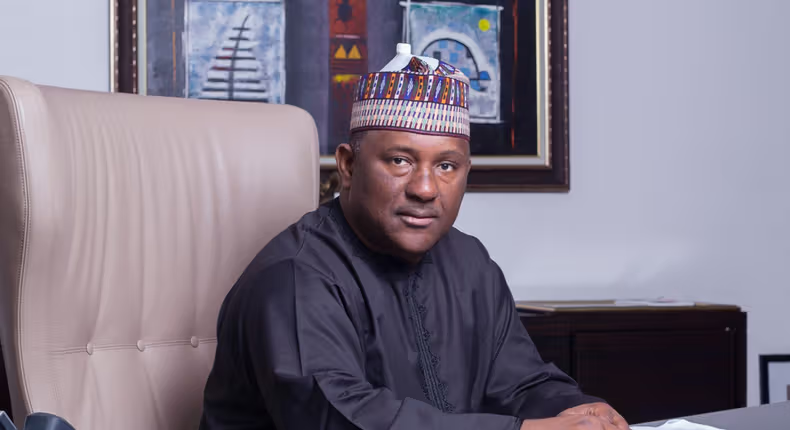
Abdul Samad Rabiu, founder and chairman of BUA Group, is entering a new phase of strategic expansion that underscores both his ambition and the evolving trajectory of Africa’s industrial economy. With a net worth estimated at around $9.8 billion, Rabiu has steadily built one of the continent’s most diversified industrial conglomerates, spanning cement, agriculture, infrastructure, and mining.
Recent developments in 2026 reveal a coordinated push across three critical fronts: scaling manufacturing capacity, expanding global trade linkages, and deepening social infrastructure investments. Taken together, these moves signal not just corporate growth, but a broader vision for Africa’s industrial transformation.
Cement Expansion: Scaling Up to Compete with Industry Giants
A New Production Line in Sokoto
At the heart of Rabiu’s latest business strategy is a major expansion of BUA Cement. The company is exploring the addition of a new 3-million-tonne production line at its Sokoto plant in northern Nigeria.
If completed, this expansion would raise BUA Cement’s total production capacity to approximately 20 million tonnes annually—up from its current level of around 17 million tonnes.
This move is not occurring in isolation. It is a direct response to intensifying competition in Nigeria’s cement sector, where scale increasingly determines market dominance.
Strategic Collaboration with China
A key element of the expansion is Rabiu’s ongoing partnership with CBMI Construction Ltd., a Chinese engineering firm with over 15 years of collaboration history with BUA.
“Excited to welcome my friend Mr. Zhang Sicai, Chairman of CBMI Construction Ltd. (SINOMA China), and his team from China to our Dubai office,” Rabiu said, emphasizing the long-standing relationship that has already delivered about 14 million tonnes of production capacity across BUA’s operations.
This partnership highlights the continued importance of China–Africa industrial cooperation, particularly in capital-intensive sectors like cement manufacturing.
Competing with Dangote Cement
The expansion is also a calculated attempt to narrow the gap with Dangote Cement, Africa’s largest cement producer, which operates an installed capacity of about 52 million tonnes annually.
While BUA remains the second-largest player, increasing capacity to 20 million tonnes strengthens its competitive positioning in Nigeria’s fast-growing construction market.
Global Expansion: Building a Nigeria–UAE Trade Corridor
A Landmark MoU in Abu Dhabi
Beyond domestic growth, Rabiu is extending BUA’s reach into global markets. In February 2026, BUA Group signed a Memorandum of Understanding with AD Ports Group and MAIR Group in Abu Dhabi.
The agreement focuses on developing sugar refining, agro-processing, and integrated logistics solutions—effectively creating a structured export corridor between Nigeria and international markets.
“This MoU marks an important milestone in BUA’s international expansion,” Rabiu stated.
Khalifa Port as a Strategic Hub
Central to the agreement is the positioning of Khalifa Port as a processing and export hub for Nigerian agricultural commodities, particularly sugar.
The project aims to:
- Refine Nigerian sugar in Abu Dhabi
- Build agro-industrial infrastructure
- Establish global logistics channels for export
Khalifa Port’s connectivity—linking over 70 destinations via more than 25 shipping lines—makes it a critical node in connecting West Africa to the Middle East and Asia.
Aligning with Global Food Security Goals
The initiative aligns with the UAE Food Security Strategy 2051, which seeks to reduce dependence on imported finished food products by boosting domestic processing capacity.
It also supports Nigeria’s ambition to diversify exports and strengthen agricultural value chains—transforming raw commodities into higher-value products.
Industrial Vision: From Resource Extraction to Value Addition
A Call for Structural Transformation
Rabiu’s business moves are closely tied to his broader economic philosophy. Speaking at Mining Indaba 2026, he called for Africa to shift from exporting raw materials to building large-scale processing industries.
“Africa does not lack resources,” he said. “What it lacks is processing capacity, industrial scale, and disciplined execution.”
Lessons from BUA’s Evolution
He pointed to BUA’s own transformation—from cement importer to major producer—as proof that industrialization is achievable with the right mix of policy support and long-term financing.
Today, BUA processes approximately 40,000 tonnes of limestone daily and produces about one million tonnes of cement monthly.
This shift has helped Nigeria transition from a cement-importing nation to a net exporter, saving billions in foreign exchange.
The Role of Development Finance
Rabiu emphasized the importance of development finance institutions (DFIs), noting that the Africa Finance Corporation has provided over $400 million in funding for BUA’s projects.
He highlighted that much of this financing has already been repaid, demonstrating the commercial viability of large-scale African industrial projects.
Social Investment: Strengthening Institutions Through ASR Africa
A New Healthcare Facility for Security Personnel
Rabiu’s influence extends beyond business into philanthropy through ASR Africa, a $100 million annual initiative focused on health, education, and social development.
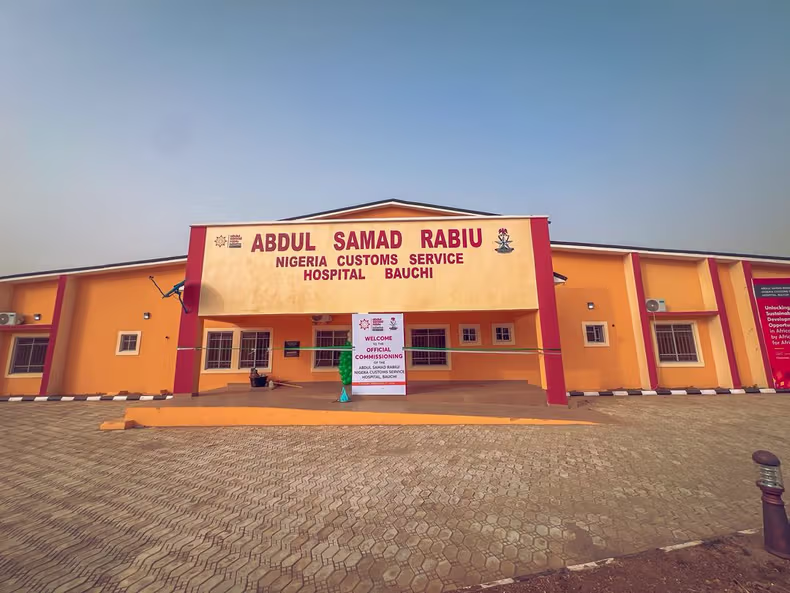
In February 2026, ASR Africa commissioned a 60-bed hospital for the Nigeria Customs Service under its Security Sector Support Programme.
Supporting National Infrastructure
The facility includes multiple clinical departments—such as Surgery, Paediatrics, and Radiology—and is expected to serve up to 300 patients monthly.
Nigeria’s Comptroller-General of Customs described the project as a “strategic welfare investment,” emphasizing the importance of social infrastructure in strengthening institutional effectiveness.
A Model of Impact-Driven Philanthropy
ASR Africa’s approach reflects a broader trend of private-sector involvement in public infrastructure, particularly in emerging economies where government resources are often stretched.
Market Implications: What These Developments Mean
For Nigeria’s Economy
Rabiu’s investments reinforce Nigeria’s position as Africa’s largest cement market and a growing hub for industrial manufacturing. Rising demand—driven by urbanization, infrastructure development, and housing shortages—continues to attract capital despite economic challenges.
For Regional Trade
The Nigeria–UAE logistics corridor could significantly enhance West Africa’s trade connectivity, opening new export channels to the Middle East and Asia.
For Africa’s Industrialization
Perhaps most importantly, Rabiu’s strategy exemplifies a broader shift toward value-added production, which many economists see as essential for sustainable growth across the continent.
Future Outlook: A Blueprint for African Industrial Growth
Abdul Samad Rabiu’s latest business developments point to a clear and consistent strategy:
- Scale domestic manufacturing
- Expand into global value chains
- Invest in enabling infrastructure
- Advocate for policy-driven industrialization
If successfully executed, these initiatives could reshape not only BUA Group’s competitive standing but also contribute meaningfully to Africa’s long-term economic transformation.
Conclusion
Rabiu’s recent moves are more than isolated corporate actions—they represent a coordinated effort to bridge local production with global markets while reinforcing social and institutional foundations.
From cement expansion in northern Nigeria to agro-industrial investments in the UAE and impactful philanthropy at home, his strategy reflects a comprehensive vision: transforming Africa from a supplier of raw materials into a hub of industrial value creation.


