

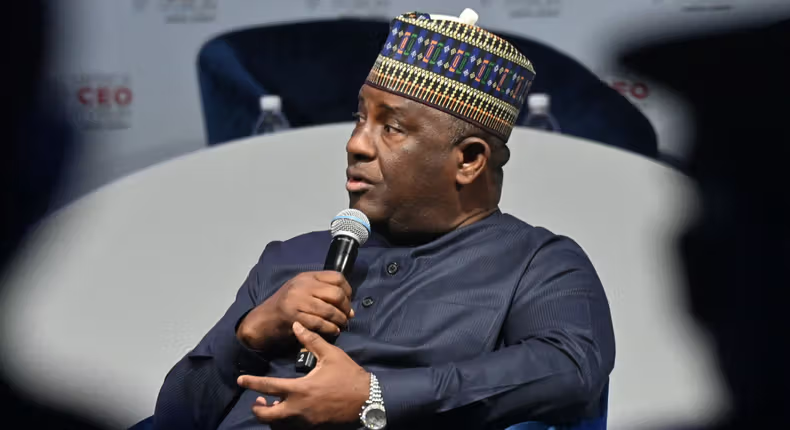
Abdul Samad Rabiu Biography: Age, Net Worth, Family, Career & Legacy
A commanding force in African industry and philanthropy
Abdul Samad Rabiu stands as one of Africa’s most influential industrialists—a business magnate whose strategic vision has reshaped Nigeria’s manufacturing, infrastructure, and agribusiness sectors. As the founder and chairman of BUA Group, he has built a multibillion-dollar conglomerate spanning cement production, sugar refining, food processing, and real estate. His trajectory reflects a blend of inherited business legacy, calculated risk-taking, and a relentless pursuit of industrial expansion.
Beyond his corporate dominance, Rabiu is equally recognized for his philanthropic commitments, channeling significant resources into healthcare, education, and infrastructure development across Africa. His rise to become one of the continent’s richest individuals has positioned him not only as a business leader but as a symbol of modern African entrepreneurship, bridging legacy wealth with contemporary innovation and large-scale social impact.
Quick Facts: Abdul Samad Rabiu Profile Snapshot
| Field | Details |
|---|---|
| Full Name | Abdul Samad Isyaku Rabiu |
| Date of Birth / Age | August 4, 1960 (65 years old) |
| Place of Birth | Kano, Nigeria |
| Nationality | Nigerian |
| Profession | Businessman, Industrialist, Philanthropist |
| Current Status | Founder & Chairman, BUA Group |
| Net Worth | Estimated $11–14 billion (2026) |
| Income Sources | Cement, sugar, food processing, infrastructure, real estate |
| Relationship Status | Previously married |
| Wife | Hannatu Musawa (divorced) |
| Children | Khadija, Isyaku Khalifa, Junaid, Rania |
| Father | Khalifah Isyaku Rabiu (renowned industrialist) |
| Tribe/Ethnicity | Hausa |
| Religion | Islam |
| Major Achievements | Founder of BUA Group, Africa’s top billionaire rankings, national honors (CFR, CON) |
Early life rooted in legacy and enterprise
Born in Kano in northern Nigeria, Abdul Samad Rabiu was raised in a family deeply entrenched in commerce and industrial activity. His father, Khalifah Isyaku Rabiu, was one of Nigeria’s most prominent industrialists during the 1970s and 1980s, establishing a powerful business foundation that would later influence Abdul Samad’s trajectory. Growing up in such an environment exposed him early to large-scale trade, logistics, and economic strategy.
His formative years were shaped by both privilege and challenge. At a time when his father faced legal and political difficulties related to import duties, Rabiu returned from studying Economics in the United States to manage family business operations. This period proved pivotal, forcing him to develop resilience, decision-making skills, and an independent business mindset that would define his future ventures.
Building an empire: The rise of a Nigerian industrial powerhouse
Rabiu officially began his entrepreneurial journey in 1988 with the establishment of BUA International Limited, initially focusing on commodity trading—importing rice, edible oil, flour, and steel. What started as a modest trading enterprise quickly evolved into a vertically integrated industrial conglomerate.
A major turning point came when his company secured a government contract to supply raw materials to Delta Steel Company. This strategic opportunity generated significant capital, enabling expansion into manufacturing and industrial processing. Over the years, BUA diversified aggressively—acquiring oil mills, building flour plants, and entering the sugar industry, where it broke long-standing monopolies.
The company’s expansion into cement manufacturing marked another transformative milestone. Through acquisitions and infrastructure investments, BUA Cement emerged as one of Nigeria’s leading cement producers, competing directly with dominant industry players. Today, BUA Group represents a cornerstone of Nigeria’s industrial economy, with billions in annual revenue and a dominant presence in key sectors.
Achievements that define industrial dominance
Abdul Samad Rabiu’s career is defined by strategic disruption and large-scale industrialization. His ability to identify monopolized sectors and introduce competition has reshaped Nigeria’s economic landscape, particularly in cement and sugar production.
Under his leadership, BUA Foods and BUA Cement have become publicly listed giants with significant market capitalization. The group’s consistent expansion and shareholder value creation have resulted in record dividend payouts, reflecting both operational efficiency and investor confidence.
His achievements extend beyond corporate success. Rabiu has received multiple national honors, including the Commander of the Order of the Federal Republic (CFR) and Commander of the Order of the Niger (CON), recognizing his contributions to Nigeria’s economic development. His leadership roles have also included chairmanship positions in key financial institutions, further cementing his influence across sectors.
Net worth, wealth creation, and business ecosystem
Abdul Samad Rabiu’s net worth has experienced remarkable growth, placing him among Africa’s wealthiest individuals. As of 2026, estimates range between $11 billion and over $14 billion, driven primarily by his holdings in BUA Cement and BUA Foods.
His wealth accumulation is closely tied to the performance of Nigeria’s industrial sector, particularly cement production, where rising demand has fueled exponential gains. A significant surge in BUA Cement shares has been a major driver of his recent wealth increase, marking one of the largest financial gains recorded on the continent in a single year.
Despite his immense wealth, Rabiu is known for maintaining a relatively low-profile lifestyle compared to other billionaires. His investments are largely concentrated in productive sectors rather than luxury consumption, reflecting a disciplined and long-term approach to wealth management.
Personal life, family, and relationships
Abdul Samad Rabiu’s personal life is anchored in family and tradition. He was previously married to Hannatu Musawa, and although the marriage ended in divorce, it produced four children who remain central to his personal and professional life.
His children—Khadija, Isyaku Khalifa, Junaid, and Rania—represent the next generation of the Rabiu legacy. Notably, his son Isyaku Khalifa Rabiu has taken on increasing responsibilities within BUA Group, signaling a potential succession plan and continuity of leadership within the family business empire.
Rabiu belongs to the Hausa ethnic group and practices Islam, both of which play a significant role in shaping his identity, values, and philanthropic priorities.
Philanthropy and continental impact
One of Rabiu’s defining contributions lies in his philanthropic work. Through the BUA Foundation and the Abdul Samad Rabiu Initiative for Africa (ASR Africa), he has committed substantial resources to social development.
His philanthropic initiatives include building large-scale healthcare facilities, supporting educational institutions, and investing in infrastructure projects. A standout commitment is his pledge of $100 million annually toward social development programs across Africa, targeting healthcare, education, and economic empowerment.
This level of structured giving places him among Africa’s most impactful philanthropists, with initiatives designed to create sustainable, long-term change rather than short-term relief.
Current relevance and recent developments
Abdul Samad Rabiu remains highly relevant in today’s economic landscape, particularly as Nigeria’s industrial sector continues to expand. His companies are experiencing sustained growth, with recent developments including record-breaking dividend payouts and increasing market capitalization.
He has also emphasized the role of Nigeria’s growing population in driving demand for infrastructure materials, particularly cement—highlighting future growth opportunities within his core industries.
At the same time, succession planning within BUA Group is becoming more visible, with his son taking on leadership roles, signaling a new phase in the company’s evolution.
Lesser-known insights and defining traits
Despite his immense success, Rabiu maintains a relatively reserved public persona, rarely engaging in social media or public controversies. This contrasts sharply with many high-profile billionaires and reinforces his image as a disciplined and focused industrialist.
Another notable aspect of his journey is his ability to navigate political and economic challenges, particularly during the early years when he managed family business operations under pressure. His resilience during those formative experiences laid the groundwork for his later success.
Influence, legacy, and enduring significance
Abdul Samad Rabiu’s legacy extends far beyond personal wealth. He has played a crucial role in transforming Nigeria’s industrial base, reducing reliance on imports, and fostering domestic production across key sectors.
His influence is evident in the competitive dynamics of industries he has entered—often breaking monopolies and introducing efficiency. At a continental level, his philanthropic initiatives are shaping education and healthcare systems, reinforcing his role as both an economic and social architect.
As Africa continues its industrialization journey, Rabiu’s model of combining large-scale business operations with structured philanthropy offers a blueprint for sustainable development.
Additional insights: A businessman shaping the future
Rabiu’s career reflects a broader narrative about African entrepreneurship—one that blends inherited legacy with modern innovation. His ability to scale operations, diversify investments, and maintain long-term strategic focus distinguishes him within the global business landscape.
His story also highlights the importance of resilience, adaptability, and vision in building enduring enterprises, particularly in emerging markets where volatility and opportunity coexist.
Conclusion: The architect of modern Nigerian industry
Abdul Samad Rabiu is more than a billionaire businessman—he is a transformative figure in Africa’s economic evolution. From his early days managing family businesses under pressure to building one of the continent’s largest industrial conglomerates, his journey is defined by strategic foresight and unwavering determination.
His legacy continues to unfold, not only through corporate expansion but through his commitment to social development and generational leadership. As Nigeria and Africa advance toward greater industrialization, Rabiu’s influence remains deeply embedded in the region’s economic and social fabric.


