


Crime in the Modern Age: Justice, Error, and the Power of Narrative
Introduction: Beyond the Headlines
Crime is often perceived through stark headlines — acts of violence, investigations, arrests, and courtroom verdicts. Yet beneath these surface-level narratives lies a far more complex reality shaped by human fallibility, evolving technology, and the powerful influence of media.
Recent cases illustrate how crime is not just about perpetrators and victims, but also about the systems that investigate it, the public that reacts to it, and the information ecosystems that amplify or distort it. From decades-old cold cases finally solved through DNA and media attention, to wrongful convictions overturned after decades, and even to crimes that never happened but triggered real-world unrest, the modern landscape of crime reveals a deeply interconnected and often troubling picture.
When Justice Waits Decades: The Persistence Behind Cold Cases
In 1982, the body of 16-year-old Roxanne Sharp was discovered near the St. Tammany Parish Fairgrounds in Covington, Louisiana. She had been raped and strangled, and for over four decades, the case remained unsolved.
Investigators initially had little physical evidence, and the trail went cold. For 43 years, her killers evaded justice. But the case did not disappear.
In 2023, detectives revisited the investigation, reinterviewing witnesses and reanalyzing evidence using modern forensic techniques. DNA testing played a pivotal role, breathing new life into old evidence. Two years later, a true-crime podcast titled “Who Killed Roxanne?” generated new leads and witness cooperation, ultimately leading to arrests.
Four men — Billy Williams Jr., Darrell Dean Spell, Perry Wayne Taylor, and Carlos Cooper — were charged with aggravated rape and second-degree murder.
Officials emphasized the significance of persistence. Covington Police Chief Michael Ferrell stated:
“Cold cases don’t close themselves. They close because people show up year after year and refuse to quit.”
District Attorney Collin Sims added:
“This case is a powerful example of what persistence, collaboration, and advancements in investigative technology can accomplish.”
This case underscores how modern forensic science and media engagement can reshape the trajectory of justice — even decades after a crime occurs.
When Justice Fails: The Cost of Wrongful Convictions
While some cases eventually find resolution, others expose critical failures in the justice system.
Peter Sullivan’s story is one of the most striking examples. Arrested in 1986 for the murder of Diane Sindall, he became the primary suspect in a high-profile case. Despite maintaining his innocence, he was convicted and spent 38 years in prison.
His conviction relied heavily on questionable evidence, including disputed confessions and forensic methods later deemed unreliable. Over time, doubts persisted — both within his family and the broader community.
Decades later, advances in DNA analysis revealed a different reality. New testing identified a DNA profile from the crime scene that did not match Sullivan, pointing instead to an unknown attacker. In May 2025, his conviction was quashed.
His brother, David Sullivan, reflected on the devastating impact:
“We can say we’ve got our brother back, but we haven’t. We’ve got what we’ve got back — as an older version of my brother, and the rest of us have lost from 29 to 68.”
Peter Sullivan is believed to be the victim of the longest miscarriage of justice involving a living prisoner in British legal history.
This case highlights the risks of flawed investigations and the long-term consequences of judicial errors — not only for the accused but also for victims whose true perpetrators remain at large.
When Crime Isn’t Real: Misinformation and Manufactured Fear
Perhaps the most unsettling dimension of modern crime is the rise of incidents driven not by actual criminal acts, but by misinformation.
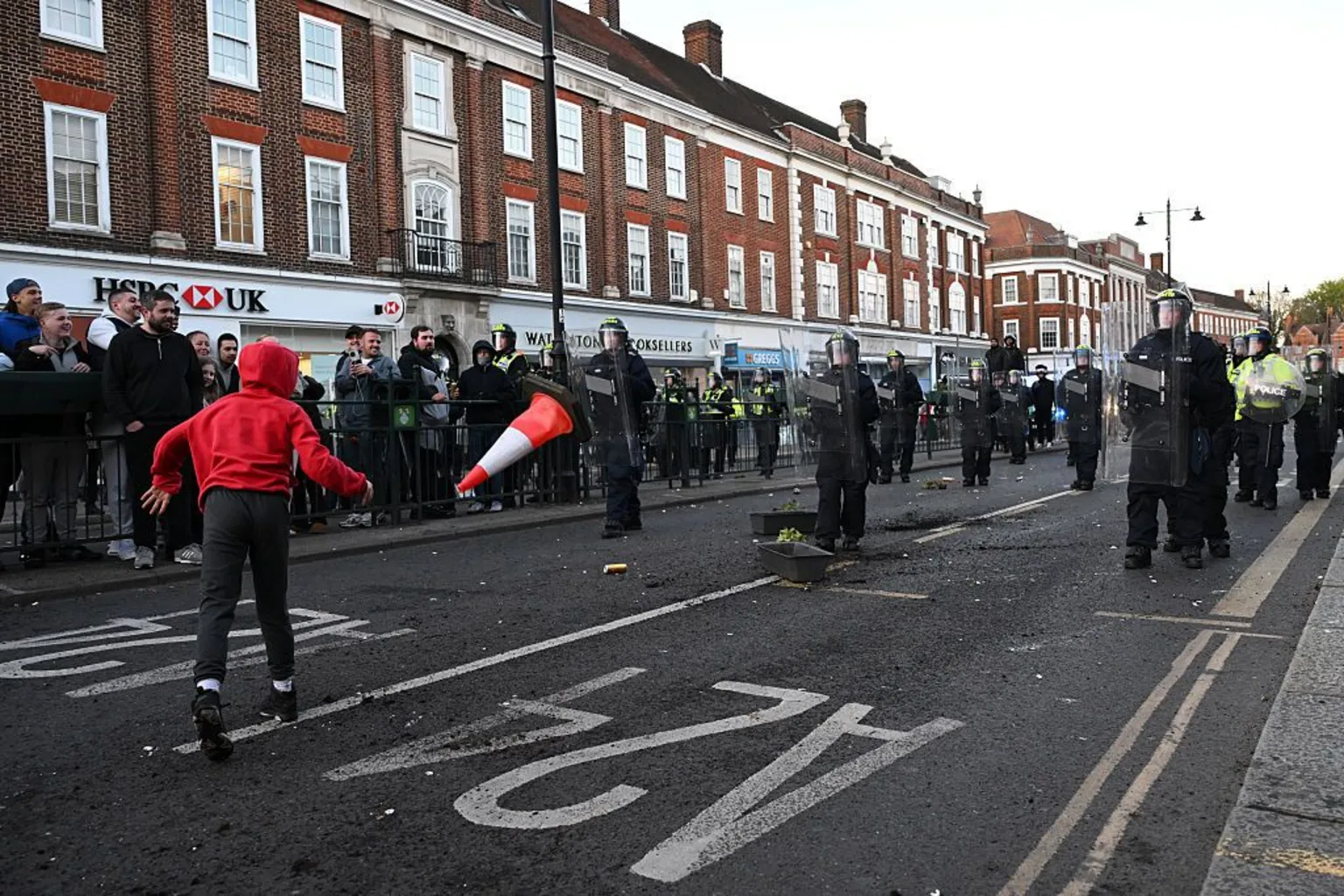
In Epsom, Surrey, an alleged gang rape sparked outrage after police issued an appeal for witnesses. Social media quickly filled the information vacuum with speculation, including false claims that asylum seekers or migrants were responsible.
Protests erupted. Violence followed. People vandalized property and even entered a hotel they mistakenly believed housed migrants.
But after a thorough investigation, police concluded that no rape had occurred. The woman involved had suffered an accidental head injury and made what was described as a “confused report.”
Despite official clarification, misinformation had already spread widely. Influential social media accounts amplified unverified claims, reaching hundreds of thousands of users.
Social psychologist Sander Van Der Linden described this phenomenon as “stochastic terrorism,” where online misinformation increases the likelihood of real-world violence.
The incident illustrates a dangerous dynamic: when information is incomplete, speculation can rapidly escalate into collective outrage — and even physical harm.
The Role of Technology: A Double-Edged Sword
Technology has transformed crime investigation and public awareness in profound ways.
Advancements That Aid Justice
- DNA analysis has become a cornerstone of modern forensics, solving cases once considered unsolvable.
- Digital media, including podcasts, can revive cold cases by engaging the public and uncovering new leads.
- Data sharing and collaboration between agencies have improved investigative efficiency.
Technologies That Complicate Reality
- Social media algorithms often prioritize emotionally charged content, amplifying misinformation.
- Viral posts can shape public perception before facts are established.
- Online platforms enable rapid mobilization of protests, sometimes based on false premises.
The same tools that bring clarity can also create confusion — making the modern crime landscape more complex than ever.
The Human Impact: Victims, Families, and Communities
At the heart of every crime — real or perceived — are human lives deeply affected by its consequences.
- Families of victims endure years, sometimes decades, waiting for justice.
- Wrongfully accused individuals lose entire lifetimes to incarceration.
- Communities can be destabilized by fear, misinformation, and unrest.
In the case of Roxanne Sharp, justice came after 43 years, offering long-awaited closure. For Peter Sullivan, justice came too late to recover lost decades. In Epsom, a community faced unrest over an event that never occurred.
These outcomes demonstrate that crime is not just a legal issue — it is a societal one.
Conclusion: Rethinking Crime in a Complex World
Crime today cannot be understood solely through traditional frameworks of law enforcement and punishment. It exists at the intersection of technology, media, and human behavior.
Three key lessons emerge:
- Persistence matters — Cold cases can be solved with time, technology, and dedication.
- Systems are fallible — Justice systems must continually evolve to prevent wrongful convictions.
- Information shapes reality — Misinformation can be as dangerous as crime itself.
As societies navigate this evolving landscape, the challenge is not only to solve crimes, but also to ensure that truth, fairness, and accountability remain at the center of the pursuit of justice.


