

Eurofighter Typhoon: Europe’s Agile Guardian in a Changing Air Warfare Era
Introduction: A Fighter Built for Dominance—and Adaptation
The Eurofighter Typhoon stands as one of the most sophisticated multirole combat aircraft developed in modern aviation history. Born from a collaborative European vision and shaped by decades of evolving military doctrine, the Typhoon has transitioned from a pure air-superiority fighter into a versatile platform capable of performing complex missions across air, land, and coalition operations.
Today, as geopolitical tensions intensify—from Eastern Europe to the Middle East—the Typhoon’s relevance is being tested not just in theory, but in real-world operations. Its performance, deployments, and strategic role offer a compelling case study of how fourth-generation fighters remain central to modern defense networks.
Origins: A Pan-European Vision
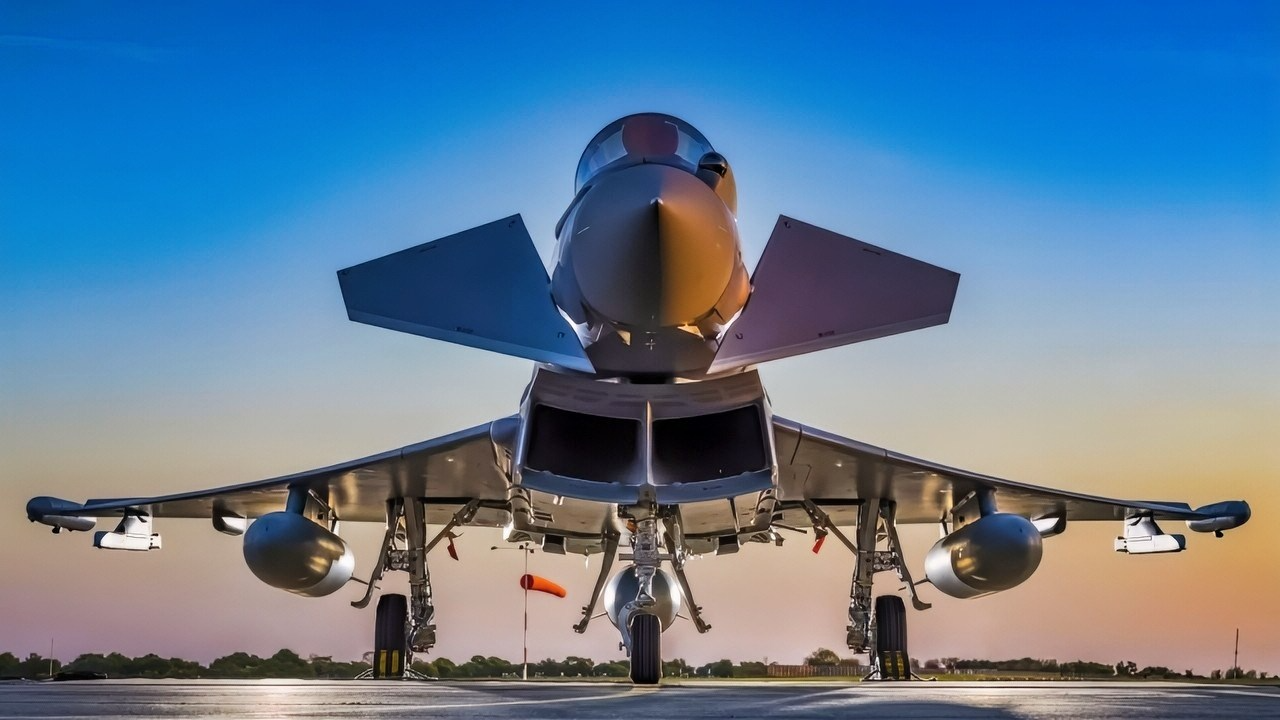
The Eurofighter Typhoon was conceived as a joint venture among several European nations aiming to create a unified, advanced fighter jet. Developed by a consortium including Airbus, BAE Systems, and Leonardo, the aircraft symbolized Europe’s ambition to achieve defense autonomy and technological parity with global powers.
Although initially intended to serve as Europe’s standard fighter platform, the program saw an early divergence when France opted to develop its own Dassault Rafale. Despite this split, the Typhoon went on to be adopted widely and is currently operated by 10 nations, with an 11th—Turkey—expected to join upon delivery.
From Air Superiority to Multirole Powerhouse
Early Combat Debut: Libya 2011
The Typhoon’s first combat experience came during the NATO-led intervention in Libya in 2011. Initially designed for air dominance, the aircraft demonstrated its adaptability by performing both reconnaissance and precision strike missions.
This marked a turning point: the Typhoon was no longer just a defensive interceptor—it was evolving into a fully capable multirole platform.
Expansion in the Middle East
The aircraft’s operational footprint expanded significantly in subsequent years, particularly during the UK’s Operation Shader in Iraq and Syria. There, it became a reliable strike asset against ISIS, deploying precision-guided munitions with increasing sophistication.
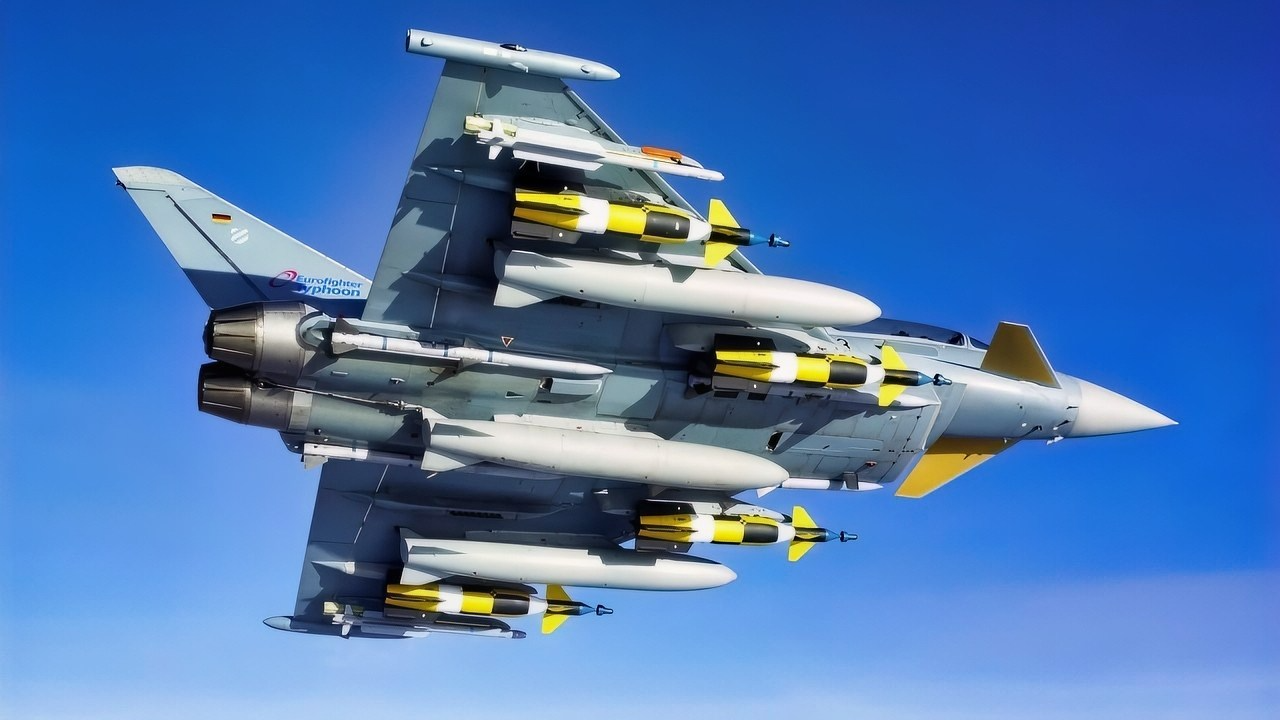
Upgrades enabled the integration of advanced weapons such as:
- Storm Shadow cruise missiles
- Brimstone precision strike weapons
- Paveway IV guided bombs
These developments significantly enhanced its air-to-ground effectiveness.
Real Combat Performance: Limited but Telling
Despite its widespread use, the Typhoon has seen relatively limited high-intensity combat against peer adversaries. However, its engagements still provide valuable insights.
Air-to-Air Engagements
In November 2025, an RAF official confirmed that Typhoon FGR4 aircraft achieved four successful air-to-air kills over an eighteen-month period in the Middle East.
These engagements primarily involved intercepting Iranian-origin Shahed-136 drones, which were used in mass attacks against Israel. While such drones are relatively slow and lack advanced countermeasures, the interceptions validated the Typhoon’s operational readiness in real-world air defense scenarios.
In 2024 and 2025, British Typhoons again engaged Iranian drones in regional airspace, reinforcing their role in counter-drone operations.
Limitations in Combat Exposure
However, analysts caution that the Typhoon has yet to face advanced air defenses or peer-level fighter opposition, leaving some aspects of its capabilities untested in high-intensity warfare.
NATO’s Frontline Shield: Strategic Deployments
Beyond direct combat, the Eurofighter Typhoon plays a critical role in NATO’s defensive posture—particularly in Eastern Europe.
Air Policing Missions
Since Russia’s annexation of Crimea in 2014, NATO has intensified its air policing efforts. Typhoons have been central to this mission:
- March 2024: Six RAF Typhoons deployed to Romania
- March 2025: British jets stationed in Poland’s Malbork Air Base
- December 2025 – 2026: German Typhoons joined under Operation Eastern Sentry
These deployments provide 24/7 quick-reaction alert coverage, safeguarding NATO airspace and deterring potential incursions.
Case Study: Romania Border Incident (2026)
A recent incident underscores the Typhoon’s deterrence role. In April 2026, two RAF Typhoons were scrambled in Romania after reports of Russian drone activity near NATO airspace.
- The aircraft established radar contact with drones near the Ukrainian border
- Pilots were authorized to engage
- Ultimately, no engagement occurred as drones did not enter Romanian airspace
The mission remained focused on “surveillance, deterrence, and readiness to respond if required.”
This highlights a key reality: the Typhoon’s value lies not only in combat, but in preventing escalation.
Technical Excellence: What Makes the Typhoon Stand Out
At its core, the Eurofighter Typhoon is engineered for performance.
Speed and Agility
- Twin Eurojet EJ200 engines
- Maximum speed of Mach 2
- Exceptional thrust-to-weight ratio
These characteristics make it one of the most agile fighters in service today.
Advanced Avionics
The Typhoon features a highly sophisticated avionics suite, including:
- ECR90 radar system
- PIRATE infrared search-and-track (IRST) sensor
- Advanced electronic countermeasures (ECM)
- Helmet-mounted display and glass cockpit
Modern upgrades have introduced AESA radar capabilities and enhanced computing systems, enabling “swing-role” functionality—allowing pilots to switch between mission types in real time.
Beyond Europe: A Global Security Instrument
Despite its name, the Eurofighter Typhoon is not confined to European skies.
Middle East Deployments
In January 2026, RAF Typhoons deployed to Qatar as part of a joint UK–Qatar squadron amid rising tensions involving Iran. While no combat occurred, the deployment demonstrated the aircraft’s role in:
- Coalition reassurance
- Strategic deterrence
- Regional stability
Strategic Assessment: Strengths and Gaps
Strengths
- Proven multirole flexibility
- High agility and performance
- Strong integration within NATO operations
- Effective in counter-drone and precision strike missions
Limitations
- Limited exposure to peer-level air combat
- No direct confrontation with advanced air defense systems
- Increasing competition from fifth-generation stealth fighters
Future Outlook: Relevance in the Age of Stealth
As sixth-generation fighter programs emerge and stealth technology becomes more dominant, questions arise about the Typhoon’s long-term role.
Yet, its continued upgrades, integration into NATO infrastructure, and operational reliability suggest that it will remain a critical component of Western airpower for years to come.
Rather than being replaced outright, the Typhoon is increasingly positioned as a complementary asset—working alongside stealth platforms like the F-35 in integrated combat environments.
Conclusion: A Fighter Defined by Adaptation
The Eurofighter Typhoon is not the most combat-tested aircraft, nor is it the stealthiest. But it is one of the most adaptable.
From Libya to the Middle East, from NATO air policing missions to real-time drone interceptions, the Typhoon has steadily proven its value—not just as a fighter jet, but as a strategic instrument of deterrence and cooperation.
In an era where air warfare is rapidly evolving, the Typhoon’s story is less about dominance—and more about resilience, versatility, and staying relevant in a shifting global landscape.


