

Samsung and IKEA Join Forces to Simplify the Smart Home Experience
A New Chapter for Connected Living
Samsung has taken a significant step toward simplifying smart home technology by announcing seamless integration of IKEA’s smart home devices into its SmartThings platform. The move marks a notable shift in how consumers can build and manage connected homes—removing technical barriers that have long complicated adoption.
For years, smart home ecosystems have promised convenience but often delivered complexity. Now, with this latest development, Samsung is attempting to turn that promise into a more accessible reality by allowing IKEA devices to connect directly to a SmartThings hub—no additional hardware required.
From Complexity to Simplicity: What Has Changed
Previously, users who wanted to integrate IKEA smart home products into SmartThings needed to operate two separate hubs: one from Samsung and one from IKEA. This dual-hub setup added cost, friction, and confusion, particularly for first-time users.
The latest update eliminates that requirement entirely. IKEA devices can now connect directly to Samsung’s SmartThings hub, streamlining setup and reducing the technical overhead.
This seemingly small change has broad implications. By removing the need for additional infrastructure, Samsung lowers the entry barrier for consumers exploring smart home technology for the first time.
A Growing Ecosystem of 25 Smart Devices
The integration supports a wide range of IKEA’s latest smart home products—25 devices in total. These include:
- Smart bulbs and plugs
- Temperature and humidity sensors
- Air quality sensors
- Motion, door, and water leak sensors
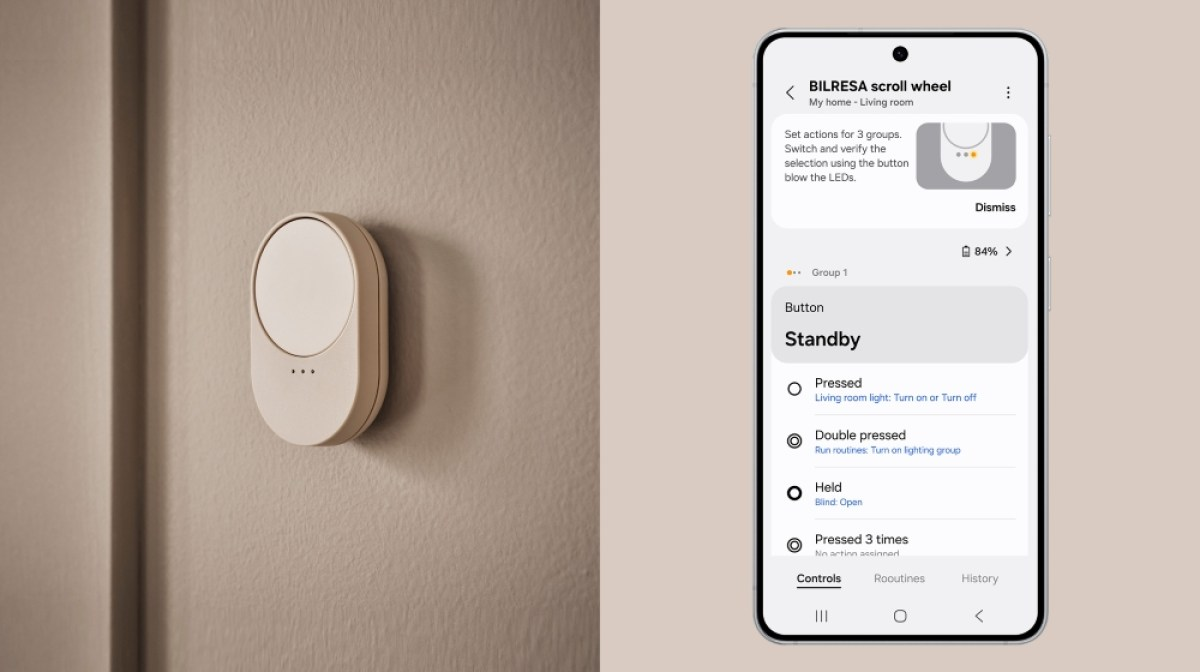
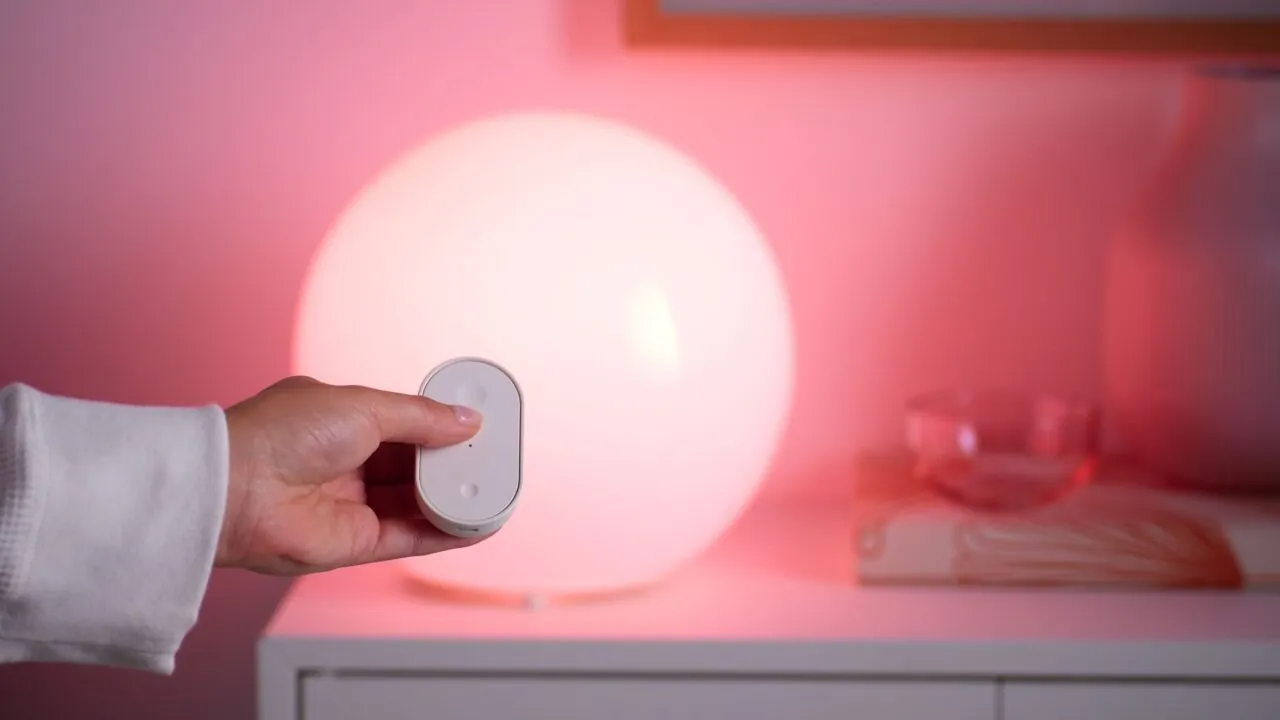
- A scroll wheel remote control
These devices cover most core smart home use cases, from lighting and energy management to security and environmental monitoring.
One standout addition is IKEA’s scroll wheel remote. Samsung highlights its intuitive design, allowing users to adjust lighting brightness or color temperature simply by rotating the wheel. The same mechanism can also control smart blinds, offering precise, tactile control over home environments.
Real-World Automation: Practical Use Cases
The integration isn’t just about connectivity—it’s about automation.
For example, IKEA’s air quality sensor can monitor temperature, humidity, carbon dioxide levels, and light intensity. Through SmartThings, users can create automated routines based on this data.
A practical scenario:
If humidity levels rise beyond a certain threshold, a Samsung air conditioner can automatically switch to dehumidification mode. This type of cross-brand automation demonstrates the potential of a unified ecosystem.
Similarly, users can control multiple devices—such as TVs, air conditioners, and even washing machines—through IKEA inputs and SmartThings routines, creating a more cohesive smart home experience.
Built on Matter: The Role of Industry Standards
This integration is made possible by the Matter protocol, a relatively new industry standard designed to unify smart home devices across brands.
Matter operates over Thread mesh networks, enabling devices from different manufacturers to communicate more reliably and securely. In theory, Matter should already provide plug-and-play compatibility—but real-world implementation has been uneven.
IKEA users, in particular, have faced challenges connecting devices across ecosystems. Samsung’s announcement acknowledges this gap, noting that the company conducted “multiple rounds of validation to enhance connectivity stability” and implemented a dedicated user experience within the SmartThings app.
In other words, while Matter provides the foundation, Samsung is adding an extra layer of optimization to ensure smoother performance.
Industry Context: A Broader Push Toward Interoperability
This move is part of a larger trend in the tech industry. In recent years, major players have begun prioritizing interoperability over closed ecosystems.
Samsung and Google previously announced mutual support for their smart home platforms, and Samsung has even integrated Siri voice commands into SmartThings. These developments reflect a shift toward collaborative ecosystems where devices work together regardless of brand.
The IKEA partnership reinforces this strategy, positioning SmartThings as a central hub capable of unifying diverse smart home products.
Affordability Meets Accessibility
IKEA’s role in this partnership is equally significant. Known for its cost-effective products, the company has been pushing aggressively into the smart home market with devices priced affordably—many under $30.
By combining IKEA’s affordability with Samsung’s robust platform, the partnership targets a broader demographic, including users who may have previously been priced out of smart home adoption.
Jaeyeon Jung, Executive Vice President of SmartThings at Samsung Electronics, emphasized this accessibility:
“By connecting IKEA devices to SmartThings, even first-time smart home users can enjoy a familiar and easy connectivity experience without financial burden. SmartThings will continue to expand its ecosystem through partnerships, enabling more consumers to enjoy seamless and convenient smart home experience within the SmartThings ecosystem regardless of brand or communication protocol.”
Addressing Past Frustrations
The integration also directly addresses a key pain point: reliability.
Earlier iterations of IKEA’s Matter-enabled devices were criticized for connectivity issues across different platforms. Users often encountered difficulties when attempting to integrate devices into their preferred ecosystems.
Samsung’s enhanced integration aims to resolve these issues by offering a more stable, plug-and-play experience. While Matter was designed to eliminate such problems, the reality has proven more complex—making Samsung’s additional optimization a critical step.
What This Means for the Future of Smart Homes
Samsung’s announcement signals a broader evolution in the smart home landscape. Instead of competing ecosystems, the industry is gradually moving toward unified platforms that prioritize user experience over brand exclusivity.
Key implications include:
- Lower barriers to entry: Simplified setup encourages adoption among non-technical users
- Greater device compatibility: Cross-brand automation becomes more practical
- Improved user experience: Reduced friction in installation and daily use
- Expanded ecosystems: Partnerships drive innovation and product diversity
If successful, this model could reshape how consumers interact with smart home technology—making it less about managing devices and more about seamless living.
Conclusion: Toward a Truly Connected Home
Samsung’s integration of IKEA smart home devices into SmartThings represents more than a technical update—it reflects a strategic shift toward simplicity, accessibility, and interoperability.
By eliminating the need for multiple hubs, supporting a wide range of affordable devices, and leveraging the Matter standard, Samsung is positioning SmartThings as a central player in the next phase of smart home evolution.
While challenges remain—particularly around consistent performance across ecosystems—the direction is clear: the future of smart homes lies in seamless integration, not fragmentation.


