

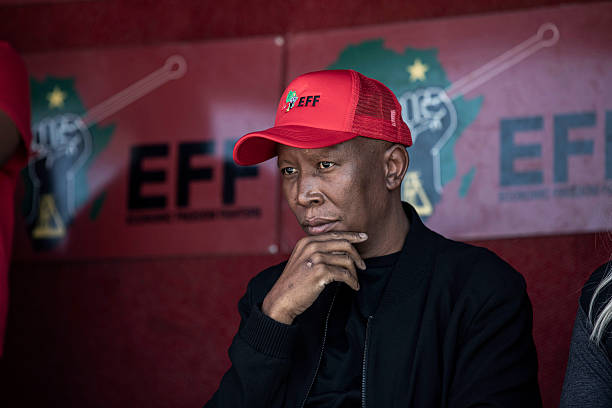
Political Firestorm: Julius Malema, Joel Cesar, and the EFF Under Scrutiny
A Nation Watches as Law, Politics, and Power Collide
South Africa’s political and legal landscape has been thrust into sharp focus following the sentencing of Economic Freedom Fighters (EFF) leader Julius Malema and the subsequent controversy involving state prosecutor Joel Cesar. What began as a high-profile firearm case has rapidly evolved into a broader debate about the rule of law, political rhetoric, and the safety of judicial officials.
At the centre of this unfolding saga lies a complex intersection of legal accountability, political loyalty, and institutional integrity—raising pressing questions about leadership conduct and the boundaries of political expression.
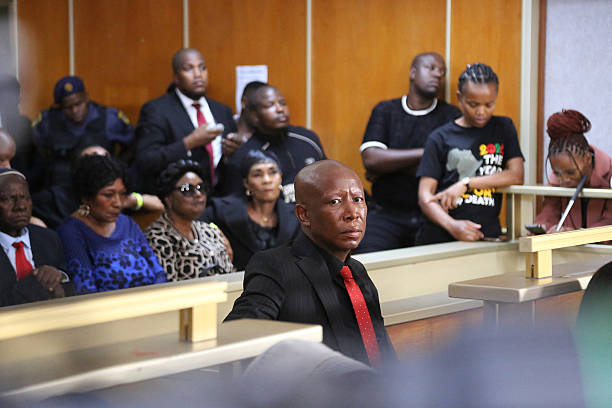
The Case That Sparked It All
The origins of the controversy trace back to July 2018, when Julius Malema discharged a firearm during the EFF’s fifth anniversary celebrations. The incident led to charges under South Africa’s Firearms Control Act, culminating in a court ruling in October last year that found Malema guilty on five counts.
These included:
- Unlawful possession of a firearm
- Unlawful possession of ammunition
- Discharge of a firearm in a built-up area
- Failure to take reasonable precautions
- Reckless endangerment
During sentencing proceedings, state prosecutor Joel Cesar argued that Malema’s actions demonstrated premeditation and a lack of remorse. The defence, however, rejected these assertions, maintaining that the evidence had been misinterpreted.
Ultimately, Magistrate Twanet Olivier delivered a significant ruling:
- Five years’ imprisonment for firearm possession
- Two years for ammunition possession
- R20,000 fines for each of the remaining charges
Although Malema was granted leave to appeal the effective five-year sentence, his conviction remains intact.
Escalation: From Courtroom to Public Arena
The case took a dramatic turn after the sentencing, when remarks attributed to Malema and posts allegedly linked to the EFF ignited widespread concern.
A social media post featuring the hashtag #HandsOfMalema reportedly quoted Malema as saying:
“The only thing we need to do is to make sure that this prosecutor, who is arrogant, and suffers from short-man syndrome, is taught a lesson.”
The post was later removed, but its impact had already reverberated across legal and political circles.
In addition, Malema publicly criticised both the magistrate and prosecutor, accusing them of bias and incompetence. He described Magistrate Twanet Olivier as “the most incompetent magistrate” and “a racist of note,” while targeting Joel Cesar with personal attacks and calls for disciplinary action.
NPA Responds: A Firm Warning on Rule of Law
The National Prosecuting Authority (NPA) responded swiftly and unequivocally.
Spokesperson Kaizer Kganyago stated that the organisation had “noted with concern” the circulation of the threatening post and strongly condemned any form of intimidation directed at prosecutors.
He emphasized:
“These officials serve the public by representing the state and are constitutionally mandated to execute their duties without fear, favour, or prejudice.”
The NPA highlighted the seriousness of such threats, particularly in the Eastern Cape, where three prosecutors have been killed in the past two years—a stark reminder of the risks faced by those in the justice system.
Kganyago further warned that:
- Threats against prosecutors must be treated with utmost seriousness
- Such conduct undermines the rule of law
- Law enforcement agencies should investigate all credible risks
Justice Department Steps In
The controversy has also prompted action from the Department of Justice and Constitutional Development.
In response to Malema’s post-sentencing remarks and perceived threats, the department is considering new measures to protect judicial officials. These include restricting the broadcasting of court proceedings, particularly by:
- Prohibiting the display of faces of judges, magistrates, and prosecutors during live coverage
- Encouraging stricter conditions for media access to courtrooms
Officials argue that such steps are necessary to safeguard the dignity, independence, and safety of those tasked with upholding justice.
EFF Stands Firm: “Business as Usual”
Despite mounting criticism, the EFF has maintained a united front.
Party leaders have dismissed concerns that Malema’s sentence could destabilise the organisation. Gauteng chairperson Nkululeko Dunga described the situation as politically motivated and insisted that it was “business as usual” within the party.
The EFF remains focused on:
- Upcoming local government elections
- Continued mobilisation around economic reform
- Legal efforts to overturn both the conviction and sentence
This resilience underscores the party’s strategy of balancing legal challenges with political momentum.
A Broader Political Debate
The Malema-Cesar controversy has quickly transcended the courtroom, becoming a focal point in South Africa’s wider political discourse.
Competing Narratives
- ANC: Emphasising stability and governance
- Democratic Alliance: Highlighting the importance of rule of law
- EFF: Framing the case as politically charged
The situation has also reignited discussions about race, fairness, and judicial consistency. Critics have pointed to the acquittal of Malema’s co-accused, Adriaan Snyman, as a potential flashpoint for further political messaging.
Public Perception and Media Dynamics
A Sunday Times editorial observed that the sentencing could paradoxically strengthen Malema’s political support.
By portraying himself as a victim of systemic bias, Malema may galvanise his base and reshape public perception of the case. This dynamic illustrates how legal outcomes can have unintended political consequences.
Meanwhile, the Department of Justice’s proposed media restrictions signal a shift in how court proceedings may be covered in the future—potentially limiting transparency while enhancing security.
What Comes Next?
The legal battle is far from over.
Malema has already initiated the appeal process, with proceedings expected to unfold in the Makhanda High Court. Key questions remain:
- Will the sentence be upheld, reduced, or overturned?
- Can the conviction itself be successfully challenged?
- How will the case influence voter sentiment ahead of elections?
At the same time, investigations into alleged threats against Joel Cesar could lead to further legal consequences, adding another layer of complexity to the situation.
Conclusion: A Defining Moment for Accountability
The intersection of Julius Malema, Joel Cesar, and the EFF has created a defining moment for South Africa’s democracy.
Beyond the legal technicalities, the case raises fundamental issues:
- The responsibility of political leaders to uphold the law
- The protection of judicial officials in a volatile environment
- The balance between free expression and intimidation
As the country watches the next phase unfold, one reality is clear: the outcome will not only shape Malema’s political future but also set important precedents for accountability, governance, and the rule of law in South Africa.


