

NYT Connections: The Daily Word Game Turning Patterns Into Play
The rise of daily digital puzzles has reshaped how millions engage with language, logic, and routine. Among the most compelling entries in this space is NYT Connections, a deceptively simple yet cognitively demanding word game that has rapidly built a loyal global following. On April 22, 2026, puzzle #1046 once again demonstrated why this game continues to captivate players—offering a layered challenge that blends vocabulary, pattern recognition, and lateral thinking into a single daily ritual.
This article takes a closer look at the game itself, its cultural momentum, and a detailed breakdown of the April 22 puzzle, including its structure, categories, and what made it both engaging and tricky.
What Is NYT Connections?
NYT Connections is a daily word puzzle developed by The New York Times Games and released in June 2023. It quickly became one of the platform’s most-played games, second only to Wordle.
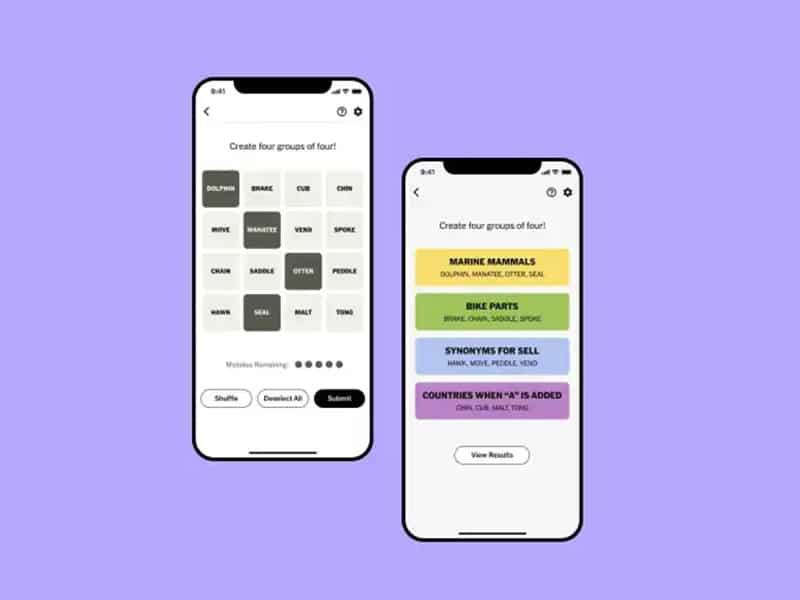
At its core, the game challenges players to organize 16 words into four groups of four, each group connected by a shared theme. These themes vary widely—from straightforward categories like objects or actions to more abstract connections involving wordplay, homophones, or cultural references.
Each puzzle follows a color-coded difficulty system:
- Yellow – Easiest
- Green – Moderate
- Blue – Challenging
- Purple – Most difficult
Players must solve all four groups with no more than four mistakes, making strategic thinking essential.
Unlike traditional crossword puzzles, Connections emphasizes relationship discovery rather than definition recall, making it a unique hybrid of linguistics and logic.
Why NYT Connections Has Become a Daily Habit
The appeal of NYT Connections lies in its balance of accessibility and depth. The rules are simple, but the execution demands careful thought. Each puzzle resets at midnight, encouraging a daily rhythm similar to Wordle, but with added complexity.
Several factors contribute to its popularity:
- Short playtime with high engagement
- Social sharing of results via color-coded grids
- Increasing difficulty across categories
- Varied themes that reward both logic and creativity
The game’s editor, Wyna Liu, has played a key role in shaping its tone—favoring clever misdirection and layered meaning.
April 22, 2026 Puzzle (#1046): A Balanced Challenge
Puzzle #1046 presented a mix of intuitive groupings and more abstract linguistic twists. The 16-word grid was:
Truck, Polish, Nice, Slug, Deck, Game, Wheel, Herb, Clay, Sock, Reading, Artist, Sticks, Glaze, Punch, Kiln
At first glance, several words appear loosely related, but the puzzle’s design intentionally introduces overlapping meanings to mislead players.
Breaking Down the Categories
🟨 Yellow Group — Pottery Equipment
CLAY, WHEEL, GLAZE, KILN
This was the most accessible category. The words clearly relate to tools and materials used in pottery-making, making it a natural starting point for most players.
🟩 Green Group — Wallop (Hit Hard)
DECK, SOCK, PUNCH, SLUG
This group required recognizing informal synonyms for striking or hitting. The connection is not literal but linguistic, relying on slang usage.
🟦 Blue Group — Pronunciation Twist
HERB, READING, NICE, POLISH
This category introduced a more nuanced challenge. These words change pronunciation when used as proper nouns—for example, “Nice” as the French city or “Polish” as a nationality versus the verb.
🟪 Purple Group — “Pick-up” Phrases
GAME, STICKS, ARTIST, TRUCK
The most difficult group relied on idiomatic expressions:
- pick-up game
- pick-up sticks
- pick-up artist
- pick-up truck
This required contextual awareness rather than direct word similarity.
What Made Puzzle #1046 Tricky?
This particular puzzle stood out for its strategic misdirection:
- Words like “Wheel” could fit both vehicles and pottery
- “Polish” might suggest cleaning rather than pronunciation
- Multiple categories relied on non-literal interpretation
These overlaps forced players to rethink initial assumptions, a hallmark of well-designed Connections puzzles.
Many solvers reported moderate difficulty, typically solving the puzzle in four to six attempts.
Strategy Insights: How Players Approach the Game
Experienced players often follow a structured approach:
1. Start with the obvious cluster
Identifying a clear category (like pottery tools) reduces complexity immediately.
2. Look for synonyms
Groups like “wallop” depend on recognizing alternative meanings of words.
3. Watch for red herrings
Some words are intentionally ambiguous and fit multiple themes.
4. Consider context shifts
Pronunciation and idiomatic usage frequently appear in harder categories.
5. Use elimination
As groups are solved, remaining words become easier to categorize.
This layered approach transforms the puzzle from guesswork into a logical process.
Cultural Impact: More Than Just a Puzzle
NYT Connections has evolved into a shared social experience:
- Players post daily results online
- Communities discuss tricky categories
- Competitive streaks and solve times are tracked
The game’s design encourages discussion, especially around ambiguous categories like pronunciation or idioms.
Its success also reflects a broader trend: digital puzzles are no longer solitary activities—they are community-driven experiences.
The Role of Language and Cognitive Engagement
Connections stands out because it taps into multiple cognitive domains:
- Semantic reasoning (meaning of words)
- Phonetics (pronunciation differences)
- Pattern recognition
- Cultural literacy
This multidimensional challenge explains why it appeals to a wide audience—from casual players to language enthusiasts.
Looking Ahead: The Future of NYT Connections
The game continues to evolve without altering its core structure. Variations such as themed editions and sports-based puzzles have already expanded its reach.
Future developments may include:
- More interactive hint systems
- Expanded themed puzzles
- Enhanced performance tracking
- Greater integration with social features
Despite these possibilities, its core appeal remains unchanged: finding hidden connections in plain sight.
Conclusion: A Daily Exercise in Thinking Differently
NYT Connections is more than a word game—it’s a structured exercise in perspective. Puzzle #1046 demonstrated how a simple grid of words can unfold into a multi-layered challenge involving craft, language, and culture.
Whether you solved it quickly or struggled with the final group, the experience reinforces a key idea:
language is not just about meaning—it’s about relationships.
And that is precisely what keeps players returning each day.


