NYT Connections Hints April 22 2026: Full Guide to Puzzle #1046
A Reader-Focused Practical Guide to Today’s Puzzle
The daily Connections puzzle from The New York Times continues to build a global following, blending vocabulary, logic, and lateral thinking into a deceptively simple challenge. On Wednesday, April 22, 2026, puzzle #1046 offered a moderately easy experience—rated 2.3 out of 5 in difficulty—yet still managed to trip up players with subtle wordplay and misleading overlaps.
This guide walks through the hints, categories, answers, and solving strategy, giving you a clear understanding of how today’s puzzle works—and how to improve your performance in future games.
What Is NYT Connections and Why It Matters
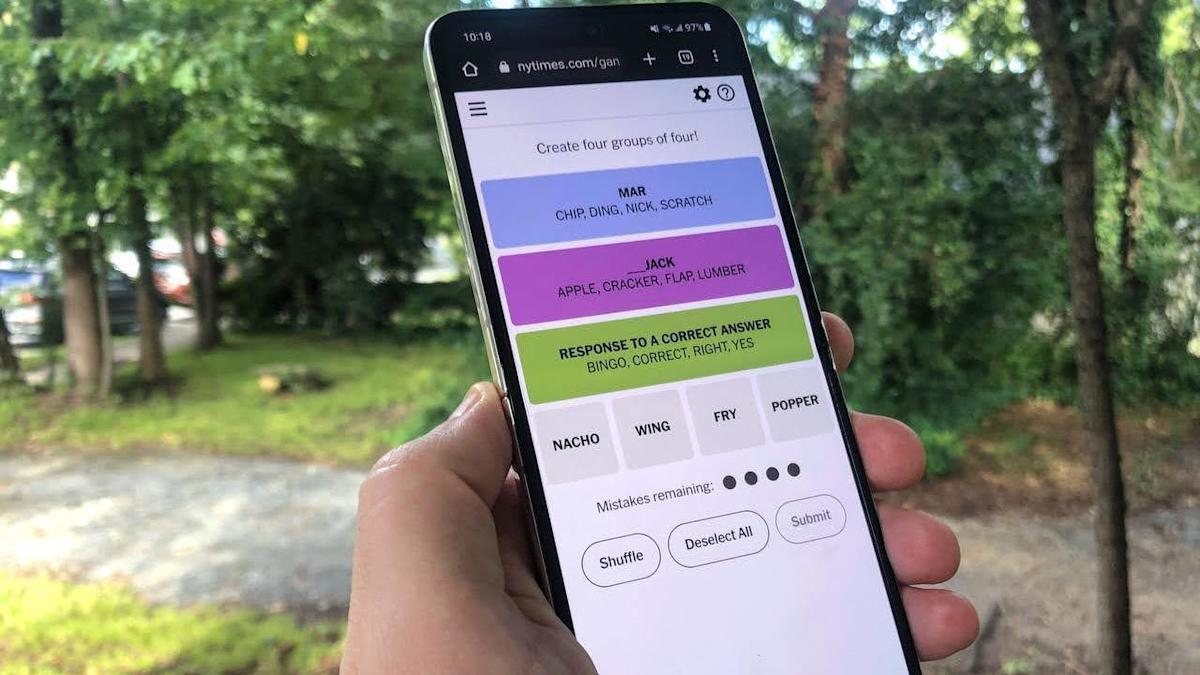
At its core, Connections is about pattern recognition. Each day, players face a 4×4 grid of 16 words, with the goal of grouping them into four sets of four based on a shared theme.
What makes the game compelling is its structure:
- Only one correct solution exists
- You can make up to four mistakes
- Categories vary from straightforward (yellow) to abstract and tricky (purple)
- The puzzle resets daily at midnight, creating a shared global experience
This format has helped the game become a social media staple, with players sharing results and strategies, similar to Wordle.
How Today’s Puzzle Was Structured
Puzzle #1046 followed the standard four-tier difficulty system:
- 🟨 Yellow – easiest
- 🟩 Green – moderate
- 🟦 Blue – challenging
- 🟪 Purple – most difficult
The design intentionally included overlapping meanings, where words could plausibly fit into multiple groups—forcing players to validate every assumption before submitting.
Hints for NYT Connections April 22, 2026
Before revealing the full solution, the puzzle offered structured hints to guide players without giving everything away:
- 🟨 Yellow: How to make ceramics
- 🟩 Green: To strike
- 🟦 Blue: Many ways to speak the word
- 🟪 Purple: Phrase begins with “Fetch” / Pick-up ___
Additional clue words surfaced in hint systems included:
- Yellow example: WHEEL
- Green example: SOCK
- Blue example: POLISH
- Purple example: STICKS
These hints were carefully chosen to nudge players toward the correct grouping without fully revealing the pattern.
Today’s Categories Explained
Once hints were expanded, the actual categories became clearer:
- 🟨 Pottery Equipment
- 🟩 Wallop (to hit or strike)
- 🟦 Words Pronounced Different Ways as Proper Nouns
- 🟪 Pick-Up ___ (phrase completion)
Each category demonstrates a different type of thinking:
- Concrete objects (Yellow)
- Action verbs (Green)
- Phonetic ambiguity (Blue)
- Phrase construction (Purple)
NYT Connections Answers April 22 2026
If you reached the solution—or want to confirm it—here are the correct groupings for Puzzle #1046:
🟨 Pottery Equipment
🟩 Wallop (To Strike)
🟦 Words Pronounced Different Ways as Proper Nouns
🟪 Pick-Up ___
Why This Puzzle Tricked Players
Despite its moderate rating, today’s puzzle introduced several cognitive traps:
1. Words with Dual Meanings
Words like READING and POLISH can function as both common words and proper nouns, making them ideal for misdirection.
2. Overlapping Categories
“SOCK,” “SLUG,” and “PUNCH” clearly signal hitting—but players might initially mix them with unrelated physical actions.
3. Hidden Phrase Logic
The purple category required recognizing “Pick-up ___” phrases, which is less obvious than simple grouping.
4. Red Herrings
Some words appeared to fit multiple categories, a deliberate design feature of the game.
Step-by-Step Strategy to Solve Similar Puzzles
Understanding the process behind solving the puzzle is more valuable than memorizing answers.
1. Start With Obvious Groups
Look for clear thematic clusters (e.g., pottery terms). These are typically the yellow group.
2. Identify Strong Verb Sets
Action words often form the green group, as seen with “DECK,” “PUNCH,” “SLUG,” and “SOCK.”
3. Watch for Wordplay
The blue category frequently relies on pronunciation, spelling, or meaning shifts.
4. Leave the Hardest for Last
Purple groups often depend on phrases, idioms, or abstract patterns—solve them by elimination if needed.
Cultural Impact of NYT Connections
Connections is more than just a puzzle—it reflects a broader trend in digital entertainment:
- Daily ritual behavior, similar to Wordle
- Social sharing culture, where players compare results
- Cognitive training, improving pattern recognition and vocabulary
Its success also highlights the growing influence of interactive word games in modern media ecosystems.
What Today’s Puzzle Reveals About Game Design
Puzzle #1046 demonstrates several core design principles:
- Layered difficulty ensures accessibility and challenge
- Word ambiguity drives engagement
- Limited mistakes increase tension
- Shared daily release builds community participation
This balance is what keeps players returning each day.
Conclusion: A Balanced Challenge With Smart Wordplay
The NYT Connections hints for April 22, 2026 delivered a well-structured puzzle that leaned on clarity in early groups and complexity in later ones. While the yellow and green categories were relatively accessible, the blue and purple groups required more deliberate thinking and pattern recognition.
For regular players, today’s puzzle reinforced a key lesson:
Don’t trust first impressions—validate every connection.
As the puzzle resets daily, each new challenge offers another opportunity to refine strategy and sharpen cognitive skills.