


Nicolas Cage National Treasure: Why Benjamin Gates Still Defines a Franchise
The Unlikely Hero Who Made History Fun Again
When Nicolas Cage stepped into the role of Benjamin Franklin Gates in National Treasure, few could have predicted the cultural footprint the film would leave behind. On paper, it was a high-concept Disney adventure—part heist, part historical puzzle. In execution, it became something more enduring: a defining entry in early-2000s blockbuster cinema and one of Cage’s most recognizable performances.
At its core, National Treasure is built on a deceptively simple premise: a historian discovers that a map to a legendary treasure is hidden on the back of the United States Declaration of Independence. What follows is a fast-moving, clue-driven adventure that merges American history, conspiracy theory, and action spectacle into a singular cinematic experience.
But the film’s longevity—and its transformation into a franchise—owes less to its premise and more to the man at its center.
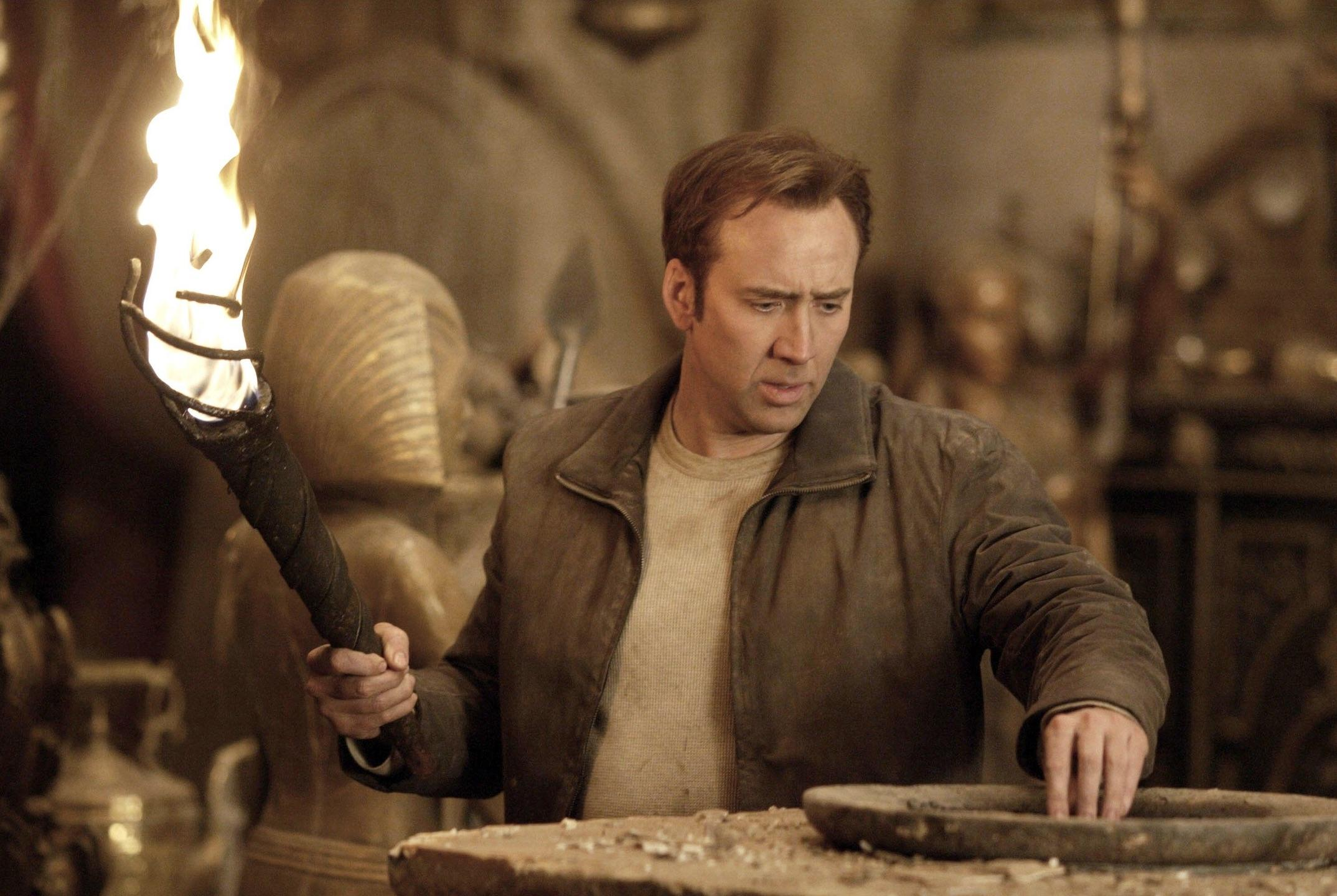
A Franchise Built on History, Myth, and Momentum
The National Treasure franchise, created by Jim Kouf, Oren Aviv, and Charles Segars, blends historical fiction with action-adventure storytelling. It currently spans two theatrical films, a television series, and extended media, all orbiting the Gates family—generational treasure hunters tasked with uncovering and preserving lost artifacts tied to American history.
The original film, released in November 2004, was a commercial success, earning approximately $347 million worldwide against a $100 million budget. Despite mixed critical reception, audiences responded strongly, establishing the film as a rewatchable favorite.
The sequel, National Treasure: Book of Secrets, expanded the scale of the narrative. This time, Benjamin Gates pursues clues linked to the assassination of Abraham Lincoln while attempting to clear his family’s name—taking the story across international landmarks and into deeper historical intrigue.
Together, the films solidified the franchise as a reliable blend of spectacle and accessible history, even as critics questioned its plausibility.
Benjamin Gates: The Character That Anchors Everything
Benjamin Franklin Gates is not a conventional action hero. He is a historian, a cryptographer, and a descendant of a long line of treasure hunters. His motivations are rooted less in personal gain and more in legacy—proving his family’s credibility and preserving historical artifacts.
That distinction matters. It reframes the narrative from a simple treasure hunt into a mission tied to identity, reputation, and cultural heritage.
Gates is also defined by a willingness to cross ethical boundaries in pursuit of a larger good. His most iconic decision—stealing the Declaration of Independence to protect it from criminals—remains one of the most recognizable moments in modern adventure cinema.
The line “I’m gonna steal the Declaration of Independence” became instantly memorable, evolving into a cultural reference point and a long-standing meme associated with Cage’s career.
The Supporting Cast and Narrative Chemistry
While Cage’s performance drives the narrative, the supporting cast provides structure and balance:
- Diane Kruger as Abigail Chase, an archivist who transitions from skeptic to partner
- Justin Bartha as Riley Poole, the tech-savvy comic relief
- Sean Bean as Ian Howe, the antagonist turned rival treasure hunter
- Jon Voight as Patrick Gates, representing generational skepticism
Their interactions create a dynamic that balances tension, humor, and emotional stakes, allowing the story to remain engaging even when the historical logic becomes increasingly speculative.
From Box Office Success to Cultural Phenomenon
Although critics initially gave the film mixed reviews, audience reception told a different story. The franchise gradually developed into a cult classic, driven by repeat viewings and its distinctive blend of historical intrigue and blockbuster pacing.
Over time, National Treasure has achieved several notable milestones:
- Strong global box office performance (over $347 million for the first film)
- Continued streaming popularity decades after release
- A lasting meme culture centered on Cage’s performance
The film’s appeal lies in its accessibility. It invites viewers to engage with history—not as a static subject, but as a puzzle filled with secrets waiting to be decoded.
Expansion, Reinvention, and Missed Continuations
Following the success of the two films, the franchise expanded into television with National Treasure: Edge of History, released in 2022. The series introduced a new generation of characters while maintaining connections to the original storyline.
However, one absence stood out: Nicolas Cage did not reprise his role as Benjamin Gates in the first season, largely due to scheduling constraints and evolving creative direction.
This absence underscored a central truth about the franchise—without Cage, the identity of National Treasure feels incomplete.
Meanwhile, a third film has remained in development for years. Scripts have been written, revised, and debated, but production delays and shifting priorities have kept it in a state of uncertainty.
Cage himself has expressed mixed feelings about returning, even suggesting at one point that the project might not materialize.
Why the Franchise Still Matters
The enduring relevance of National Treasure lies in its ability to merge entertainment with cultural curiosity. It transforms historical artifacts into narrative devices and reimagines national identity as something dynamic and discoverable.
More importantly, it reflects a specific era of filmmaking—when original, mid-budget adventure films could become global hits without relying on existing intellectual property or shared cinematic universes.
Cage’s performance, often described as earnest and unconventional, plays a critical role in this. He treats even the most improbable scenarios with complete sincerity, creating a tone that is both dramatic and unintentionally humorous.
The Future: Uncertain but Not Forgotten
The question of a third film remains unresolved. Development continues in various forms, with producers indicating ongoing interest and scripts reportedly nearing completion at different stages.
At the same time, the franchise’s continued streaming success and persistent fan demand suggest that its story is far from over.
Whether or not Benjamin Gates returns to the big screen, the legacy of National Treasure is already secure. It stands as a rare example of a film that transformed historical fiction into mainstream entertainment—and, in the process, gave Nicolas Cage one of the most enduring roles of his career.
Conclusion
Nicolas Cage National Treasure is more than a nostalgic action film. It is a case study in how character-driven storytelling, combined with a bold premise, can create a lasting cultural impact.
From its $347 million box office debut to its ongoing presence in streaming charts and internet culture, the franchise continues to resonate. And at the center of it all remains Benjamin Franklin Gates—a historian who turned history into adventure, and a performance that ensured the story would never be forgotten.


