


Samsung One UI 8.5 Beta: The Software Upgrade Quietly Redefining Galaxy Phones
At first glance, One UI 8.5 beta looks like another incremental software update. In reality, it signals something more strategic: a shift in how Samsung Electronics distributes innovation across its ecosystem.
Rather than reserving cutting-edge features for its latest flagship devices, Samsung is now pushing premium Galaxy S26 AI capabilities to millions of existing users—transforming older phones into AI-driven tools almost overnight.
This is not just a software upgrade. It’s a recalibration of the smartphone upgrade cycle itself.
A Beta That Behaves Like a Flagship Release
The One UI 8.5 beta, built on Android 16, began testing in late 2025 and has now expanded globally. It initially targeted flagship models but is increasingly reaching mid-range devices such as the Galaxy A series, including the Galaxy A55.
That expansion matters. Beta programs are typically restricted to high-end hardware. By including mid-range devices early, Samsung is testing performance across a broader ecosystem—reducing fragmentation and improving stability before the full rollout.
At the same time, security updates are being delivered in parallel across both beta and stable channels, ensuring users remain protected while experimenting with new features.
The Core Idea: AI Without Hardware Barriers
Samsung’s most consequential move is clear: removing the exclusivity of AI features.
Features once tied to next-generation hardware—specifically the Galaxy S26 lineup—are now being deployed to older devices like the Galaxy S24 and Galaxy S25.
This aligns with Samsung’s earlier commitment to bring Galaxy AI capabilities to over 100 million users. The One UI 8.5 beta is the most tangible execution of that promise so far.
What’s Actually New — And Why It Matters
Audio Eraser: Real-Time Sound Control
Audio Eraser introduces granular audio manipulation directly on-device. It separates voices, background noise, and music in real time.
The practical outcome is straightforward:
- Enhance dialogue while watching videos
- Reduce background noise during playback
- Adjust audio dynamically from the Quick Panel
Unlike traditional audio tools, this works instantly—even on streaming platforms.
Creative Studio: AI Image Generation on Your Phone
Creative Studio moves generative AI from the cloud into the mobile workflow.
Users can:
- Convert sketches into polished artwork
- Apply new artistic styles to existing images
- Generate creative visuals without external apps
This positions Samsung devices as lightweight creative workstations rather than just consumption tools.
Call Screening: AI as a Gatekeeper
Spam and unknown calls are handled differently here. Call Screening allows the device to answer calls on your behalf and transcribe conversations in real time.
The result is a shift in user behavior:
- Fewer interruptions
- More control over incoming communication
- Decision-making based on context, not guesswork
Photo Assist: Editing Through Language
Photo editing becomes prompt-based.
Instead of manual adjustments, users can:
- Add or remove objects
- Modify clothing colors
- Adjust scene elements using text commands
This lowers the barrier to advanced image editing, aligning with broader generative AI trends.
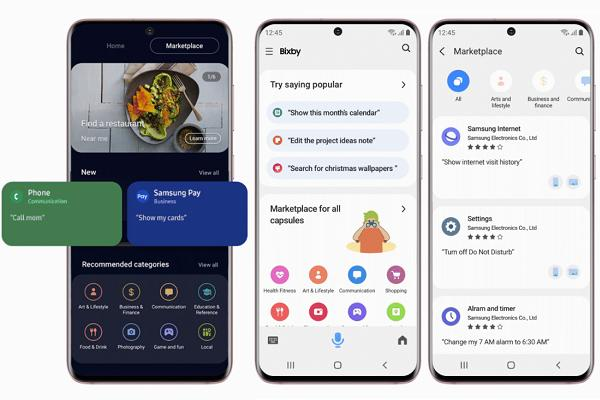
Bixby’s Reinvention: From Assistant to System Operator
Perhaps the most significant upgrade lies in Samsung’s assistant.
With integration from Perplexity AI, Bixby has evolved into a system-level controller.
Instead of navigating menus, users issue natural commands:
- “My eyes are strained” → activates Eye Comfort Shield
- “Screen is too bright” → triggers Extra Dim mode
- “Check battery health” → runs diagnostics
This is a shift from reactive assistant to proactive system manager.
Unlike competing assistants on Apple Inc. or Google devices, Bixby’s strength here is deep system integration rather than general-purpose AI responses.
The Rollout Strategy: Controlled, But Accelerating
Samsung is deploying One UI 8.5 through a structured wave model:
- Flagships (Galaxy S24, S25) receive early beta builds
- Foldables and tablets follow
- Mid-range devices (A-series) join testing later
- Stable rollout begins regionally, starting late April 2026
The expected global rollout window extends into early May, though timing varies by region and device eligibility.
The beta has already reached multiple markets, including South Korea, India, the United States, and the United Kingdom.
A Subtle but Strategic Ecosystem Play
There is no direct revenue tied to giving away premium features for free. Yet the long-term logic is clear.
By embedding AI deeply into daily phone usage, Samsung is:
- Increasing user dependence on Galaxy devices
- Strengthening ecosystem lock-in
- Showcasing capabilities without requiring hardware upgrades
This mirrors strategies seen in cloud platforms, where value comes from engagement rather than immediate monetization.
Public Perception: Quietly Positive, Strategically Important
Unlike flashy product launches, One UI 8.5 is generating attention through utility rather than hype.
Users are responding to:
- Practical AI tools rather than experimental features
- Improved everyday workflows
- Reduced need for third-party apps
At the same time, the decision to democratize flagship features is being interpreted as a competitive differentiator—especially compared to rivals that limit features to newer devices.
Lesser-Known Details Worth Noting
- The beta program has reached at least nine iterations, indicating a mature development phase
- Some devices may skip beta entirely and go straight to stable release
- Samsung is testing cross-platform sharing (AirDrop-style) via Quick Share on select devices
- Security patches are being synchronized across beta and stable users, reducing risk exposure
The Bigger Picture: Software as the New Hardware
The One UI 8.5 beta underscores a broader shift in the smartphone industry.
Hardware improvements are becoming incremental. Software—particularly AI—is where differentiation now happens.
Samsung’s approach is direct:
- Deliver flagship experiences without forcing upgrades
- Expand AI adoption at scale
- Position software as the primary value driver
If this strategy holds, the traditional upgrade cycle may slow—but user engagement with the ecosystem will deepen.
Conclusion
Samsung One UI 8.5 beta is not just an update—it’s a strategic pivot.
By bringing advanced AI features to older devices, enhancing system-level intelligence through Bixby, and expanding beta access across device tiers, Samsung is reshaping how users experience their phones.
The emphasis is no longer on what device you own—but what your device can learn, adapt, and automate.
And that distinction is likely to define the next phase of the smartphone market.


