Alexander Blockx: The Rising Challenger Who Tested the Elite in Munich
A Narrative of Emergence on Clay
On a brisk April afternoon in Munich, a relatively unfamiliar name began to command attention on the ATP Tour: Alexander Blockx. Facing one of the game’s fastest-rising stars, Ben Shelton, the 21-year-old Belgian wildcard stepped onto the clay court not as a favorite—but as a disruptor.
What followed was not merely a match result, but a statement about the evolving depth of men’s tennis. Blockx, ranked in the low 70s globally, pushed a top-10 opponent to the brink, forcing a high-intensity second-set tie-break before eventually falling 6-4, 7-6 (10/8) after one hour and 45 minutes of play.
This was not a routine defeat—it was a performance that signaled arrival.


The Match That Elevated His Profile
A Contest of Margins
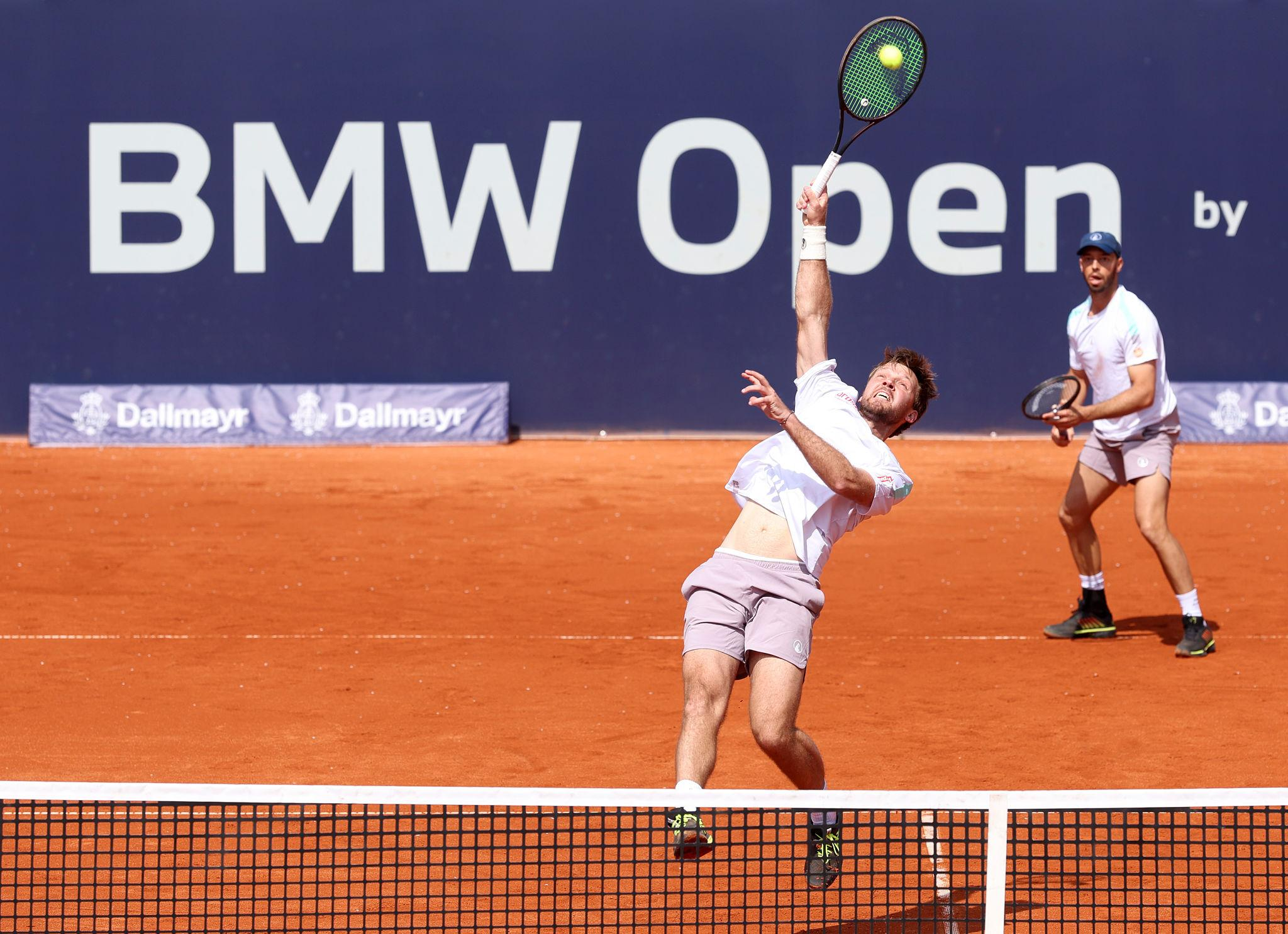
The encounter at the BMW Open marked the first professional meeting between Blockx and Shelton, and it unfolded as a tightly contested battle from the outset.
Blockx entered the match in strong form, having won five of his last six matches since transitioning to clay. His confidence was evident as he matched Shelton’s power with composure and tactical discipline.


Key moments defined the match:
- Shelton secured the first set with a single break of serve
- Blockx responded with resilience, pushing the second set into a tie-break
- The Belgian forced extended rallies and pressured Shelton’s consistency
- The tie-break saw razor-thin margins, with Shelton saving multiple set points
Ultimately, Shelton’s experience and composure in critical moments proved decisive, but Blockx’s ability to stretch a top-ranked player to the limit stood out.
Context: A Player Building Momentum
Recent Form and Competitive Edge
Blockx’s performance in Munich did not emerge in isolation. His recent trajectory suggests a player steadily transitioning from prospect to contender.
- Defeated Yannick Hanfmann in straight sets to reach the round of 16
- Reached the round of 16 at the Monte Carlo Masters, losing only to Alex de Minaur
- Demonstrated adaptability on clay, a surface that often exposes technical weaknesses
Statistical projections prior to the match indicated that Shelton held a 58% probability of winning, underscoring that Blockx was not expected to dominate—but also not dismissed.


Technical Profile: What Defines Blockx’s Game
Composure Beyond Ranking
Despite his relatively modest ranking, Blockx’s game reveals several attributes typically associated with more established players:
1. Baseline Consistency
He maintains long rallies effectively, particularly on slower surfaces like clay.
2. Tactical Awareness
Blockx shows an ability to vary pace and placement, forcing opponents out of rhythm.
3. Mental Resilience
Pushing a top-10 player into a tie-break under pressure reflects competitive maturity.
4. Clay Court Adaptation
His recent results indicate a growing comfort on clay—historically one of the most demanding surfaces in professional tennis.
The Broader Competitive Landscape
A Generation in Transition
Blockx’s emergence comes at a time when men’s tennis is experiencing a generational shift. Established stars remain dominant, but younger players are increasingly closing the gap.
In Munich alone:
- Shelton, ranked world No. 6, continues his pursuit of a first clay title
- Rising Brazilian João Fonseca advanced impressively, defeating Arthur Rinderknech
- Top seed Alexander Zverev remains a benchmark on home soil
Within this context, Blockx’s performance is not just about one match—it reflects a broader trend of emerging players challenging the hierarchy.
What This Match Reveals
A Turning Point Without a Victory
Losses can often obscure progress, but in this case, the opposite applies.
Blockx demonstrated:
- The ability to compete with elite-level opponents
- Tactical growth under high-pressure scenarios
- Physical endurance across extended rallies and tie-break situations
Even in defeat, the match functioned as a validation of his upward trajectory.
Future Outlook: What Comes Next for Blockx
Indicators of Continued Growth
Based on current form and performance metrics, several trends are likely:
Short-Term Outlook
- Increased participation in ATP 250 and 500 events
- Potential ranking improvements with consistent results
- Greater exposure against top-20 opponents
Medium-Term Development
- Refinement of serve efficiency under pressure
- Enhanced conversion rate on break points
- Continued adaptation to different surfaces
Long-Term Potential
- Transition from wildcard entries to direct main-draw placements
- Possible breakthrough into ATP quarterfinals or semifinals
- Establishment as a regular competitor within the top 50
Conclusion: A Name Worth Tracking
Alexander Blockx’s performance in Munich represents more than a competitive match—it is a signal of progression within the ATP ecosystem. Against a top-ranked opponent, he demonstrated technical competence, mental resilience, and the capacity to compete at a higher level than his ranking suggests.
For observers of the sport, Blockx is no longer a peripheral figure. He is part of the emerging cohort reshaping the competitive landscape—one match at a time.