Queen Elizabeth at 100: Why Her Absence Still Shapes the Monarchy
On April 21, 2026, Queen Elizabeth II would have turned 100. The centenary has not been treated as a routine anniversary. Instead, it has evolved into a moment of national assessment—an attempt to understand not just who she was, but what she represented, and whether the institution she shaped can sustain itself without her.
Four years after her death on September 8, 2022, the British monarchy finds itself navigating a more uncertain environment. The tributes marking her centenary—exhibitions, memorial projects, and public commemorations—do more than honor a historic sovereign. They reinforce a central argument: that Elizabeth’s personal authority, discipline, and restraint were not incidental traits, but structural pillars that held the monarchy together.
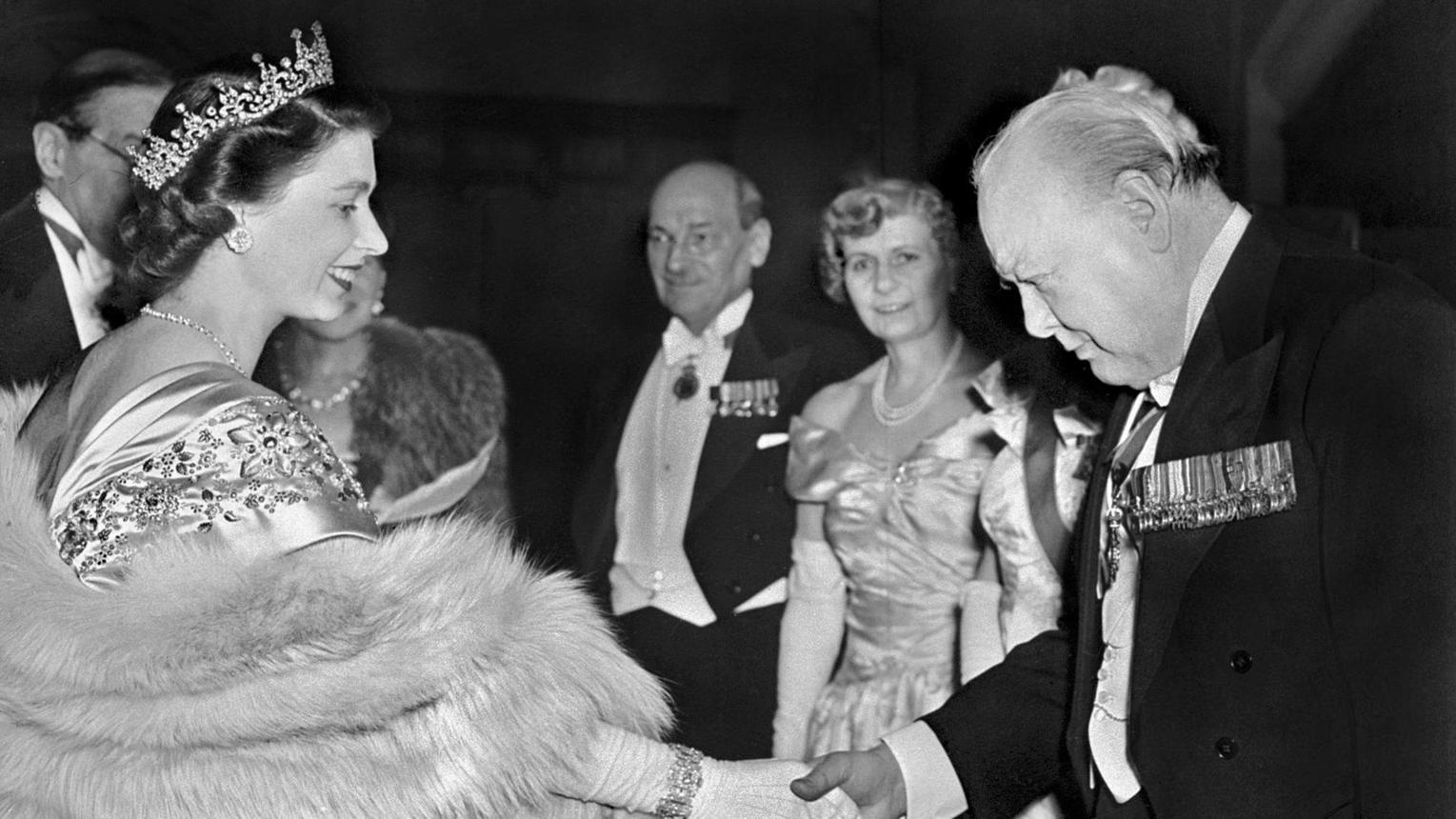
A Centenary Framed by Legacy and Symbolism
The most visible tribute is the exhibition Queen Elizabeth II: Her Life in Style, hosted at The King’s Gallery. Running from April to October 2026, it presents the largest display of her wardrobe ever assembled, spanning childhood garments, coronation attire, diplomatic ensembles, and private clothing.
The exhibition underscores a key dimension of her reign: clothing as statecraft. Under the stewardship of the Royal Collection Trust, curators have emphasized how her wardrobe functioned as a deliberate tool of communication—projecting visibility, continuity, and reassurance. Bright colors ensured she could be seen in crowds; consistent silhouettes reinforced stability; ceremonial garments embodied constitutional continuity.
This is often described as “soft power,” but in Elizabeth’s case, it operated with unusual precision. Her image was never accidental. It was curated to support the monarchy’s role as a unifying symbol in a rapidly changing society.
Beyond the palace, the centenary extends into public space. A national memorial is under development in St James’s Park, led by Foster + Partners. The design incorporates symbolic elements tied to her life, including references to her wedding tiara and her long relationship with the Commonwealth.
Meanwhile, a new commemorative garden in The Regent’s Park is set to open in April 2026, transforming a disused nursery into a landscaped public space focused on biodiversity and reflection.
These projects are not purely commemorative. They are infrastructural—embedding her legacy into the physical and cultural fabric of the nation.
The Monarchy Without Its Anchor
Elizabeth’s centenary has sharpened comparisons between her era and the present. During her 70-year reign, she became synonymous with continuity. From her accession in 1952 to her Platinum Jubilee in 2022, she presided over profound transitions: decolonization, political upheaval, technological change, and shifting public expectations.
Her approach was consistent: absorb disruption, avoid escalation, and maintain institutional stability. Key moments illustrate this pattern:
- The turbulence of 1992, often referred to as her annus horribilis
- The handling of Princess Diana’s death in 1997
- A carefully neutral stance during Brexit tensions
- A rare televised address during the COVID-19 crisis in 2020
In each case, Elizabeth positioned herself as a stabilizing force rather than a reactive figure. That model of leadership—restrained, consistent, and institution-first—became her defining legacy.
By contrast, the monarchy under King Charles III has appeared more exposed. Recent years have brought simultaneous pressures:
- Public estrangement involving Prince Harry
- Ongoing fallout connected to Prince Andrew
- Health disclosures from both the King and Catherine, Princess of Wales
The current generation has adopted a more transparent approach, particularly regarding health. While this reflects modern expectations, it also reduces the aura of distance that historically shielded the monarchy. The institution appears more human—and, by extension, more vulnerable.
Authority Through Restraint
Elizabeth’s influence was not rooted in overt displays of power. It was expressed through control—of emotion, language, and presence.
Accounts from aides and observers frequently reference her ability to communicate disapproval without confrontation. A subtle expression—often described informally as “the look”—could signal dissatisfaction without public escalation. This method preserved hierarchy while avoiding spectacle.
Even senior political figures recognized this dynamic. Tony Blair noted that while she could be personable, boundaries were strictly maintained. Familiarity, if misplaced, was quietly corrected.
This approach had constitutional implications. Monarchies depend on calibrated distance. Excess familiarity risks undermining authority; excessive detachment risks irrelevance. Elizabeth maintained a precise balance between the two.
Her style can be summarized as:
- Formal but not rigid
- Accessible but not informal
- Visible but not intrusive
That balance is difficult to replicate, particularly in a media environment that rewards immediacy and emotional transparency.
A Model That Cannot Be Recreated
The centenary has reinforced a central tension: Elizabeth’s model of monarchy remains widely respected, but it may not be replicable.
She operated in a context shaped by post-war deference, slower media cycles, and clearer institutional boundaries. The modern monarchy functions within a vastly different landscape—defined by digital scrutiny, social media amplification, and shifting public expectations.
- Continuous global media attention
- Reduced tolerance for opacity
- Heightened expectations of personal authenticity
- Ongoing reputational risk from individual actions
In this environment, the monarchy cannot rely solely on inherited authority. It must actively maintain legitimacy—often in ways that differ from Elizabeth’s approach.
Why Her Absence Still Matters
What distinguishes this centenary is not only the scale of remembrance, but the clarity of its underlying message. Elizabeth II is being treated as a benchmark—a standard against which the monarchy continues to measure itself.
Her legacy offers a coherent framework:
- Continuity without stagnation
- Ceremony without excess
- Duty without self-promotion
These principles remain relevant, but their application has become more complex. The monarchy must adapt to contemporary realities while preserving the institutional stability she embodied.
The memorial projects, exhibitions, and public tributes are therefore not only retrospective. They are forward-looking. They seek to anchor the monarchy in values that remain broadly respected, even as the context around them evolves.
Conclusion: A Standard That Endures
At 100, Queen Elizabeth II is not simply being remembered as a historical figure. She continues to function as a reference point for institutional stability.
Her absence has exposed the extent to which the monarchy depended on her personal authority. It has also clarified the challenge facing her successors: to sustain relevance in a more volatile, transparent, and demanding public environment.
The centenary ultimately serves two purposes. It honors a life of exceptional duration and discipline. And it underscores a more difficult reality—that the qualities she embodied remain essential, even if they are increasingly difficult to reproduce.


