
House Ethics Committee and Cory Mills: A Political Flashpoint in Washington
A Pressure Test for Congressional Accountability
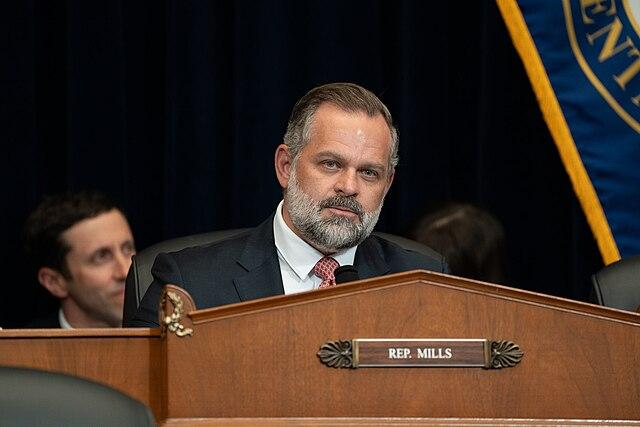
The unfolding controversy surrounding Cory Mills has rapidly evolved into one of the most closely watched ethics cases in Washington. What began as an internal investigation by the United States House Committee on Ethics has now expanded into a broader political and institutional debate about standards, accountability, and the limits of public trust.
At the center of the issue is a convergence of formal allegations, public pressure from lawmakers, and a shifting political climate that has become less tolerant of unresolved misconduct claims. The result is not just a case about one individual, but a test of how Congress responds when ethical scrutiny intersects with political consequences.
The Investigation: From Allegations to Institutional Scrutiny
The Ethics Committee’s investigation into Mills carries significant weight because it moves the issue beyond partisan rhetoric into formal congressional review. The allegations under examination include claims of dating violence, campaign finance concerns, and other personal conduct issues that have drawn sustained attention.
According to reporting, the case includes multiple incidents tied to Mills’ personal relationships. One involves a restraining order obtained by a former partner, who alleged harassment following a breakup. Another incident in February 2025 involved a reported physical altercation at Mills’ Washington, D.C. residence. While police documented the case and forwarded it to the U.S. attorney’s office, Mills was not prosecuted and the matter is no longer under active investigation.
Separately, a police report alleged that Mills threatened to release intimate images of a former partner after their relationship ended. The report described repeated contact and threats tied to private materials, further intensifying scrutiny around his conduct.
Despite these allegations, Mills has consistently denied wrongdoing, emphasizing that he has not been arrested or charged and framing the situation as a personal dispute rather than a legal violation.
Mills’ Response: Drawing a Line Between Allegations and Guilt
Mills has publicly rejected comparisons to other lawmakers who resigned under misconduct allegations, including Eric Swalwell and Tony Gonzales.
“I don’t even fall into the category of Swalwell or Gonzales,” Mills said, arguing that his case stems from what he described as “a bad breakup” rather than institutional misconduct.
He has also stressed that there have been no complaints from congressional staff or interns, attempting to distinguish his situation from cases involving violations of House workplace rules.
From Mills’ perspective, the issue reflects a broader concern about being judged on accusations rather than due process. He characterized the growing calls for his removal as politically motivated, describing them as part of a “tit for tat” dynamic within Congress.
Escalating Political Pressure Inside Congress
While the Ethics Committee continues its work, the political environment around the case has intensified.
Prominent lawmakers—including Alexandria Ocasio-Cortez—have openly suggested that Mills should resign, especially in light of recent departures tied to misconduct allegations. Her remarks reframed the issue, shifting it from a procedural review into a broader debate about consistency in ethical standards.
“Frankly, I think Cory Mills should probably be on that list as well,” she said, referring to lawmakers who had stepped down.
Other members of Congress, including Nancy Mace, Andre Carson, Chris Pappas, and Nydia Velázquez, have also called for Mills to resign or face expulsion.
This growing chorus reflects a shift in congressional dynamics: allegations alone, once formally investigated, can generate enough political pressure to threaten a lawmaker’s position—even without criminal charges.
Leadership Response: Cautious Oversight
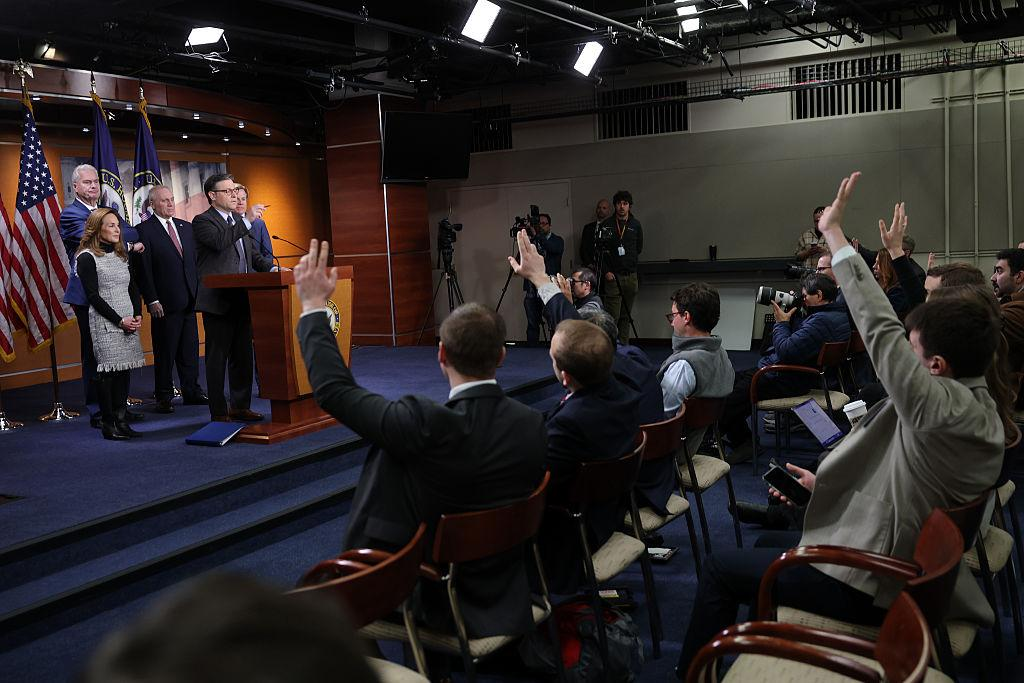
House leadership has so far taken a measured approach. Mike Johnson, the Speaker of the House, acknowledged the situation but indicated that he was still reviewing the status of the Ethics Committee’s investigation.
“With regard to Mills, I’m not sure the status of the Ethics Committee investigation. That’s one of the things I’ll be looking into,” Johnson said.
This response underscores a key institutional tension: leadership must balance due process with mounting political pressure. Acting too quickly risks undermining the integrity of the investigation, while waiting too long may be perceived as inaction.
A Broader Pattern: Resignations and Rising Standards
The scrutiny facing Mills is occurring in a broader context shaped by recent resignations in Congress. The departures of Swalwell and Gonzales—both tied to allegations involving relationships with staff—have heightened sensitivity around ethical conduct.
In this environment, individual cases are no longer viewed in isolation. Instead, they are part of a wider pattern that raises questions about consistency and fairness in enforcement.
The comparison is politically significant. While Mills disputes any equivalence, critics argue that the threshold for accountability should be applied uniformly across cases, regardless of party affiliation or specific circumstances.
The Human Dimension Behind the Headlines
Beyond the political calculations, the case highlights the personal impact of public allegations. Reports involving restraining orders, alleged threats, and disputed accounts of physical altercations illustrate the complex and often contradictory nature of such cases.
In one instance, a woman initially accused Mills of assault before later recanting, attributing her injuries to unrelated causes.
These conflicting narratives complicate the Ethics Committee’s task. The panel must navigate not only legal standards but also the broader question of credibility—an inherently difficult process when evidence is contested and public opinion is already forming.
What the Ethics Process Achieves
The House Ethics Committee serves a specific function within Congress: to investigate allegations, determine whether rules were violated, and recommend potential disciplinary action.
This process is designed to ensure accountability while preserving due process. It allows lawmakers to be evaluated within an institutional framework rather than through immediate political judgment.
However, the Mills case demonstrates the limits of this structure. While the committee operates methodically, political pressure moves quickly, often shaping outcomes before formal conclusions are reached.
Possible Outcomes and Future Scenarios
Several paths remain possible as the situation develops:
- Continuation of the investigation without immediate action
- Formal sanctions or censure recommended by the Ethics Committee
- A House vote on expulsion, which would require significant support
- Voluntary resignation, driven by sustained political pressure
The outcome will depend not only on the committee’s findings but also on the broader political climate within Congress.
Conclusion: A Defining Moment for Congressional Ethics
The case involving the House Ethics Committee and Cory Mills has become more than a single investigation. It represents a critical moment for how Congress defines accountability in an era of heightened scrutiny.
For Mills, the stakes are personal and immediate—his political future remains uncertain as the investigation continues. For Congress, the implications are institutional. The decisions made in this case will help shape expectations for how allegations are handled, how standards are applied, and how trust is maintained.
In the end, the question extends beyond one lawmaker: it is about whether the system can balance fairness, transparency, and accountability in a way that satisfies both lawmakers and the public they serve.


