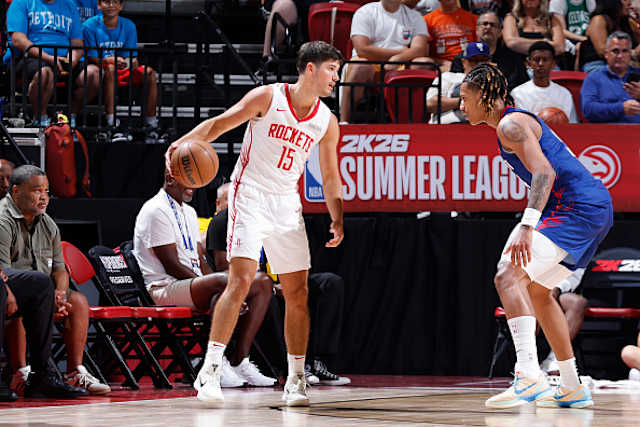
Reed Sheppard and the Rockets’ Future: A Strategic Outlook
Introduction: Why Reed Sheppard Matters Now
In the evolving landscape of the NBA, teams built on youth and upside often hinge on a few critical development arcs. For the Houston Rockets, that reality is becoming increasingly clear. Among the emerging names shaping their trajectory, Reed Sheppard has moved from promising prospect to a central figure in discussions about the team’s future.
- Introduction: Why Reed Sheppard Matters Now
- From Prospect to Production: Sheppard’s Rapid Emergence
- The Starting Lineup Debate: Data Driving Decisions
- Offensive Architecture: A Modern Guard Profile
- Synergy with Star Talent: The Kevin Durant Factor
- The Thompson–Sheppard Axis: A Defining Partnership
- Recent Performances: Indicators of Ceiling
- Strategic Implications: What Comes Next
- Conclusion: A Franchise Inflection Point
Recent analysis across league coverage suggests a consistent theme: the Rockets’ ceiling—particularly in high-stakes moments—may depend heavily on the growth of Sheppard alongside Amen Thompson. What was once a developmental storyline is now a performance determinant.
This is not just about potential. It is about measurable impact, lineup optimization, and the strategic identity of a team attempting to transition from rebuilding to contention.


From Prospect to Production: Sheppard’s Rapid Emergence
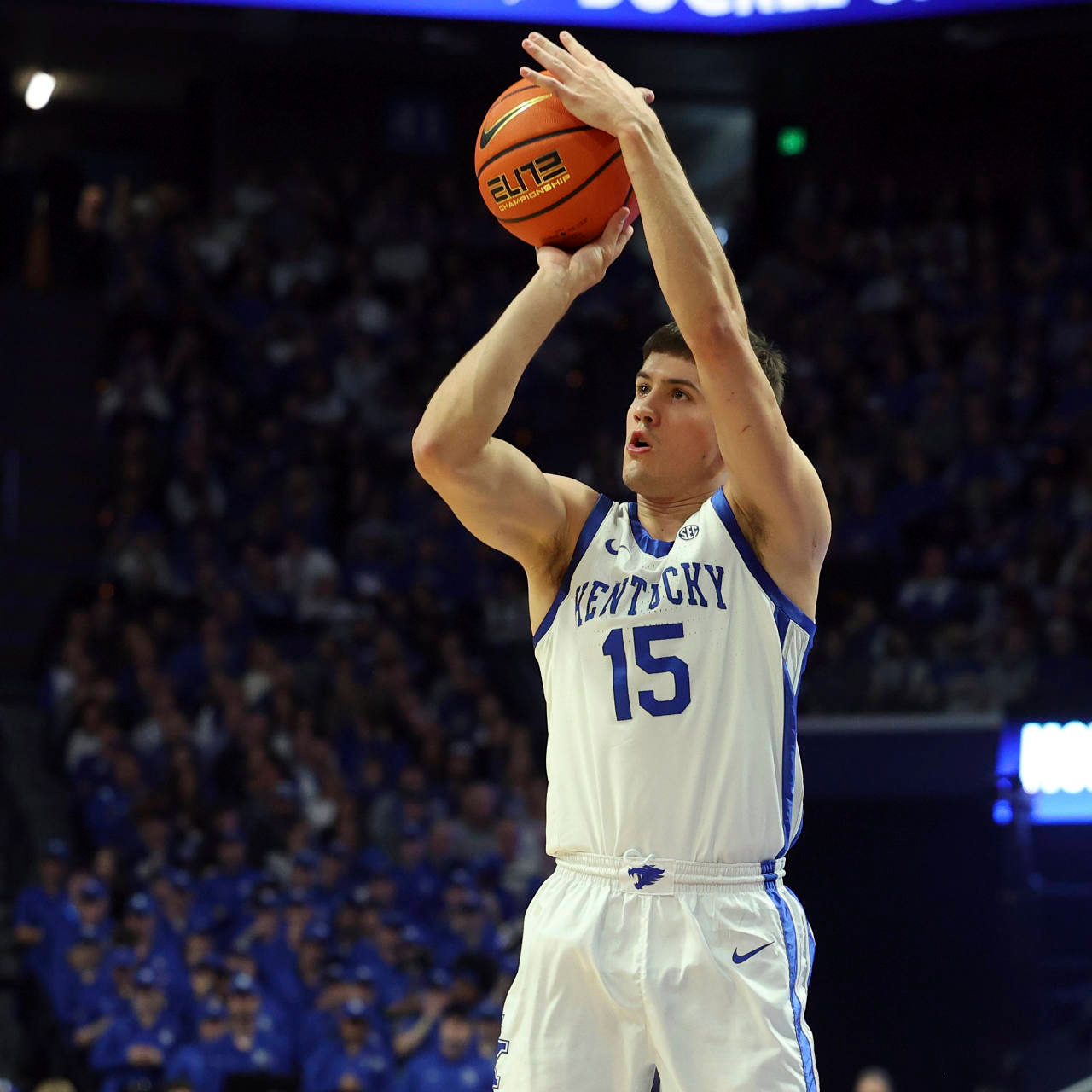
Reed Sheppard entered the league with expectations attached to his draft pedigree. As a top-three pick out of University of Kentucky, he was viewed as a high-IQ guard with elite shooting instincts and a strong understanding of spacing.
What has shifted in the current season is the translation of those traits into consistent production.


- 13.6 points per game
- 3.5 assists per game
- 2.9 rebounds per game
- 43% field goal shooting
- 39.6% from three-point range
- 80.7% free throw shooting
These are not empty numbers. They reflect efficiency within a structured offense, particularly one that relies on spacing and decision-making rather than isolation-heavy play.
Sheppard has also demonstrated value in both on-ball and off-ball roles, a dual capability that increases lineup flexibility. His ability to navigate screens and create perimeter opportunities has made him a reliable scoring outlet, while his pick-and-roll execution shows developing playmaking instincts.
The Starting Lineup Debate: Data Driving Decisions
One of the most compelling arguments surrounding Sheppard is statistical: the Rockets hold a 13–4 record when he starts.
For a team searching for stability, that figure carries weight. It suggests that Sheppard’s presence in the starting lineup correlates directly with winning outcomes.


From a tactical standpoint, this raises several implications:
- Improved spacing: Defenses must respect his perimeter shooting.
- Ball movement efficiency: His decision-making accelerates offensive flow.
- Lineup balance: He complements both primary scorers and interior players.
Despite these indicators, Sheppard has often been deployed as a reserve under head coach Ime Udoka. This rotational choice reflects caution rather than skepticism—typical of a team managing a young core—but the data increasingly challenges that approach.
Offensive Architecture: A Modern Guard Profile
Sheppard’s style aligns closely with contemporary NBA offensive principles. Analysts have drawn stylistic comparisons to players like Steve Nash and Mark Price—guards known for efficiency, vision, and shooting precision rather than raw athletic dominance.
Key Functional Strengths
1. Off-ball movement
Sheppard excels at relocating after passes, using screens to create clean looks. This reduces stagnation and forces defensive rotations.
2. Pick-and-roll intelligence
He reads defensive coverage effectively, identifying passing lanes and exploiting mismatches.
3. Floor general tendencies
While not yet at the elite playmaking tier of Jason Kidd or John Stockton, he is arguably the Rockets’ most natural organizer in half-court sets.
This profile positions him as a “table-setting guard”—a player who may not dominate usage but elevates the efficiency of everyone around him.
Synergy with Star Talent: The Kevin Durant Factor
A notable dimension of Sheppard’s impact is his interaction with Kevin Durant. Data indicates that Houston performs with a slightly better net rating when Durant shares the floor with Sheppard than when he does not.
This is strategically significant.
Durant’s offensive profile thrives in systems where spacing and timing are optimized. Sheppard’s presence enhances both:
- He creates clean passing angles for Durant.
- He reduces defensive congestion through perimeter gravity.
- He supports secondary playmaking, allowing Durant to conserve energy for scoring.
In effect, Sheppard acts as an amplifier rather than a competitor for touches—a valuable trait in star-centric lineups.
The Thompson–Sheppard Axis: A Defining Partnership
The broader narrative surrounding the Rockets emphasizes the dual development of Reed Sheppard and Amen Thompson. Analysts have suggested that their growth will determine how far the team can go, particularly in postseason scenarios.
This pairing offers complementary dynamics:
- Thompson: Athleticism, defensive versatility, transition play
- Sheppard: Shooting, spacing, decision-making
Together, they represent a balanced backcourt model—one that merges physical tools with technical precision.
If both players reach their projected ceilings, the Rockets could field a backcourt capable of adapting to multiple playoff styles, from fast-paced transitions to half-court execution.
Recent Performances: Indicators of Ceiling
Recent highlights reinforce Sheppard’s upward trajectory:
- A 30-point performance against the Golden State Warriors
- Multiple instances of deep-range shooting confidence
- Increasing involvement in late-game offensive sets
These are not isolated flashes. They indicate growing trust from coaching staff and teammates, particularly in high-pressure moments.
At the same time, moments such as a flagrant foul in a game against the Phoenix Suns illustrate that his development is ongoing—typical for a young guard adjusting to NBA intensity and physicality.
Strategic Implications: What Comes Next
The Rockets now face a decision point. The evidence suggests that Sheppard is not merely a rotation piece but a foundational component of their system.
Key Questions Moving Forward
- Should he be permanently installed as the starting point guard?
- How should his minutes be balanced with veteran guards?
- Can his playmaking expand to match his shooting impact?
The answers will shape not only individual performance metrics but also the team’s competitive timeline.
Conclusion: A Franchise Inflection Point
Reed Sheppard’s emergence is not just a developmental success story—it is a strategic variable in the Houston Rockets’ future.
His efficiency, adaptability, and growing influence on winning outcomes position him as more than a promising young player. He is increasingly a structural necessity within the team’s system.
If the Rockets commit fully to his integration—particularly alongside Amen Thompson—they may accelerate their transition from rebuilding franchise to legitimate contender.
The trajectory is clear. The remaining question is how decisively the organization acts on the evidence.