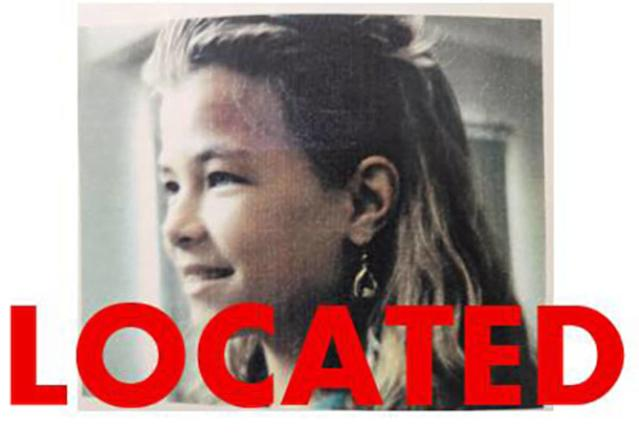
Christina Marie Plante: A 32-Year Mystery Resolved
A Disappearance That Defied Time
In the landscape of missing persons cases—where uncertainty often lingers for decades—few stories reach a definitive and hopeful conclusion. The case of Christina Marie Plante stands as a rare exception. After vanishing without a trace as a teenager in 1994, she has now been found alive more than three decades later, closing one of Arizona’s most enduring mysteries.
- A Disappearance That Defied Time
- The Day Everything Changed: May 1994
- Decades of Dead Ends and Determination
- The Breakthrough: April 2026
- A Resolution Without Answers
- The Broader Impact: What This Case Represents
- Rare but Not Unprecedented
- A Story That Redefines Closure
- Conclusion: A Case That Will Be Remembered
Her story is not only a personal narrative of survival but also a reflection of how persistence, evolving investigative techniques, and technological advancements are reshaping the outcomes of long-standing cold cases.
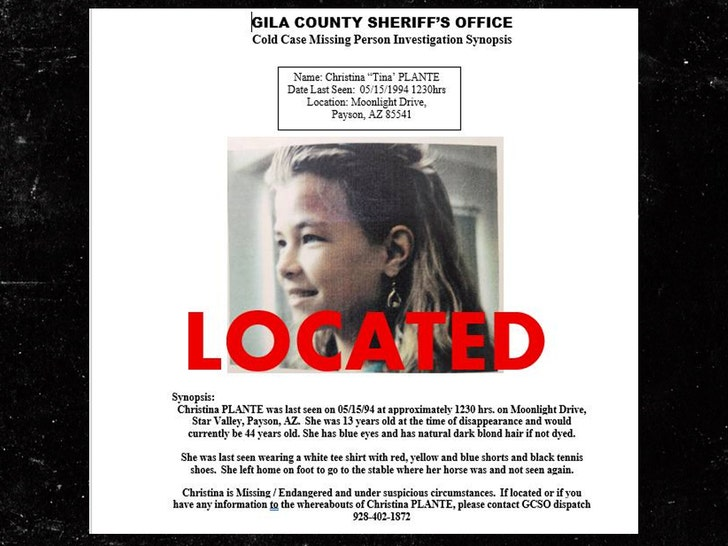
The Day Everything Changed: May 1994
Christina Marie Plante was just 13 years old when she disappeared from Star Valley, a small, mountainous community northeast of Phoenix.

On that day in May 1994, she reportedly left home on foot to visit a nearby stable where her horse was kept. It was a routine activity—one that gave no indication of what would follow.
Then, abruptly, she vanished.


Authorities quickly classified her case as “endangered and under suspicious circumstances.” Despite extensive searches involving law enforcement, volunteers, and regional resources, no credible leads emerged.
Flyers were distributed, interviews conducted, and her information entered into national missing children databases. Yet, the investigation stalled.
For years, there was silence.
Decades of Dead Ends and Determination
What distinguishes this case is not just the disappearance, but the sustained effort to resolve it.


Even as the investigation went cold, it was never closed. Authorities periodically revisited the case file, reanalyzing evidence and pursuing new tips.
This persistence was formalized with the creation of the Cold Case Unit within the Gila County Sheriff’s Office. The unit brought a structured approach to re-examining unsolved cases, combining traditional investigative work with emerging technologies.
The process that ultimately led to a breakthrough can be understood in three key stages:
This approach aims to revive stalled investigations by leveraging modern tools and systematic review methods:
- Re-examination of historical evidence
Detectives revisited old case files, witness statements, and physical evidence. - Application of modern technology
Advances in forensic science and data analysis generated new investigative leads. - Integrated case review
A comprehensive reassessment allowed investigators to connect previously overlooked details.
This methodology proved decisive.
The Breakthrough: April 2026
After 32 years, authorities announced a development few expected.
Christina Marie Plante had been found—alive.
Investigators confirmed her identity, officially resolving her missing person status.
The sheriff’s office described the discovery as the result of “advances in technology, modern investigative techniques, and detailed case review.”
Yet, despite the magnitude of the breakthrough, key details remain undisclosed.
“Out of respect for Christina’s privacy and well-being, additional details will not be released at this time.”
What is known is limited but significant: she survived, and she is now 44 years old.
A Resolution Without Answers
Unlike many high-profile cases, the resolution of Christina Marie Plante’s disappearance does not come with a detailed explanation.
There is no public account of where she spent those 32 years, what circumstances led to her disappearance, or how she built a new life.
This absence of detail has created a unique dynamic—closure without full understanding.
As observers have noted, the case answers the most fundamental question—whether she was alive—but leaves the narrative of those missing decades unresolved.
The Broader Impact: What This Case Represents
While deeply personal, this case carries broader implications for law enforcement and society.
1. The Power of Cold Case Units
The success reinforces the value of specialized investigative teams dedicated to unresolved cases. Persistent review can yield results even decades later.
2. Technology as a Game-Changer
Modern forensic tools and data analysis are transforming investigations, enabling breakthroughs that were previously impossible.
3. Hope for Families
For families of missing persons, this case offers a rare but powerful message: resolution is still possible, even after decades.
Authorities emphasized this point, noting that cold case initiatives are “bringing long-awaited answers to families and communities.”
Rare but Not Unprecedented
Although uncommon, Christina’s story is not entirely unique.
There have been isolated cases where missing individuals were found alive years later. One example includes Steve Carter, who reconnected with his biological family decades after being reported missing.
These cases, while rare, highlight the unpredictable nature of missing person investigations and the possibility of unexpected outcomes.
A Story That Redefines Closure
The resolution of Christina Marie Plante’s case challenges traditional notions of closure.
Typically, closure comes with answers—clear timelines, explanations, and accountability. In this instance, closure is defined more narrowly: confirmation of survival and identity.
For law enforcement, it marks the successful conclusion of a long-standing investigation.
For the public, it is a reminder of how much can remain unknown.
For Christina herself, it signals a return to visibility—on her own terms.
Conclusion: A Case That Will Be Remembered
The story of Christina Marie Plante is ultimately one of endurance—of a case that refused to be forgotten and of investigative systems that continued to evolve until they found answers.
It stands as a rare convergence of persistence, technology, and timing.
Even without full disclosure, the outcome is significant: a missing child, gone for 32 years, has been found alive.
And in the realm of cold cases, that alone is extraordinary.