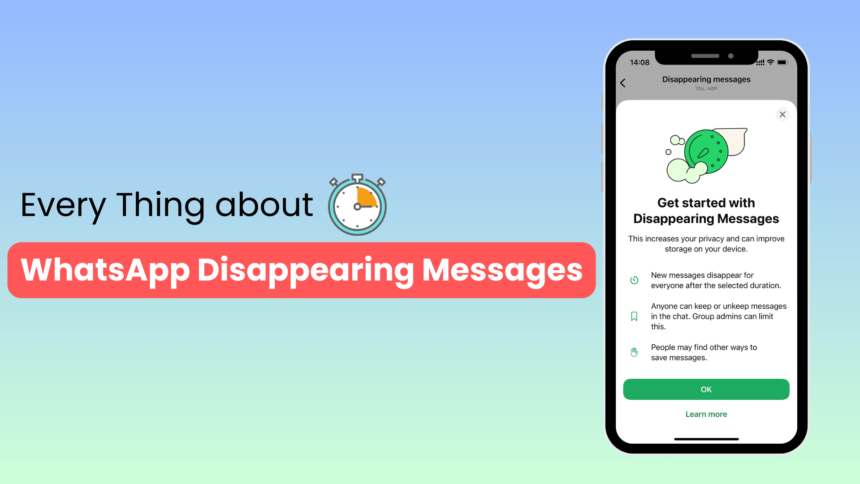
WhatsApp’s New “After Reading” Feature Could Redefine Private Messaging on iPhone
WhatsApp is taking another major step in its long-running push toward stronger digital privacy. The Meta-owned messaging platform is now testing a new “After reading” disappearing messages feature on iOS, introducing a smarter and more flexible approach to self-destructing chats.
The feature, currently available to select beta testers using WhatsApp for iOS version 26.19.10.72, changes how disappearing messages work by triggering deletion only after a recipient actually opens a message. That subtle adjustment could significantly reshape how users manage sensitive conversations, temporary information, and private exchanges.
The rollout follows similar testing on Android that began last month, signaling that WhatsApp is preparing a broader privacy-focused upgrade across both major mobile ecosystems.


A New Take on Disappearing Messages
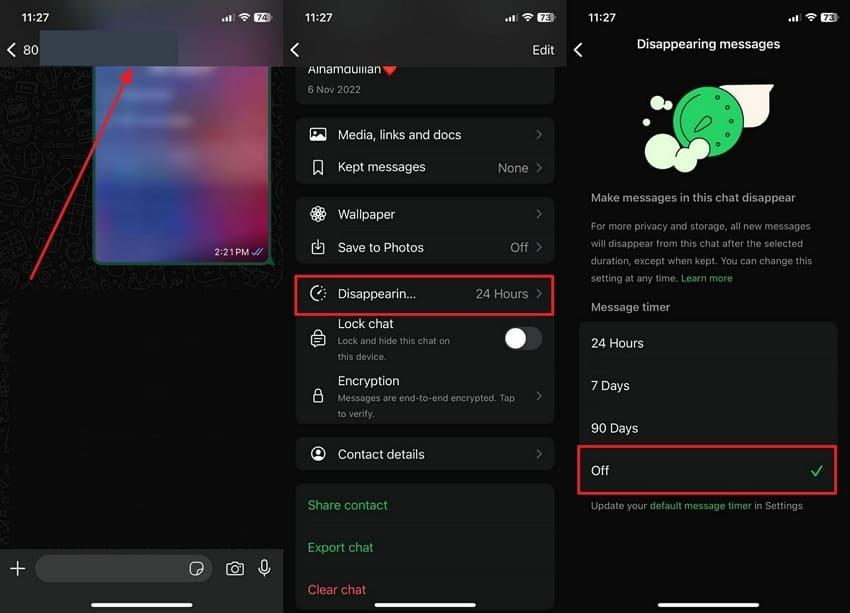
Until now, WhatsApp’s disappearing messages system has worked on a fixed countdown that starts the moment a message is sent. Users could choose expiration windows such as 24 hours, 7 days, or 90 days, but the timer would continue running whether the recipient actually opened the message or not.
The new “After reading” system changes that behavior entirely.


Under the updated mechanism, the timer only begins once the recipient reads the message. Users can reportedly choose from three countdown durations:
- 5 minutes
- 1 hour
- 2 hours
Some reports also reference a 12-hour option appearing in certain beta builds, suggesting WhatsApp may still be experimenting with timing variations before launch.
If the message remains unread, WhatsApp automatically deletes it after 24 hours.
The feature appears inside:


Default message timer → Message timer → “After reading”
This makes it an extension of WhatsApp’s broader disappearing messages infrastructure rather than a completely separate tool.
How the Feature Actually Works
WhatsApp’s implementation introduces a dual-timer system that behaves differently for senders and recipients.
For the sender, deletion timing starts immediately after sending the message. For the recipient, the countdown begins only after opening it.
The result is a more contextual privacy model.
For example:
- A user sends a message at 10:00 AM
- The sender selected a 5-minute “After reading” timer
- The sender’s copy disappears at 10:05 AM
- The recipient opens the message at 10:10 AM
- The message then disappears from the recipient’s device at 10:15 AM
If the recipient never opens the message, WhatsApp deletes it automatically after 24 hours.
This behavior is notably different from WhatsApp’s current disappearing message system, where both sides follow the same countdown from the send time.
Why WhatsApp Is Moving in This Direction
The new feature reflects a broader industry trend: ephemeral communication.
Messaging apps increasingly compete on privacy, control, and temporary interactions rather than permanent digital archives. Platforms such as Snapchat popularized disappearing content years ago, while Signal and Telegram expanded self-destructing messaging into secure communications.
WhatsApp has steadily moved in the same direction by introducing:
- View-once photos and videos
- Chat lock
- Secret codes
- Screen-sharing restrictions
- Advanced chat privacy controls
- Incognito AI chats
- Disappearing messages
The new “After reading” system fits naturally into that ecosystem.
Instead of merely deleting messages after a generic delay, WhatsApp is now attempting to make conversations feel more dynamic and context-aware.
Privacy Benefits for Users
The feature could prove especially useful in situations involving:
Sensitive Conversations
Users sharing confidential information — such as passwords, financial details, addresses, or temporary verification codes — may prefer messages that disappear shortly after being viewed.
Reduced Digital Clutter
Temporary chats can help keep conversations cleaner and easier to manage without manually deleting content.
Better Control Over Shared Information
Unlike standard disappearing messages, the new model ensures the recipient actually sees the content before the timer begins. That makes the system more practical for time-sensitive communication.
More Flexible Privacy
Because the feature must be manually enabled, users retain full control over when and where it applies.
WhatsApp’s Privacy Strategy Is Becoming More Aggressive
The timing of the rollout is important.
Meta has recently intensified WhatsApp’s privacy positioning as competition grows across messaging platforms and AI-powered communication tools.
Recent WhatsApp privacy-focused developments include:
- Incognito chats with Meta AI
- Encrypted cloud backup experiments
- Advanced chat privacy controls
- Restrictions on exporting conversations
- Expanded disappearing media functionality
The company appears to be building WhatsApp into a platform where users can maintain tighter control over how long conversations exist and who can access them.
That strategy may also help WhatsApp differentiate itself from Apple’s expanding RCS messaging capabilities on iPhone. Some industry observers believe Meta sees privacy-first features as a competitive advantage in the messaging wars.
There Are Still Limitations
Despite the stronger privacy model, disappearing messages are not foolproof.
Users can still potentially:
- Take screenshots
- Copy content manually
- Photograph screens with another device
- Forward information before deletion
Security researchers have also previously identified weaknesses involving “View Once” functionality on WhatsApp Web, raising broader questions about how temporary content can truly remain temporary in modern digital systems.
In practice, disappearing messages reduce exposure risk rather than eliminate it completely.
That distinction remains important for users who handle highly sensitive communications.
Limited Beta Rollout Underway
At the moment, the feature is only available to some iOS beta testers through Apple’s TestFlight program.
WABetaInfo reports that a small number of regular App Store users may also begin seeing the option before a wider release.
WhatsApp has not officially confirmed a public launch timeline for either iOS or Android. However, the fact that testing is now active across both platforms strongly suggests a broader rollout could arrive in the coming months.
As with many WhatsApp beta features, functionality may still change before the final release.
The Bigger Picture for Messaging Apps
The evolution of disappearing messages reflects a larger shift in how users think about online communication.
For years, digital messaging created permanent records by default. Today, many users increasingly prefer temporary, context-based communication that mirrors real-world conversations more closely.
WhatsApp’s “After reading” feature represents another move toward that future — one where messages behave less like archived emails and more like fleeting spoken conversations.
Whether users adopt the feature widely remains to be seen, but the direction is clear: privacy, ephemerality, and user control are becoming central pillars of modern messaging platforms.
And with billions of WhatsApp users worldwide, even small privacy changes can reshape digital communication habits on a massive scale.