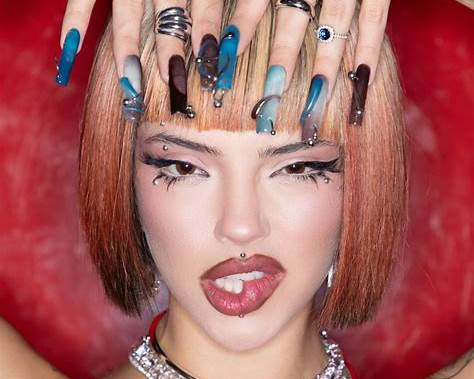
Eurovision 2026 at 70: Music, Politics and a Contest Under Pressure
The Eurovision Song Contest has always been more than a music competition. For seven decades, it has reflected Europe’s cultural mood, political tensions, pop trends and shared spectacle. But Eurovision 2026 may become one of the most debated editions in the event’s history.
Held in Vienna, Austria, the 70th anniversary edition of Eurovision arrived with sold-out arenas, elaborate stage productions and millions of viewers expected worldwide. Yet alongside the sequins, pyrotechnics and power ballads came boycotts, protests and renewed questions about whether the contest can truly remain “non-political.”
At the center of the spectacle were 25 finalists battling for the famous glass microphone trophy — including Bulgaria’s breakout star DARA, Ukraine’s Leleka, Australia’s Delta Goodrem and Finland’s heavily favored duo Linda Lampenius and Pete Parkkonen.
But Eurovision 2026 also became defined by another story: the growing divide over Israel’s participation and the wider geopolitical tensions surrounding the contest.
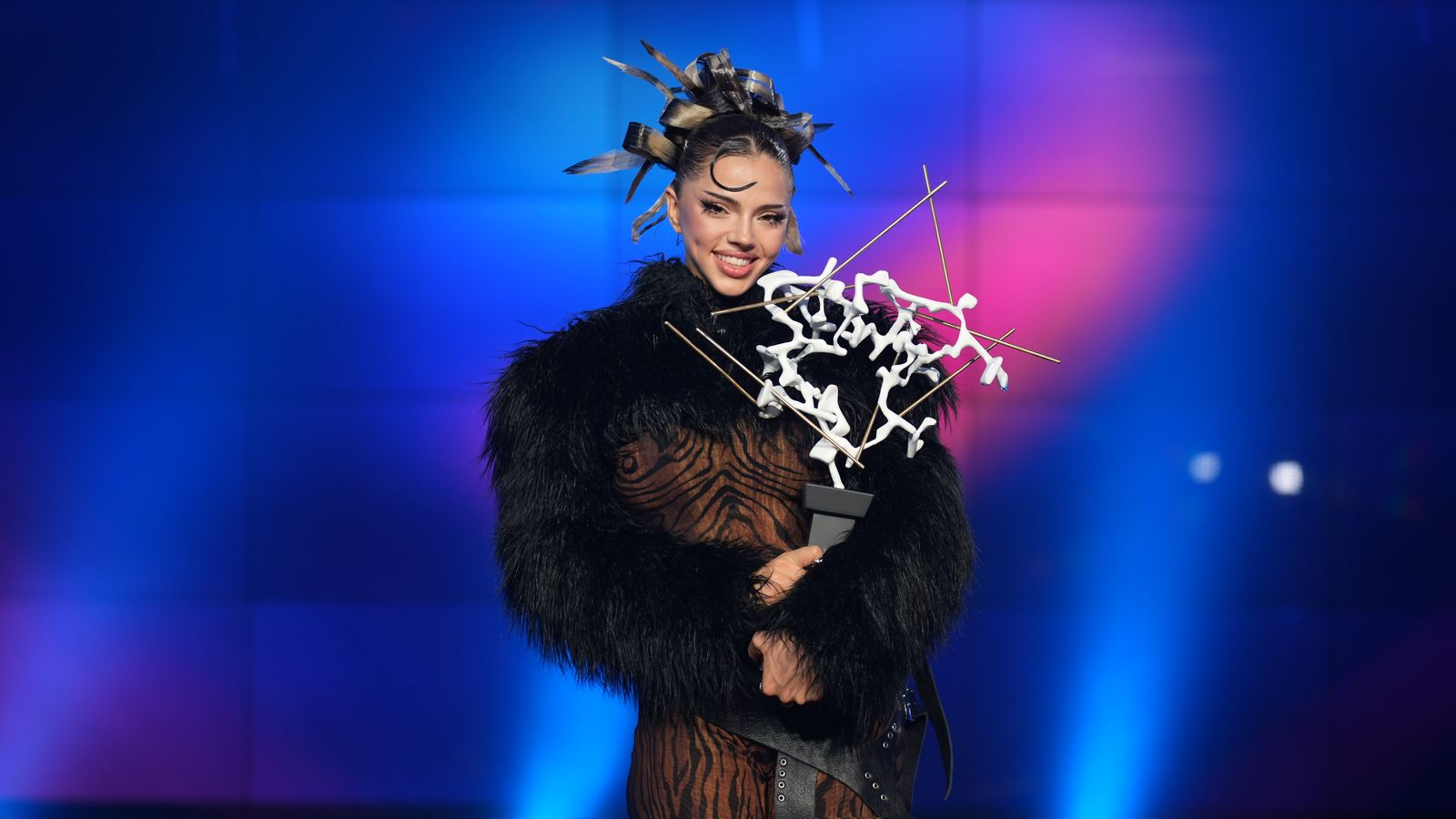
Vienna Hosts Eurovision’s 70th Anniversary
Austria earned hosting rights after singer JJ won Eurovision 2025 with the song Wasted Love. The 2026 competition returned to Vienna’s Wiener Stadthalle, the same venue used for Eurovision’s 60th anniversary in 2015.
Organizers described the anniversary edition as both a celebration of Eurovision history and a showcase for the future of global pop culture. Eurovision director Martin Green called it:
“The biggest music show in the world.”
The city transformed into a Eurovision festival hub, with fan villages, public viewing zones and thousands of international visitors pouring into the Austrian capital. Tickets for all nine final events reportedly sold out in just 14 minutes.
The event’s popularity remains staggering. Eurovision continues to attract audiences that rival or surpass many of the world’s largest televised entertainment broadcasts.
Bulgaria’s DARA Emerges as a Surprise Contender
One of the biggest breakout stories of Eurovision 2026 has been Bulgaria’s DARA and her song Bangaranga.
After a fiery semifinal performance, DARA surged into the Top 10 favorites according to bookmakers. Bulgarian media reports also noted that an informal vote among accredited journalists in Vienna suggested she could even finish third overall.
Performing 12th in the grand final lineup, DARA became a symbol of Bulgaria’s renewed Eurovision ambitions. Bulgarian National Television urged Bulgarians living abroad and international supporters to vote using the ESC.vote platform or international SMS voting systems.
Her rise reflected Eurovision’s ability to transform artists into international sensations almost overnight.
Ukraine Continues Its Eurovision Legacy
Ukraine once again qualified for the Eurovision final, continuing one of the contest’s most remarkable streaks. Since debuting in 2003, Ukraine has never failed to reach the grand final.
Singer Leleka represented the country with Ridnym (“To the dear ones”), advancing alongside finalists from Bulgaria, Norway, Australia, Romania and several other nations.
Eurovision has long served as an important cultural platform for Ukraine. Previous Ukrainian victories include Ruslana’s Wild Dances in 2004, Jamala’s 1944 in 2016 and Kalush Orchestra’s Stefania in 2022.
Even during wartime, Eurovision remains a powerful instrument of soft power and cultural identity for Ukraine on the international stage.
The Countries Battling for Eurovision Glory
The grand final featured 25 competing countries after two semifinals narrowed the field.
Among the strongest contenders according to bookmakers and broadcasters were:
- Finland — Linda Lampenius and Pete Parkkonen with Liekinheitin
- Australia — Delta Goodrem with Eclipse
- Greece — Akylas with Ferto
- Romania — Alexandra Capitanescu with Choke Me
- Israel — Noam Bettan with Michelle
Meanwhile, the United Kingdom was represented by experimental YouTube musician Sam Battle, better known as “Look Mum No Computer,” performing the electro-pop track Eins, Zwei, Drei.
The UK entry became one of the most talked-about acts because of its eccentric stage design, including a self-built “mega synthesizer.”
A Contest Overshadowed by Politics
Despite the celebratory atmosphere, Eurovision 2026 became increasingly consumed by geopolitical controversy.
Five countries — Iceland, Ireland, the Netherlands, Slovenia and Spain — boycotted the contest over Israel’s participation amid the Gaza conflict.
Several broadcasters also altered their programming in protest. Ireland’s RTÉ notably chose to air a rerun of the sitcom Father Ted instead of Eurovision coverage.
Outside the venue in Vienna, pro-Palestinian demonstrations took place throughout Eurovision week. Protest organizers accused the European Broadcasting Union (EBU) of applying inconsistent standards after Russia was excluded from Eurovision in 2022 following its invasion of Ukraine.
The EBU maintained that Eurovision participation is determined by broadcasters rather than governments. Eurovision director Martin Green defended the decision, stating:
“Artists and public service broadcasts don’t represent necessarily the views of their governments.”
Still, critics argued that the controversy fundamentally challenged Eurovision’s long-standing slogan: “United by Music.”
Israel’s Participation Sparks Debate
Israel’s entry, Michelle by Noam Bettan, became one of the contest’s most politically charged performances.
While bookmakers expected Israel to perform strongly in public voting, security concerns and protests remained intense throughout the week.
The EBU also issued Bettan a formal warning after he posted social media videos encouraging supporters to cast all 10 available votes for him.
Analysts warned that an Israeli victory could create unprecedented complications for Eurovision 2027, especially given current travel advisories and broadcaster boycotts.
Eurovision’s Emotional Power Still Endures
Even amid controversy, Eurovision 2026 also reminded audiences why the contest has survived for 70 years.
Veteran broadcaster Graham Norton reflected on Eurovision’s extraordinary scale and emotional energy, describing it as:
“The Olympics” of music television.
Past Eurovision legends also shared stories about how the competition transformed their lives — from Moldova’s viral “Epic Sax Guy” phenomenon to Finland’s Lordi overcoming backlash after their historic 2006 victory.
These stories reinforced Eurovision’s unique role in global entertainment. Few competitions can simultaneously launch international careers, generate political debate and create lasting cultural moments.
Voting Changes and New Rules
Eurovision 2026 also introduced adjustments to the voting system.
According to broadcasters, voting opened immediately after the first performance rather than later in the show. Jury votes still accounted for 50% of the final result, with the public determining the remaining half.
The EBU additionally tightened voting procedures following controversies in previous years, including allegations of organized vote manipulation.
Viewers could vote using telephone, SMS, the official Eurovision app or the ESC Vote platform, though payment requirements were introduced in several countries to reduce fraudulent voting.
Eurovision’s Future Faces a Defining Test
Eurovision 2026 demonstrated both the enduring strength and growing fragility of the competition.
On one hand, the contest remains one of the world’s largest live entertainment events, capable of uniting millions through music, performance and spectacle.
On the other hand, the increasing overlap between politics, international conflict and entertainment has placed Eurovision under enormous pressure.
The contest now faces difficult questions:
- Can Eurovision realistically remain apolitical?
- Will more broadcasters consider boycotts in future years?
- Can the EBU maintain unity among participating nations?
- And will younger audiences continue embracing Eurovision’s message of inclusivity and shared culture?
For now, Eurovision 2026 stands as a landmark anniversary edition — one remembered not only for the music, but for the debates that unfolded far beyond the stage in Vienna.
As Europe celebrated 70 years of Eurovision, the contest once again proved that it is never just about the songs.