AT&T, T-Mobile, and Verizon’s Satellite Alliance Could Redefine Mobile Coverage in America
For years, wireless carriers have competed fiercely over who offers the strongest signal, the fastest 5G network, and the widest coverage map. But in one of the clearest signs that the next era of mobile connectivity will not be built by towers alone, AT&T, T-Mobile, and Verizon are now preparing to work together.
- A Rare Truce Among Fierce Rivals
- What the Joint Venture Is Designed to Do
- Why Direct-to-Device Satellite Technology Matters
- The Business Strategy Behind the Coverage Promise
- The Digital Divide Angle
- What Customers Could Eventually Experience
- The Industry Still Has Questions to Answer
- A Turning Point for the Future of Mobile Networks
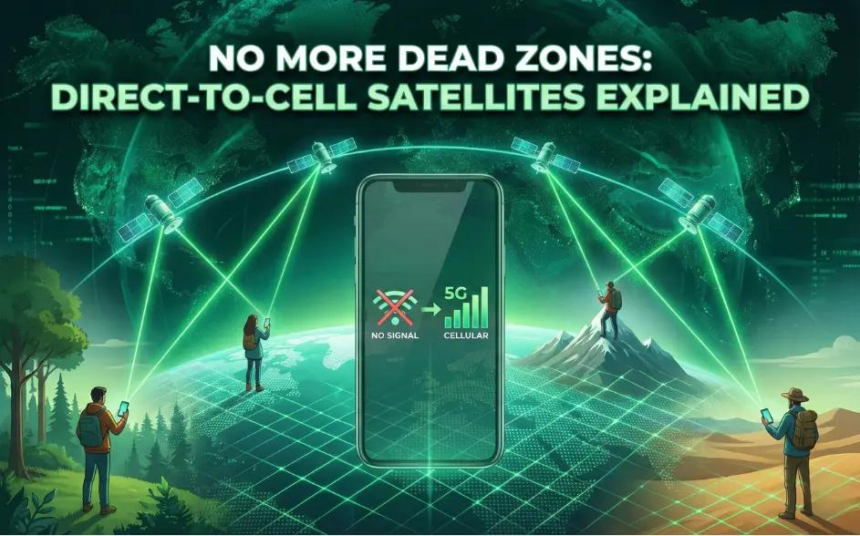
On May 14, 2026, the three largest U.S. wireless carriers announced an agreement in principle to form a joint venture designed to help eliminate wireless dead zones across the United States. The plan centers on satellite-based direct-to-device technology, a fast-emerging model that allows ordinary smartphones to connect through satellites when traditional cell networks are unavailable.
The partnership is still preliminary. The companies must negotiate definitive agreements and satisfy customary closing conditions before the joint venture becomes operational. But if completed, it could mark a major shift in how mobile coverage is delivered, especially in rural areas, national parks, highways, waterways, disaster zones, and other places where cellular infrastructure remains limited or absent.


A Rare Truce Among Fierce Rivals
The announcement stands out because AT&T, T-Mobile, and Verizon are not natural collaborators. They are direct competitors in one of America’s most aggressive consumer technology markets. Their brands are built around network superiority, customer migration, pricing battles, and claims of coverage leadership.
Yet the satellite-to-phone market is changing the competitive logic. No single carrier can easily solve every dead zone through terrestrial towers alone. Remote terrain, sparse populations, environmental restrictions, disaster risk, and infrastructure costs make universal ground-based coverage difficult. Satellite connectivity offers a complementary layer that can reach places where towers are impractical.


The proposed joint venture aims to pool limited spectrum resources, increase capacity, improve customer experience, and create a unified platform that helps satellite providers reach more users. The companies say the effort will combine intellectual property and terrestrial spectrum while creating industry specifications to make satellite services more seamless for customers and operators.
That means the goal is not simply to add another coverage feature to premium mobile plans. The broader ambition is to create a shared technical and commercial framework for satellite-based direct-to-device connectivity.
What the Joint Venture Is Designed to Do
The core idea is straightforward: when a customer moves outside the reach of traditional cell towers, satellite-based direct-to-device service could keep the phone connected.
The companies describe satellite services as supplementary to the core wireless networks customers already rely on. Terrestrial mobile networks will remain the main way people receive everyday high-speed service, especially in cities, suburbs, and populated corridors. The satellite layer would step in where conventional coverage is weak, unavailable, or temporarily disrupted.


According to the companies, the joint venture is expected to deliver several customer benefits: fewer coverage gaps, more reliable emergency connectivity, improved network performance, faster feature updates, broader access to satellite services, common technical specifications, and a more consistent customer experience.
That could matter in practical ways. A driver on a rural highway might be able to send a message after a breakdown. A hiker in a national park could stay reachable in an emergency. A family affected by a natural disaster might retain a backup communications path if ground-based networks are damaged.
John Stankey, Chairman and CEO, AT&T, framed the effort around simplicity and reliability:
“Our goal is to make staying connected simple, no matter where you are — on a rural highway, in a national park, on a boat, or during an emergency. By joining with other carriers, we’re bringing our combined expertise to accelerate our customers’ access to reliable, and always-on coverage everywhere. This collaboration not only makes connectivity easier; it strengthens America’s communications leadership,”
Why Direct-to-Device Satellite Technology Matters
Direct-to-device, often shortened to D2D, is one of the most important frontiers in wireless communications. Unlike traditional satellite phones, D2D systems are intended to work with standard smartphones, reducing the need for specialized hardware.
The technology does not replace cellular networks. Instead, it extends them. Satellites can act as an additional coverage layer in places where mobile towers do not reach. That is why the carriers are positioning the joint venture as a way to close gaps rather than rebuild the entire wireless system.
T-Mobile has already been active in this area through satellite-powered direct-to-device service, while AT&T and Verizon have pursued satellite connectivity efforts with other partners. The new joint venture does not cancel those existing arrangements. The companies said existing carrier-satellite agreements will remain in place, and each partner can continue connectivity efforts independently.
That detail is important. The joint venture is not necessarily a single replacement for every carrier’s satellite strategy. It appears designed to create shared infrastructure, common standards, and expanded access while preserving separate commercial relationships.
Srini Gopalan, President and CEO, T-Mobile, highlighted that broader ecosystem:
“Having launched the first nationwide, satellite-powered direct-to-device network for text and data, we’ve seen firsthand how critical reliable connectivity can be when America needs it most. With the expansion of satellite constellations, soon to be supported by multiple space-based operators, this JV will use expanded capacity and improved performance to deliver the best possible service to customers. This partnership will also make it easier for satellite operators to deliver a broader range of direct-to-device experiences and help accelerate innovation across the wireless and satellite industries. Together, we’re aiming to advance a future where America stays connected in more places, with fewer dead zones and greater access to the products and experiences people rely on every day,”
The Business Strategy Behind the Coverage Promise
The consumer-facing message is about eliminating dead zones. The industry strategy is more complex.
Satellite-to-phone services are becoming a competitive arena involving mobile carriers, satellite operators, device makers, operating system providers, regulators, and spectrum owners. SpaceX’s Starlink Mobile, AST SpaceMobile, Skylo, Globalstar, Amazon-linked satellite ambitions, and other operators are part of a rapidly developing market.
For the big three carriers, a joint venture could create leverage in a market where satellite companies increasingly control critical infrastructure. By presenting a unified framework, AT&T, T-Mobile, and Verizon may be trying to ensure that satellite connectivity develops as an interoperable extension of mobile networks rather than as a parallel system dominated by one or two satellite providers.
The partnership is also framed around competition. The companies say the joint venture will help more satellite service providers compete, invest, and grow. It is also expected to work with rural mobile network operators so they can bring new products to their own customers.
That matters because satellite coverage should not only benefit customers of the largest carriers. If the platform works as described, smaller and rural operators could also gain pathways to offer new satellite-enabled services without building everything from scratch.
Dan Schulman, CEO, Verizon, described the partnership as infrastructure-building as much as coverage expansion:
“Customers’ daily lives depend on our services. To thrive in today’s world, staying connected is essential. We are not just closing gaps on a map, we are building resilient digital infrastructure that meets the changing needs of our customers, no matter where life takes them. This partnership gives customers more options, continues to strengthen America’s infrastructure and increases competition for satellite providers,”
The Digital Divide Angle
The announcement places heavy emphasis on unserved and underserved communities. That language is significant because coverage gaps are not merely a convenience problem. They affect public safety, rural commerce, education, transportation, emergency response, and economic participation.
In many rural regions, weak mobile coverage can limit access to digital services that urban users take for granted. Farmers, truck drivers, small businesses, first responders, and residents in remote communities often experience the practical consequences of incomplete connectivity.
The joint venture’s promise is that satellite-based technologies can help extend coverage to places where tower construction may be slow, costly, or geographically difficult. The companies say the initiative will help America extend its global leadership in wireless communications technology and services by delivering resilient connectivity and creating a diverse ecosystem for wireless and satellite products.
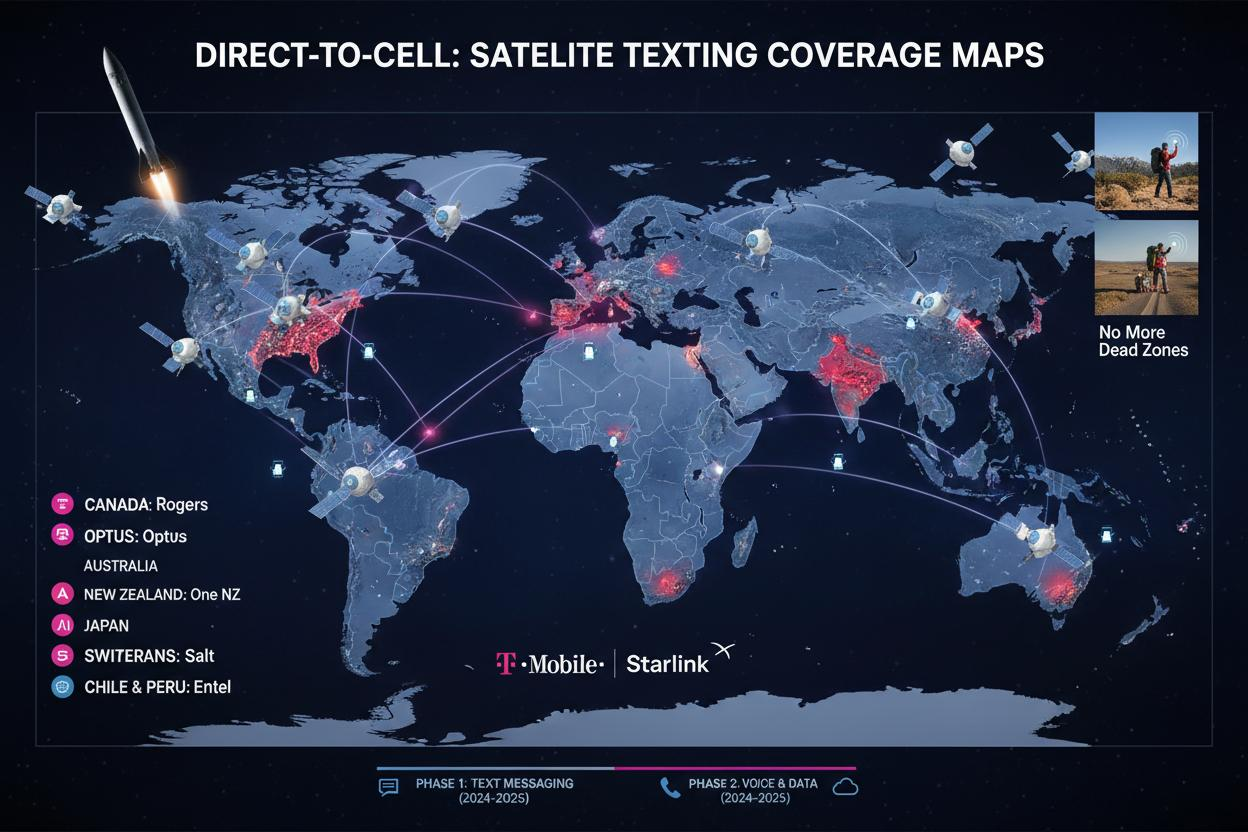
Still, the real impact will depend on execution. The announcement does not yet provide investment levels, rollout timing, pricing, supported devices, coverage maps, or service tiers. Those details will determine whether the venture becomes a meaningful solution for underserved communities or remains a strategic framework awaiting commercial clarity.
What Customers Could Eventually Experience
If the joint venture succeeds, the most noticeable change for customers could be less anxiety about losing service.
A phone might not suddenly deliver full urban-style broadband performance in the middle of a remote wilderness area. Satellite direct-to-device service is likely to develop in stages, with text and basic data often arriving before richer voice, video, or high-speed applications. But even modest connectivity can be critical when the alternative is no signal at all.
The companies say customers should eventually see stronger and more reliable connectivity in areas where traditional cell service is challenging. They also point to simpler access to satellite services across providers, more consistent performance, and quicker feature updates.
For consumers, the best-case outcome is that satellite backup becomes less fragmented. Instead of each carrier building isolated systems with different user experiences, a common technical approach could make satellite connectivity feel more like a natural extension of mobile service.
The Industry Still Has Questions to Answer
Despite the scale of the announcement, several major questions remain.
The companies have not disclosed the name of the joint venture, ownership structure, investment size, launch schedule, or detailed technical specifications. The agreement is still only “in principle,” which means the final version could change or face delays. The companies also acknowledge that the venture remains subject to definitive agreements and customary closing conditions.
There may also be regulatory and competition questions. When the three largest U.S. wireless carriers coordinate in any major strategic area, regulators and market observers are likely to examine how the arrangement affects competition, spectrum use, satellite providers, smaller carriers, and consumer choice.
The carriers are trying to position the venture as pro-competitive, arguing that it will expand provider options, improve spectrum efficiency, support rural operators, and make satellite integration easier. Whether regulators and competitors accept that framing will be an important part of the next phase.
A Turning Point for the Future of Mobile Networks
The planned joint venture reflects a broader truth about the future of connectivity: the next generation of mobile coverage will likely be hybrid.
Cell towers, fiber backhaul, 5G networks, satellites, operating systems, devices, and applications will need to work together more intelligently. Coverage will no longer be defined only by how many towers a carrier owns, but by how well it can blend terrestrial and non-terrestrial networks into one reliable customer experience.
For AT&T, T-Mobile, and Verizon, the proposed partnership is a strategic response to a changing communications landscape. For customers, it could eventually mean fewer dead zones and more dependable service in places that have long been difficult to connect.
The announcement is not yet a finished product. It is a framework, a signal, and a competitive maneuver. But its significance is clear: America’s largest wireless carriers are acknowledging that the path to broader coverage may require cooperation in space, even as they continue to compete fiercely on the ground.