


Sony Xperia 1 VIII Review: Sony’s Boldest Xperia Yet
The Sony Xperia 1 VIII is not just another yearly refresh. It represents the biggest philosophical and visual shift Sony has made to its flagship smartphone line in years. After several generations of conservative updates, Sony has finally reworked the Xperia formula with a dramatic redesign, a completely new telephoto camera system, AI-powered photography tools, and upgraded flagship hardware.
Yet despite the ambitious hardware, the Xperia 1 VIII enters a fiercely competitive premium smartphone market dominated by Samsung, Apple, Google, and aggressive Chinese brands like Oppo and vivo. Sony’s latest device attempts to stand apart not by copying rivals completely, but by preserving enthusiast-friendly features many competitors abandoned years ago.
The result is a fascinating flagship filled with contradictions: technically impressive, visually unique, occasionally frustrating, and unmistakably Sony.
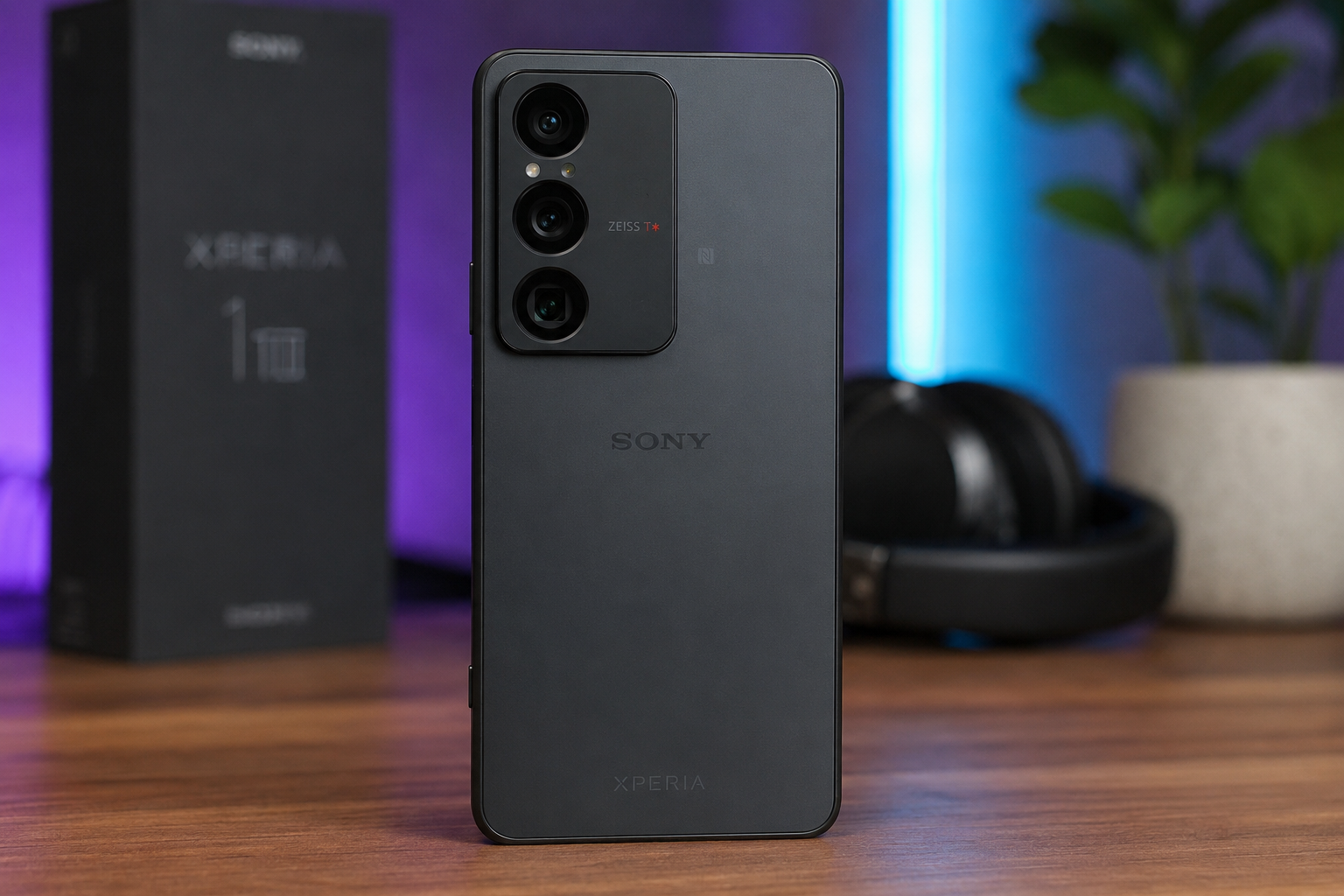
A Radical New Look for Xperia
Sony has maintained a remarkably consistent Xperia design language since the Xperia 1 II launched in 2020. The Xperia 1 VIII finally breaks that cycle.
The most noticeable change is the new square camera island positioned at the top-left corner of the rear panel. Earlier Xperia devices used a vertical camera strip centered on the back, but Sony has now embraced a layout more commonly seen on modern flagship Android phones.
The redesign is not purely cosmetic. According to leaks and official details, the larger camera bump exists specifically to accommodate significantly larger image sensors, particularly the upgraded telephoto system.
Sony also introduced textured “ORE” finishes and gemstone-inspired color options, giving the device a more tactile and premium feel. The frosted rear glass and rough matte surface improve grip substantially compared to previous Xperia phones.
Color options include:
- Graphite Black
- Garnet Red
- Iolite Silver
- Native Gold (exclusive to the 1TB variant)
Despite the redesign, Sony retained several signature Xperia elements that loyal fans appreciate:
- Dedicated physical camera shutter button
- Expandable microSD storage
- 3.5mm headphone jack
- Front-facing stereo speakers
- No punch-hole or notch in the display
The phone still features Sony’s trademark tall-and-narrow form factor with a 6.5-inch OLED display and visible top and bottom bezels. While many modern phones pursue edge-to-edge aesthetics, Sony continues prioritizing symmetry and uninterrupted viewing.
The Biggest Camera Upgrade Is the Telephoto Lens
The centerpiece of the Xperia 1 VIII is unquestionably its new telephoto camera.
Sony replaced the previous 12MP variable zoom periscope lens with a 48MP fixed 70mm telephoto camera using a much larger 1/1.56-inch sensor. Sony says the sensor is roughly four times larger than the one used in the Xperia 1 VII.
That larger sensor brings several benefits:
- Better low-light photography
- Improved dynamic range
- Cleaner HDR processing
- More natural background blur
- Enhanced detail retention
Sony also expanded RAW multi-frame image processing across all rear cameras, improving noise reduction and HDR handling. The rear camera system now includes:
- 48MP main camera
- 48MP ultra-wide camera
- 48MP telephoto camera
On paper, this is Sony’s most ambitious smartphone camera setup yet.
However, there are compromises.
The Xperia 1 VII offered a variable optical zoom system ranging from 85mm to 170mm. The Xperia 1 VIII abandons that flexibility in favor of image quality. Users gain stronger low-light performance but lose some zoom versatility. The minimum focus distance has also increased to 15cm, reducing macro capabilities.
AI Camera Assistant: Helpful Tool or Overprocessing Problem?
Sony is also leaning heavily into artificial intelligence this year with its new AI Camera Assistant.
Powered by “Xperia Intelligence,” the feature analyzes scenes, lighting conditions, and subjects in real time to recommend settings such as:
- Lens selection
- Bokeh intensity
- Color tones
- Exposure adjustments
Sony says the system draws directly from its Alpha camera expertise, aiming to help users achieve creative results without requiring professional photography knowledge.
In theory, this bridges Sony’s traditionally manual camera experience with the simplified photography approach popularized by Apple and Google.
But early reactions have been mixed.
Some reviewers praised the AI-assisted shooting suggestions, while others criticized the resulting images for appearing overprocessed and unnatural.
One major criticism centers around skin tone rendering. Early sample comparisons against the iPhone 17 Pro showed Sony struggling with greenish and yellowish facial tones, especially in portrait photography.
Reviewers also pointed out issues with:
- Overexposure
- Flattened shadows
- Washed-out HDR rendering
- Aggressive brightness enhancement
Tech commentators expressed concern that Sony may be abandoning the more natural photographic style that traditionally distinguished Xperia devices from competitors.
Ironically, Sony’s historically restrained image processing was often praised by photography enthusiasts precisely because it avoided the exaggerated HDR look common in many smartphones.
Performance Is Pure Flagship
Under the hood, the Xperia 1 VIII is equipped with Qualcomm’s Snapdragon 8 Elite Gen 5 processor, one of the most powerful Android chipsets currently available.
Sony claims the new chip delivers:
- Up to 23% faster GPU performance
- Around 20% lower power consumption
- Improved sustained gaming performance
The phone is available in multiple configurations:
| Variant | RAM | Storage |
|---|---|---|
| Base Model | 12GB | 256GB |
| Mid Variant | 12GB | 512GB |
| Premium Variant | 16GB | 1TB |
Expandable storage remains one of Xperia’s biggest advantages. With microSD support up to 2TB, users can theoretically push total storage capacity to 3TB.
That alone makes the Xperia 1 VIII particularly appealing to photographers, videographers, and creators working with large files.
Sony Still Refuses to Kill the Headphone Jack
One of the Xperia line’s defining characteristics remains its commitment to enthusiast hardware features most manufacturers removed years ago.
The Xperia 1 VIII still includes:
- 3.5mm headphone jack
- Expandable storage
- Front-facing stereo speakers
- Dedicated camera shutter key
Sony also upgraded the stereo speaker system with improved bass response, wider soundstage performance, and clearer vocal reproduction.
The headphone jack supports high-resolution wired audio and benefits from Sony’s long-standing Walkman audio heritage.
For audiophiles and media enthusiasts, these features continue to make Xperia phones uniquely attractive.
Display and Battery
The Xperia 1 VIII features a 6.5-inch LTPO OLED display with:
- 120Hz refresh rate
- HDR BT.2020 support
- 1080 x 2340 resolution
- Gorilla Glass Victus 2 protection
Sony retains its Bravia-inspired display tuning, emphasizing cinematic color reproduction and media consumption.
Battery specifications include:
- 5000mAh battery
- 30W wired charging
- 15W wireless charging
- Reverse wireless charging
Sony claims up to two days of battery life under normal usage conditions.
The Price Problem
The Xperia 1 VIII is unapologetically expensive.
Pricing starts at:
- £1399 / €1499 for the 256GB model
- £1849 / €1999 for the 1TB version
If sold in the United States, estimates suggest pricing could have approached $1,900 to $2,500.
Sony is also continuing its absence from the US flagship smartphone market, focusing instead on Europe and Asia.
At these prices, the Xperia 1 VIII competes directly against devices like:
- Samsung Galaxy S26 Ultra
- iPhone 17 Pro Max
- Oppo Find X9 Ultra
- vivo X300 Ultra
That creates enormous pressure for Sony to deliver not just uniqueness, but category-leading performance.
Who Is the Xperia 1 VIII Really For?
The Xperia 1 VIII is clearly not trying to appeal to mainstream smartphone buyers.
Instead, Sony is targeting a niche audience that values:
- Manual photography controls
- Expandable storage
- Wired audio
- Uninterrupted displays
- Distinctive industrial design
- Professional camera-inspired experiences
For that audience, the Xperia 1 VIII may be one of the most interesting flagship phones currently available.
However, the device also highlights Sony’s ongoing challenge in smartphones: balancing enthusiast appeal with broader usability.
The hardware is undeniably impressive, especially the new telephoto sensor and premium build quality. But concerns around AI image processing, portrait rendering, and software polish suggest Sony still has work to do before it can truly rival the computational photography dominance of Apple, Google, and Chinese camera-focused flagships.
Final Verdict
The Sony Xperia 1 VIII is bold, ambitious, and refreshingly different.
It modernizes Xperia design without abandoning the enthusiast features that made the series unique. The larger telephoto sensor represents a meaningful hardware leap, while the Snapdragon 8 Elite Gen 5 ensures flagship-level performance across gaming, photography, and multitasking.
At the same time, Sony’s growing reliance on AI-assisted photography introduces new concerns. Early camera samples suggest the company may be drifting away from the natural image style that once differentiated Xperia phones from competitors.
Still, in a smartphone industry increasingly filled with similar-looking devices, the Xperia 1 VIII stands out. Whether that uniqueness is enough to justify its ultra-premium pricing remains the central question.
For photography enthusiasts, media lovers, and long-time Sony fans, the Xperia 1 VIII may be one of the most compelling niche flagships of 2026. For everyone else, it remains a fascinating—but expensive—alternative to the mainstream smartphone giants.


