
South Africa’s Top Court Draws a Line on Repeat Asylum Claims
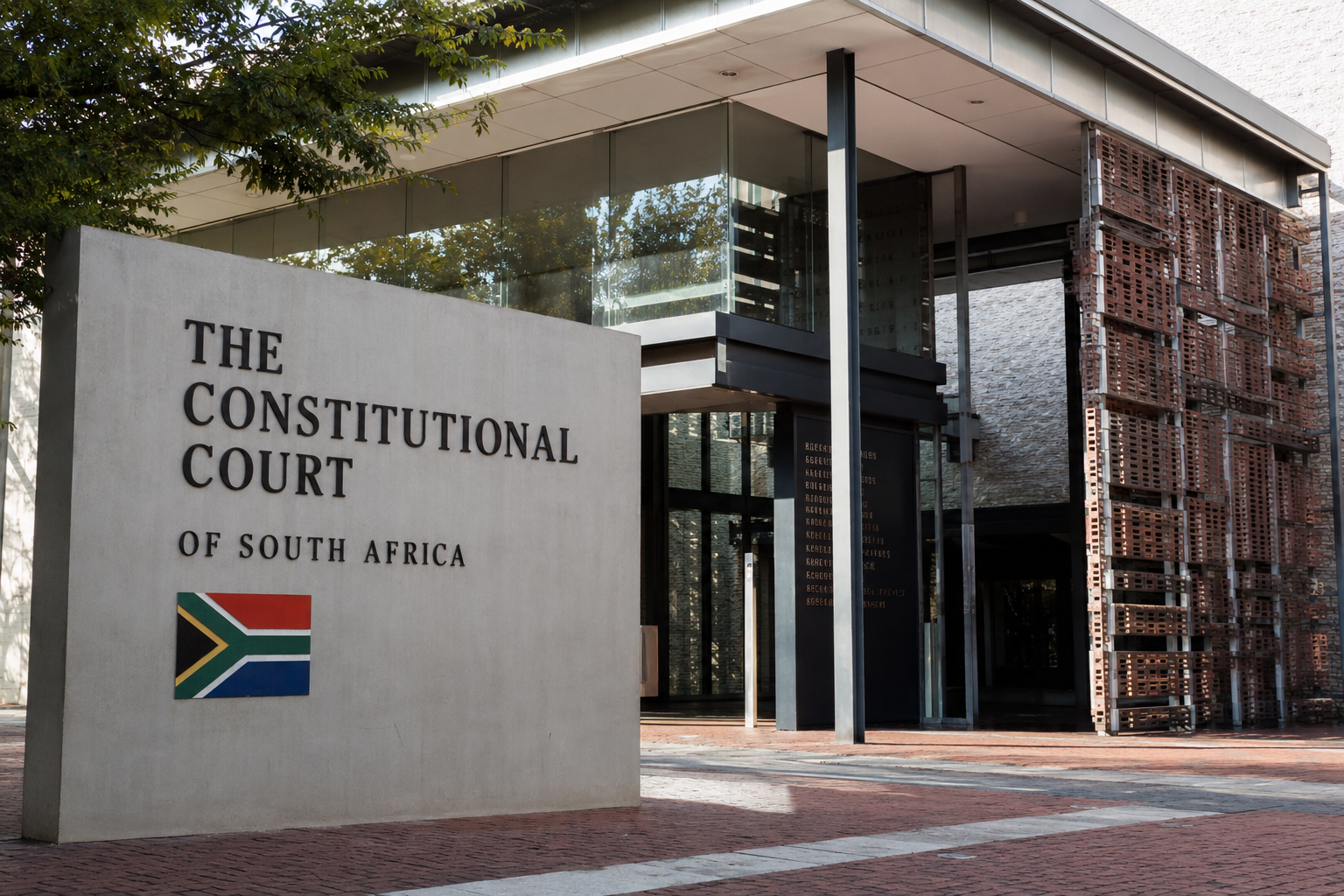
The Constitutional Court of South Africa has delivered a landmark ruling that could reshape the country’s asylum system for years to come, deciding that refugees and asylum seekers cannot remain in the country and submit new asylum applications after a previous claim has already been rejected.
- The Case That Reached South Africa’s Highest Court
- Why the Constitutional Court Rejected Repeat Applications
- Home Affairs Celebrates “Major Victory”
- A System Under Growing Pressure
- The Broader Global Debate Around Asylum Systems
- Legal Experts May Still Debate the Consequences
- What the Ruling Means Going Forward
The judgment, handed down on 13 May 2026, overturns an earlier Supreme Court of Appeal (SCA) decision that had favored two Burundian nationals seeking another opportunity to secure refugee protection in South Africa. The ruling arrives at a politically sensitive moment, as migration policy, border management, and anti-immigrant tensions increasingly dominate public debate in the country.
The Case That Reached South Africa’s Highest Court
At the center of the dispute were two citizens of Burundi who fled to South Africa between 2008 and 2012, fearing persecution in their home country. After arriving, both applied for asylum.


Their original asylum claims were rejected by South African authorities, who found the applications lacked merit. The Department of Home Affairs’ decision later received backing from Parliament’s Portfolio Committee in 2014.
But the matter did not end there.


In 2018, the pair submitted a fresh asylum application, arguing that Burundi’s political climate had deteriorated dramatically following the violent unrest linked to the country’s disputed 2015 presidential election. At least 70 people were reportedly killed after then-President Pierre Nkurunziza sought a controversial third term.
The applicants attempted to use what is known as “sur place” refugee status — a legal principle that applies when someone who was not initially considered a refugee later becomes one because conditions in their home country change after departure.
The Supreme Court of Appeal sided with the Burundian applicants, effectively opening the door for repeat applications under changed circumstances.
However, the Department of Home Affairs challenged that ruling before the Constitutional Court, arguing that permitting repeated asylum applications would undermine the integrity of the refugee system.


The apex court ultimately agreed with the government.
Why the Constitutional Court Rejected Repeat Applications
In its majority judgment, the Constitutional Court warned that allowing unlimited repeat applications without a clear legislative framework could create what it described as a “never-ending cycle.”
According to the court’s reasoning, repeated applications could make deportations nearly impossible while placing immense strain on South Africa’s already burdened asylum administration system.
The ruling effectively establishes that once an asylum application has been finally rejected, applicants are not automatically entitled to file another claim based on the same or related circumstances.
Officials within the Department of Home Affairs argue that the loophole had been exploited for years, contributing to delays, mounting backlogs, and administrative inefficiency.
The court’s decision is now being viewed as one of the most significant refugee and migration rulings in South Africa in recent years.
Home Affairs Celebrates “Major Victory”
Home Affairs Minister Dr Leon Schreiber quickly welcomed the ruling, describing it as a major step toward restoring order to South Africa’s migration system.
“This judgment from the highest court in the land is an affirmation of the unprecedented progress we are making in restoring the rule of law and clamping down on abuse in migration and asylum systems,” Schreiber said.
In public remarks following the decision, Schreiber argued that the SCA judgment would have enabled asylum seekers to take “multiple bites at the cherry” by continuously filing new applications whenever earlier claims failed.
The Department of Home Affairs says the ruling reinforces the principle of finality in asylum adjudication and will support broader reforms aimed at improving efficiency and credibility within the refugee system.
A System Under Growing Pressure
The Constitutional Court ruling comes amid mounting pressure on South Africa’s refugee infrastructure.
According to the UN refugee agency (UNHCR), South Africa hosted more than 167,000 refugees and asylum seekers in 2025, including people from Burundi, the Democratic Republic of Congo, Somalia, South Sudan, Rwanda, and Zimbabwe.
As Africa’s most industrialized economy, South Africa has long attracted migrants seeking economic opportunities, safety, or political refuge. Official estimates suggest the country hosts approximately 2.4 million migrants, although the actual figure may be considerably higher.
At the same time, public frustration over unemployment, crime, housing shortages, and undocumented migration has intensified political pressure on authorities to tighten immigration enforcement.
Recent months have seen waves of anti-immigrant protests in several South African cities, with demonstrators demanding mass deportations of undocumented foreigners.
President Cyril Ramaphosa has condemned violence against migrants, warning that opportunists were exploiting tensions for political purposes.
“The recent violent protests and criminal acts directed at foreign nationals in parts of our country do not represent the views of South Africa’s people nor reflect our government’s policy,” Ramaphosa said in a public statement.
The Broader Global Debate Around Asylum Systems
South Africa’s ruling reflects a broader international debate over asylum systems, border management, and refugee protections.
Governments across the world are increasingly balancing humanitarian obligations with political pressure to curb irregular migration and prevent abuse of asylum frameworks.
Australia, for example, continues to spend billions on offshore processing and migration enforcement while debating reforms to refugee intake systems and asylum protections.
In Europe, anti-asylum protests have intensified in some countries, including violent demonstrations targeting refugee shelters in the Netherlands.
Meanwhile, in the United States, asylum seekers continue to face legal uncertainty, detention concerns, and disputes over due process protections.
These global developments illustrate how asylum policy has become one of the most politically sensitive and legally contested issues worldwide.
Legal Experts May Still Debate the Consequences
Although the Constitutional Court ruling delivers clarity on repeat applications, legal analysts are likely to continue debating how the decision will affect genuine refugees whose circumstances change dramatically after an initial rejection.
The Burundian applicants argued precisely that point: conditions in Burundi worsened significantly after their first applications were denied.
Critics of stricter asylum rules often warn that rigid systems may fail to account for rapidly evolving conflicts, political violence, or humanitarian crises.
Supporters of the ruling, however, argue that immigration systems require finality and enforceable rules to function effectively.
The challenge for South Africa now will be balancing constitutional protections for vulnerable migrants with growing domestic demands for stronger immigration enforcement.
What the Ruling Means Going Forward
The Constitutional Court’s decision is expected to strengthen the government’s ongoing efforts to overhaul South Africa’s migration framework.
Officials have already linked the judgment to broader policy reforms, including tighter controls over asylum processing and measures intended to reduce what authorities describe as systemic abuse.
For asylum seekers currently in South Africa, the ruling sends a clear message: once a claim has been fully rejected, filing a fresh application may no longer provide a pathway to remain in the country.
For the government, the judgment represents a major legal endorsement of its tougher stance on migration management.
And for the broader region, the case may become an influential precedent in future debates over refugee protection, administrative fairness, and the limits of asylum systems in an era of rising global displacement.