Rugby Union Faces a Defining Moment as Operation Obsidian Exposes Deep Anti-Doping Failures
Rugby union has long marketed itself as a sport built on discipline, physical sacrifice, and moral integrity. But in 2026, one of the most serious anti-doping investigations in the game’s history has forced the global rugby community into uncomfortable reflection.
- Operation Obsidian: The Investigation That Shook Rugby
- Merab Sharikadze Receives 11-Year Ban
- A Doping Scandal Without Performance-Enhancing Drugs?
- The Wider Problem Inside Rugby Union
- Government Intervention and Institutional Fallout
- The Human Cost Behind the Headlines
- Rugby’s Reputation Under Pressure
- A Defining Test for the Future of Rugby Union
At the center of the controversy is “Operation Obsidian,” a sweeping investigation led by the World Anti-Doping Agency (WADA) and World Rugby that uncovered an organized urine-swapping scheme involving members of the Georgia national rugby union team. The scandal has resulted in lengthy suspensions for six players and a member of the team’s medical staff, while also triggering broader concerns about the integrity of anti-doping systems within rugby and beyond.
The fallout has already reshaped Georgian rugby, prompted government intervention, and reignited global debate about doping culture in elite sport.


Operation Obsidian: The Investigation That Shook Rugby
Operation Obsidian began in 2023 after irregularities were detected in biological samples linked to Georgian rugby players ahead of the Rugby World Cup in France. Scientists monitoring athlete biological passports identified anomalies that suggested possible manipulation of urine samples.
What followed was a four-year investigation involving forensic testing, long-term sample storage analysis, and intelligence-sharing between World Rugby and WADA. According to investigators, the inquiry uncovered five confirmed cases of urine sample substitution dating back to 2019.


WADA stated that the operation revealed players had been engaging in “sample substitution,” a prohibited method under Article 2.2 of the World Anti-Doping Code. The investigation also determined that athletes were allegedly receiving advance notice of drug tests through individuals connected to the Georgian Anti-Doping Agency (GADA).
Even more troubling were findings that doping control officers failed to properly observe athletes during urine collection procedures — a major breach of international anti-doping protocols.
Merab Sharikadze Receives 11-Year Ban
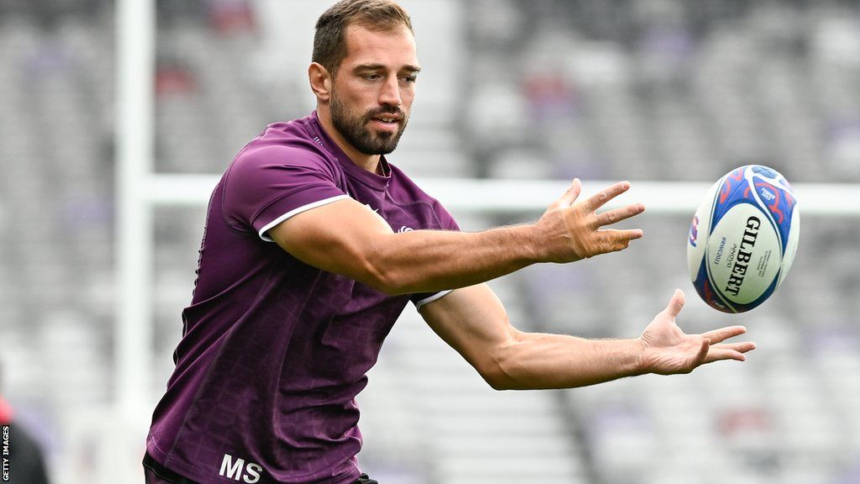
The most prominent figure implicated in the scandal is former Georgia captain Merab Sharikadze, who has been banned from sport for 11 years.
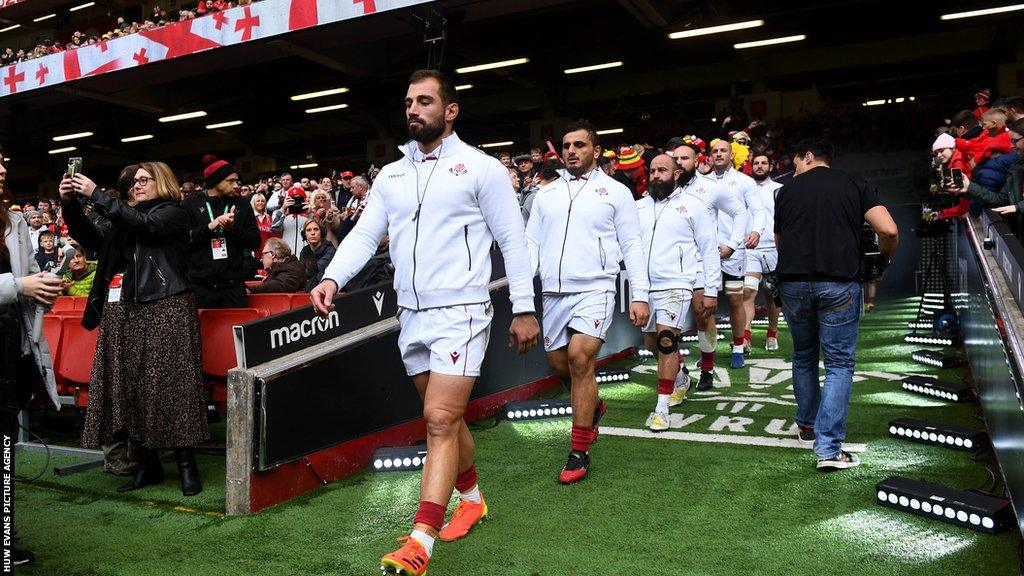
Sharikadze was once celebrated as one of Georgian rugby’s defining figures. He earned more than 100 caps for the national side and captained the team during its historic 13-12 victory over Wales in Cardiff in 2022.


Investigators concluded that Sharikadze supplied “clean” urine samples to teammates on three separate occasions. Hooker Giorgi Chkoidze received a six-year suspension, while Lasha Khmaladze, Otar Lashkhi, and Miriani Modebadze were each handed three-year bans. Lasha Lomidze received a nine-month suspension.
Team doctor Nutsa Shamatava was banned for nine years after investigators found she had provided advance notice of out-of-competition tests to players through group chats.
World Rugby described the case as “the most extensive anti-doping investigation ever undertaken in rugby.”
A Doping Scandal Without Performance-Enhancing Drugs?
One of the most surprising elements of the investigation was what investigators did not find.
Initially, World Rugby believed the urine substitutions were intended to hide the use of performance-enhancing drugs. However, after years of forensic analysis, officials said there was no evidence supporting that theory.
Instead, the evidence suggested players were attempting to conceal the use of cannabis and tramadol — substances that occupied a grey regulatory area during the period in question. Cannabis is prohibited only during competition under WADA rules, while tramadol was not banned at the time the offenses occurred.
World Rugby stated:
“There was credible evidence to support the players’ assertions that the urine sample substitutions occurred to conceal the use of non-performance-enhancing substances (namely, cannabis and tramadol).”
The revelation complicated public reaction to the scandal. While the methods used clearly violated anti-doping regulations, the absence of proven performance-enhancing drug use raised questions about whether rugby’s culture around pain management, recreational drug use, and athlete welfare requires deeper scrutiny.
The Wider Problem Inside Rugby Union
Operation Obsidian has intensified concerns that rugby union may have a larger anti-doping problem than many within the sport are willing to admit.
A broader analysis published by Sports Gazette highlighted the scale of anti-doping enforcement in rugby across several countries. According to UK Anti-Doping Agency data, 12 rugby union players in the UK are currently serving sanctions for anti-doping rule violations. The offenses range from steroid use and growth hormones to trafficking and recreational drug use.
Testing has also increased significantly. The number of rugby union tests conducted under RFU, SRU, and WRU programs rose from 901 in 2021 to 1,086 in 2025.
South Africa has also come under heavy scrutiny. Reports cited in the investigation noted that approximately 20% of global rugby doping violations between 2019 and 2023 were linked to South African rugby.
Several high-profile cases have added to those concerns, including bans involving Springboks players S’busiso Nkosi and Elton Jantjies.
The issue extends beyond elite competition. Experts argue that semi-professional and grassroots rugby may be particularly vulnerable due to intense physical demands and limited oversight.
Sports integrity expert Julia Cook explained that anti-doping enforcement at lower levels often becomes “a cat-and-mouse game” because testing programs are expensive and strategically targeted.
Government Intervention and Institutional Fallout
The scandal’s consequences have stretched far beyond individual bans.
Following communication with WADA, the Georgian government withdrew recognition of GADA and began working to establish a completely new national anti-doping organization with entirely different personnel.
WADA President Witold Bańka called the situation “a scandal for Georgian sport” and said the lengthy suspensions send “a strong message to others who may be tempted to try and cheat the system.”
World Rugby Chief Executive Alan Gilpin defended the investigation’s scale and significance, saying:
“Our extensive four-year investigation has helped identify subversion of the doping control process and sends a clear message that World Rugby takes all anti-doping matters extremely seriously and is an unwavering champion of clean sport.”
Meanwhile, the Georgian Rugby Union has accepted misconduct charges, agreed to financial penalties, and committed to anti-doping reforms and education programs.
The Human Cost Behind the Headlines
Beyond the sanctions and institutional failures lies a deeply personal story.
In interviews cited during coverage of the scandal, Sharikadze described the emotional collapse that followed the investigation. He said he initially believed he was helping trusted teammates and did not understand the full implications of providing urine samples.
“Rugby was equal to life for me,” he reportedly said. “My story shouldn’t have ended like that.”
He also spoke about avoiding home after learning about his suspension and asking his mother to remove rugby memorabilia from the family home. During the period surrounding the scandal, his mother passed away, adding another painful layer to the saga.
The case therefore exists in a complicated space: a clear anti-doping violation intertwined with loyalty, pressure, flawed systems, and the emotional toll of elite sport.
Rugby’s Reputation Under Pressure
For decades, rugby union has cultivated an image of honor and sportsmanship distinct from many other professional sports. Operation Obsidian has challenged that identity.
The scandal demonstrated that sophisticated manipulation of anti-doping systems can occur even in sports that emphasize values-based culture. It also highlighted vulnerabilities in testing procedures, governance oversight, and athlete education.
Importantly, WADA has confirmed that its investigation is not over. Officials are now reviewing samples from athletes in other Georgian sports to determine whether the problems uncovered in rugby extend further into the country’s sporting ecosystem.
WADA Director of Intelligence and Investigations Günter Younger stated:
“We are now in the next phase of this investigation as we assess whether the issues in Georgian rugby go beyond that of one sport.”
The agency is also developing dedicated guidelines for identifying and investigating future sample substitution cases.
A Defining Test for the Future of Rugby Union
Operation Obsidian may ultimately become a defining moment for rugby union’s modern era.
The investigation exposed how fragile anti-doping systems can become when trust breaks down between athletes, medical staff, and regulators. It also forced rugby authorities to confront uncomfortable realities about player behavior, pain management culture, and institutional accountability.
For supporters, the revelations are unsettling because they touch the heart of what rugby claims to represent. Yet for anti-doping agencies, the case may also represent proof that long-term scientific monitoring and coordinated investigations can uncover sophisticated deception.
Whether rugby union emerges stronger from this crisis will depend on what happens next — not only in Georgia, but across the global game.