Weekly Poll: Would You Buy the Motorola Razr 70, Razr 70+ or Razr 70 Ultra?
Motorola’s Razr revival continues in 2026 with a familiar but more refined lineup of foldable flip phones. This year, the company unveiled three models — the Motorola Razr 70, Razr 70+, and Razr 70 Ultra — each targeting a different tier of the premium foldable market. Yet despite the refreshed branding, larger batteries, and new finishes, one major question dominates the conversation:
- Motorola Doubles Down on the Flip Foldable Formula
- A Flagship That Plays It Safe
- Motorola’s Design Strategy: Fashion Over Minimalism
- The Camera Upgrade That Might Matter Most
- But the Price Increase Is Hard to Ignore
- Finally Expanding Beyond North America
- Is the Razr 70+ Too Similar to Last Year’s Model?
- The Entry Model Might Be the Sweet Spot
- Conclusion
Are these upgrades compelling enough to justify their higher prices?
That question is now at the center of the latest weekly smartphone poll as consumers weigh whether Motorola’s stylish foldables still offer enough value in an increasingly competitive market led by Samsung’s Galaxy Z Flip series.
The 2026 Razr family arrives at a critical moment for foldables. Motorola reportedly controls more than 50% of the foldable market in the United States, thanks largely to its iconic Razr branding and aggressively designed cover displays. But with Samsung preparing the Galaxy Z Flip 8 and rivals pushing thinner designs, stronger software support, and more powerful hardware, Motorola’s latest strategy appears less about reinvention and more about refinement.



Motorola Doubles Down on the Flip Foldable Formula
The Razr brand remains synonymous with flip phones, even as Motorola expands into book-style foldables for the first time. Instead of radically redesigning the Razr line, Motorola has chosen to evolve it gradually.


The lineup now includes:
- Motorola Razr 70 — the standard entry model
- Motorola Razr 70+ — a newly global mid-tier variant
- Motorola Razr 70 Ultra — the flagship foldable
In the United States, the phones carry slightly different names:
- Razr 2026
- Razr+ 2026
- Razr Ultra 2026
At first glance, the phones look strikingly similar to last year’s Razr 60 series. The bigger story lies in the details: improved battery capacities, upgraded ultrawide cameras, brighter screens, and new material finishes inspired by Pantone collaborations.
The Razr 70 Ultra: Premium Style Meets Familiar Hardware
A Flagship That Plays It Safe
The Motorola Razr 70 Ultra is positioned as the most luxurious model in the series. Motorola calls it the “most powerful Razr yet,” but the hardware tells a more cautious story.


The phone still uses Qualcomm’s Snapdragon 8 Elite chipset — essentially the same processor found in the previous generation, though slightly overclocked to 4.47GHz. While still powerful, this means the Ultra could already feel a generation behind compared to upcoming flagship Android phones in late 2026.
Key specifications include:
- 7-inch 165Hz LTPO OLED internal display
- 4-inch 165Hz external display
- 5,000mAh battery
- 68W wired charging
- 30W wireless charging
- Triple 50MP camera setup
- IP48 water and dust resistance
The internal display now reaches a peak brightness of 5,000 nits, up from 4,500 nits previously. Battery capacity also increases from 4,700mAh to 5,000mAh, making it one of the largest batteries in a premium flip foldable.
Motorola’s Design Strategy: Fashion Over Minimalism
One area where Motorola continues to differentiate itself is industrial design.
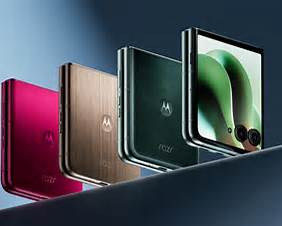
The Razr 70 Ultra introduces new Pantone-inspired finishes, including:
- Pantone Orient Blue with Alcantara texture
- Pantone Cocoa with a wood veneer finish
These materials create a dramatically different aesthetic from Samsung’s more industrial Galaxy Z Flip approach. Motorola appears to be positioning the Razr as a fashion-forward foldable rather than a purely technical device.
However, this design philosophy comes with trade-offs. The Razr 70 Ultra is thicker than rivals like the Galaxy Z Flip 7, measuring around 7.2mm unfolded compared to Samsung’s slimmer foldable profile.
The Camera Upgrade That Might Matter Most
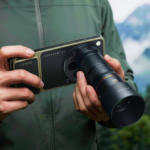
Although the camera hardware appears unchanged on paper, Motorola introduced a new LOFIC sensor in the main 50MP camera.
The company claims the new sensor dramatically improves dynamic range, reducing exposure issues and enhancing low-light performance. Motorola also says its new imaging pipeline speeds up shot processing while improving efficiency.
Additional camera features include:
- Frame Match photo alignment tool
- Tilt-to-zoom camcorder mode
- Enhanced AI-powered editing
The new camcorder zoom feature is particularly notable because it leverages the foldable form factor creatively. Users can partially fold the phone like a traditional camcorder and zoom simply by tilting the device.
But the Price Increase Is Hard to Ignore
The biggest controversy surrounding the Razr 70 Ultra may not be its specs — it’s the price.
Pricing now starts at:
- $1,500 in the US
- £1,200 in the UK
- €1,400 in Europe
That represents roughly a $200 increase over last year’s model.
For many consumers, that makes the value proposition significantly harder to justify, especially considering Samsung offers longer software support.
Motorola currently promises:
- 3 Android OS upgrades
- 5 years of security updates
Samsung and Google now offer up to 7 years of support.
The Razr 70+: The Middle Child With Global Ambitions
Finally Expanding Beyond North America
One of the most interesting developments this year is the global rollout of the Razr 70+.
Last year’s Razr+ was primarily a North American device, but Motorola is now expanding the Plus branding internationally for the first time.
The Razr 70+ acts as a middle-ground option between the standard model and the Ultra.
Specifications include:
- Snapdragon 8s Gen 3 processor
- 4-inch external display
- 4,500mAh battery
- 45W charging
- Dual 50MP rear cameras
The design closely mirrors the Ultra, making the two nearly indistinguishable when closed.
Is the Razr 70+ Too Similar to Last Year’s Model?
Despite the new branding, critics argue the Razr 70+ changes very little from the previous Razr+ 2025.
The most meaningful upgrade is the larger battery capacity, which increases from 4,000mAh to 4,500mAh. The telephoto camera from last year has also been replaced with a 50MP ultrawide sensor.
Still, with pricing expected around:
- $1,100 in the US
- £1,000 in the UK
many buyers may struggle to see enough innovation to justify the cost.
The Razr 70: The Most Practical Option?
The Entry Model Might Be the Sweet Spot
Ironically, the most affordable Razr could end up being the most attractive option for mainstream buyers.
The Motorola Razr 70 introduces:
- MediaTek Dimensity 7450X processor
- 4,800mAh battery
- 50MP ultrawide camera
- 3.63-inch external display
While the chipset upgrade is modest, the larger battery and improved ultrawide camera give the device more practical appeal.
The phone also undercuts Samsung’s Galaxy Z Flip pricing in many markets:
- £799 in the UK
- €870 in Europe
- $800 in the US
That lower entry price may prove important as foldables gradually move toward mainstream adoption.
AI, Software, and Motorola’s New Direction
Motorola is increasingly leaning into AI-powered experiences across the Razr lineup.
Features now include:
- Moto AI tools
- Google Gemini integration
- Microsoft Copilot support
- Perplexity AI integration
- AI-powered photo enhancements
- Digital wardrobe recommendations in Google Photos
However, not all reactions have been positive.
Some reviewers criticized Motorola’s software for becoming increasingly cluttered with advertising, AI suggestions, and unnecessary content feeds.
The cleaner near-stock Android experience that once defined Motorola devices appears to be fading.
The Big Poll Question: Which Razr Would You Actually Buy?
The latest weekly poll surrounding the Razr 70 lineup ultimately highlights a broader issue in the foldable market:
Consumers want innovation — but they also want value.
Motorola’s 2026 Razr family delivers:
- Better batteries
- Brighter screens
- Improved cameras
- Stylish new finishes
But it also introduces:
- Higher prices
- Minimal chipset improvements
- Shorter software support than rivals
- Designs that feel very familiar
For existing Razr owners, especially those using the Razr 60 Ultra, the upgrades may not feel substantial enough.
For newcomers to foldables, however, Motorola’s colorful designs, large cover screens, fast charging, and fashionable finishes still make the Razr lineup one of the most visually distinctive choices available.
The question now is whether buyers prioritize:
- Samsung’s thinner engineering and longer support,
or - Motorola’s bold styling and foldable personality.
That’s exactly why this year’s Razr poll has become so interesting.
Conclusion
Motorola’s Razr 70 series reflects a company confident in its foldable identity. Instead of reinventing the formula, Motorola refined it with larger batteries, brighter displays, AI-driven software features, and premium materials.
Yet the foldable market in 2026 is more competitive than ever. Incremental upgrades and rising prices are forcing consumers to ask tougher questions about long-term value.
The Razr 70 Ultra may still be one of the most stylish foldables on the market, but style alone may no longer be enough at $1,500.
Meanwhile, the Razr 70 and Razr 70+ could emerge as the smarter choices for buyers who want the foldable experience without fully entering ultra-premium pricing territory.
Now the spotlight shifts to consumers — and the poll results may reveal whether Motorola’s strategy still resonates in the next phase of foldable smartphones.