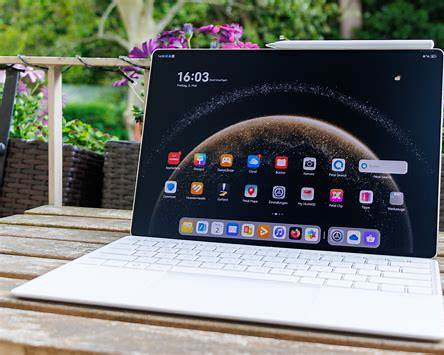
Huawei is preparing to expand its premium tablet lineup with the MatePad Pro Max, a device that is already attracting attention ahead of its official global rollout. Positioned as the company’s most advanced MatePad to date, the upcoming tablet combines an ultra-thin design, high-end display technology, flagship-level productivity tools, and ambitious hardware features aimed at competing in the premium tablet market.
The MatePad Pro Max was first teased before Huawei’s global launch event in Bangkok, where the company confirmed several headline features, including a record-setting 4.7mm chassis and a large OLED PaperMatte display. The device was later formally introduced alongside Huawei’s latest wearables and ecosystem products.
Huawei’s Focus: Ultra-Thin Premium Design
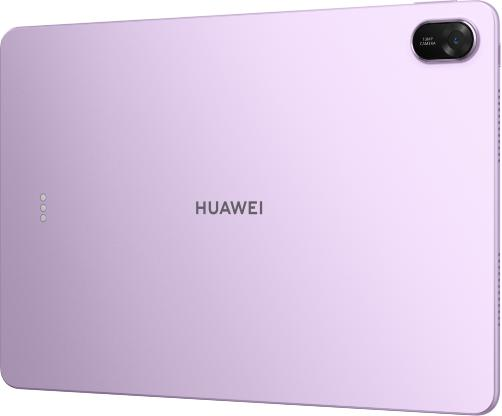
One of the biggest talking points surrounding the MatePad Pro Max is its industrial design. Huawei says the tablet measures just 4.7mm thick, making it the slimmest flagship tablet the company has ever produced and one of the thinnest premium tablets on the market.
At approximately 499 grams, Huawei is also marketing the device as exceptionally lightweight for its class. The tablet uses a full-metal unibody design built around what Huawei calls its “Cloud Falcon Architecture.” According to the company, the device has received TÜV Rheinland Ultra-thin Bending Resistance Certification, highlighting durability despite its slim profile.
Adding to the premium aesthetic is a new luminous rear finish designed to shift appearance depending on lighting angles. Huawei appears to be leaning heavily into design differentiation, an area where the company has historically attempted to stand apart from competitors.
At launch, the MatePad Pro Max will reportedly be available in Blue and Space Gray color options.
Massive OLED PaperMatte Display Takes Center Stage
The MatePad Pro Max is built around a 13.2-inch Flexible OLED PaperMatte display, one of the largest and most advanced screens Huawei has ever used on a tablet.
The panel features:
- 3K resolution (3000 × 2000)
- 144Hz refresh rate
- 1600 nits peak brightness
- 2,000,000:1 contrast ratio
- 94% screen-to-body ratio
- Ultra-slim 3.55mm bezels
Huawei says the PaperMatte technology uses nano-level etching to reduce glare and improve readability in bright environments. The company claims the display delivers 20% clearer viewing while also carrying TÜV Rheinland Full Care Display 5.0 certification.
The thin bezels are particularly notable because Huawei has reportedly embedded the front camera system directly into the bezel area itself, allowing the device to maintain an uninterrupted front-facing design.
Performance Upgrades and Kirin 9-Series Expectations
Ahead of launch, leaks from tipster Digital Chat Station suggested the MatePad Pro Max would be powered by a Kirin 9-series chipset and support 66W fast charging.
Huawei has not publicly detailed the chipset architecture yet, but the company claims the tablet delivers a 20% performance improvement compared to the MatePad Pro 2025. Huawei also says the device features a redesigned thermal system capable of delivering 30% better heat dissipation.
The cooling system reportedly includes:
- A 100% larger heat dissipation area
- Dual-layer vapor chamber cooling
- A centered mainboard design for improved thermal management
These improvements appear aimed at productivity workloads, multitasking, creative applications, and sustained performance during extended use.
Productivity Is a Major Part of Huawei’s Strategy
Huawei is increasingly positioning its flagship tablets as laptop alternatives, and the MatePad Pro Max reflects that strategy clearly.
Running HarmonyOS 4.3, the tablet includes several productivity-focused software features designed to mimic a desktop-style workflow.
Huawei says the device supports:
- Live Multitask for running up to three apps simultaneously
- PC-level WPS Office AI
- AI-powered document and presentation generation
- Smart spreadsheet and PDF tools
- Enhanced handwriting recognition in Huawei Notes
The company is also emphasizing stylus and keyboard integration as central parts of the experience rather than optional accessories.
Glide Keyboard
Huawei introduced a new Glide Keyboard accessory featuring:
- Laptop-style hinge mechanism
- Large touchpad
- 1.8mm key travel
- Built-in stylus slot
- Magnetic stylus charging
- More than 40 HarmonyOS shortcuts
Huawei claims the accessory delivers 122% improved stiffness while maintaining a lightweight alloy construction.
M-Pencil Pro
The new M-Pencil Pro stylus includes:
- 10,000+ pressure sensitivity levels
- NearLink low-latency connection
- Rotation-based stroke adjustment
- Tactile feedback
- Wireless magnetic charging
- Shortcut gesture controls
The stylus appears targeted at digital artists, note-takers, and professional users looking for a more advanced input experience.
Battery, Cameras, and Audio Features
Despite its extremely thin body, Huawei has equipped the MatePad Pro Max with a 10,400mAh battery in most markets, while EU models will carry a slightly smaller 9,760mAh unit.
Huawei says the tablet can provide more than 14 hours of video playback on a single charge.
Charging capabilities include:
- 66W wired fast charging
- 40W reverse charging support
Camera hardware includes:
- 50MP rear camera
- 12MP front-facing camera
For multimedia performance, Huawei has added:
- Six-speaker audio system
- Quad-driver bass setup
- Four microphones
- Huawei SOUND audio tuning
Connectivity options include Wi-Fi 7, Bluetooth 6.0, NearLink technology, and Smart Antenna 2.0, which Huawei claims improves weak signal performance by 40%.
Satellite Communication Variant Could Be a Major Addition
One of the more unusual rumored features is satellite communication support.
Leaks suggest Huawei may offer a version of the MatePad Pro Max with satellite connectivity capabilities, potentially expanding emergency communication options and positioning the device as one of the first premium tablets to include such technology.
Huawei has already experimented with satellite communication in some of its smartphones, so extending the feature to tablets would align with the company’s broader ecosystem ambitions.
Pricing and Configurations
Huawei is launching the MatePad Pro Max in multiple storage configurations, including:
- 12GB RAM + 256GB storage
- 12GB RAM + 512GB storage
- 16GB RAM + 512GB storage
Reported European pricing includes:
- EUR 1,399 for the 12GB + 512GB version with Folio Cover
- EUR 1,499 for the 12GB + 256GB version with Smart Keyboard
- EUR 1,649 for the 16GB + 512GB version with Smart Keyboard
Accessories are sold separately in some markets.
Huawei’s Premium Ecosystem Push Continues
The MatePad Pro Max did not launch alone. Huawei introduced the tablet during a broader global showcase in Bangkok that also featured new wearables including the Watch Fit 5 series, Watch GT Runner 2 Racing Legend Edition, and Watch Ultimate Design Spring Edition.
The coordinated launch reflects Huawei’s continued effort to strengthen its ecosystem strategy by connecting tablets, wearables, styluses, keyboards, and software services under HarmonyOS.
Early Reaction and Market Challenges
Initial online reactions have been mixed.
Some users praised the tablet’s design and display ambitions, while others questioned the lack of detailed chipset disclosures and broader ecosystem limitations outside China.
Comments from early discussions also highlighted concerns about processor competitiveness, RAM configurations, charging accessories, and software support in international markets.
These reactions underscore Huawei’s broader challenge in the premium tablet segment: balancing cutting-edge hardware design with global software accessibility and long-term ecosystem confidence.
Final Thoughts
The Huawei MatePad Pro Max is shaping up to be one of the company’s most ambitious tablets yet. With its ultra-thin 4.7mm design, high-refresh-rate OLED PaperMatte display, flagship productivity tools, and premium accessory ecosystem, Huawei is clearly targeting users who want a tablet capable of replacing traditional laptops for many tasks.
Whether the device succeeds globally may depend less on its hardware — which appears highly competitive — and more on how Huawei continues to evolve HarmonyOS, app compatibility, and ecosystem integration outside its domestic market.
Still, the MatePad Pro Max demonstrates that Huawei remains determined to compete aggressively in the premium consumer technology space, even as the tablet market becomes increasingly crowded.
Relevant launch details and specifications were confirmed during Huawei’s Bangkok global launch event and subsequent product announcements.