
Huawei Launches Ultra-Thin MatePad Pro Max as Global Tablet Race Intensifies
Huawei has unveiled one of its most ambitious consumer devices in years: the HUAWEI MatePad Pro Max, a premium flagship tablet that is now being positioned as a direct challenger to Apple’s iPad Pro and Samsung’s Galaxy Tab Ultra lineup.
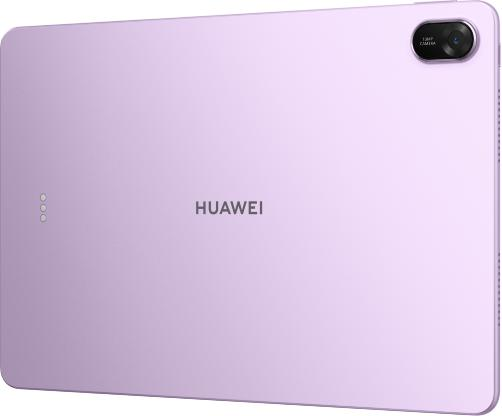
Announced during Huawei’s “Now Is Your Spark” global product launch event in Bangkok, Thailand, the new tablet immediately drew attention for one defining characteristic — its remarkably thin design. At just 4.7 mm thick and weighing 499g, Huawei says the MatePad Pro Max is the thinnest and lightest tablet in the 13-inch-plus category.
The launch represents more than a hardware refresh. It signals Huawei’s determination to remain competitive in the premium tablet market despite ongoing geopolitical challenges and restrictions in the United States.
Huawei’s Thinnest Tablet Yet
The MatePad Pro Max arrives with a design philosophy centered on portability without sacrificing flagship-level performance.
Huawei emphasized during the launch that the tablet combines:
- refined industrial design
- PC-level productivity
- creative software tools
- a premium OLED display
- AI-powered productivity features
The standard version weighs 499g, while the special PaperMatte Edition weighs slightly more at 509g. Even with its extremely slim profile, Huawei claims the tablet still delivers a large-screen productivity experience tailored for professionals, creators, and entertainment users.
Industry observers quickly compared the MatePad Pro Max to competing flagship tablets. According to details highlighted after the launch, the new Huawei device is thinner than:
- Honor MagicPad 4 (4.8mm)
- Apple 13-inch iPad Pro (5.1mm)
- Samsung Galaxy Tab S11 Ultra (5.1mm)
The narrow 3.55mm bezel also helps the tablet achieve a 94% screen-to-body ratio, giving it a futuristic edge-to-edge appearance.
A Display Designed for Work and Creativity
Huawei equipped the MatePad Pro Max with a 13.2-inch OLED display featuring a 3000 × 2000 resolution.
The company also introduced a specialized PaperMatte version that uses nano-level etching technology to reduce glare and reflections. Huawei says this approach creates a more paper-like writing and viewing experience, especially useful for reading, sketching, and long work sessions.
The emphasis on display quality reflects Huawei’s broader strategy of positioning the tablet as both a productivity machine and a creative workstation.
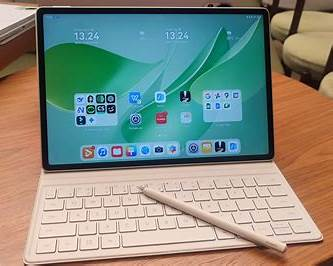
The MatePad Pro Max supports Huawei’s M-Pencil Pro stylus and Glide keyboard attachment, enabling laptop-style workflows for users who want a portable alternative to traditional notebooks.
Creative users are also expected to benefit from the GoPaint application, which introduces advanced brush systems including a “splatter brush” tool for digital artwork. Huawei additionally highlighted AI handwriting enhancement features intended to improve note-taking accuracy and stylus responsiveness.
AI Becomes Central to the Tablet Experience
Artificial intelligence is becoming increasingly important across the consumer electronics industry, and Huawei made AI functionality a major selling point during the Bangkok launch.
The MatePad Pro Max integrates AI-assisted features through WPS Office AI, allowing users to create and organize documents and presentations more efficiently. Huawei also introduced Live-Multitask functionality, enabling three simultaneous app windows for advanced multitasking workflows.
This reflects a wider trend in the tablet market where manufacturers are increasingly blending productivity software, AI tools, and entertainment features into unified ecosystems.
Rather than competing solely on hardware specifications, companies are now racing to create integrated digital workspaces powered by intelligent software assistance.
Huawei Expands Its Connected Device Ecosystem
While the MatePad Pro Max was the headline announcement, Huawei used the Bangkok event to showcase a much broader ecosystem strategy.
The company unveiled several new wearable products aimed at different market segments.
WATCH FIT 5 Series Targets Younger Users
Huawei introduced the WATCH FIT 5 Series with a refreshed square-shaped design and expanded sports tracking capabilities.
The smartwatch supports activities such as:
- cycling
- golf
- trail running
- tennis
Huawei says the wearable provides advanced performance analysis and training guidance designed for both casual fitness users and competitive athletes.
WATCH GT Runner 2 Focuses on Professional Training
Another major wearable announcement was the HUAWEI WATCH GT Runner 2 Racing Legend Edition.
The device includes:
- a new Running Ability Index (RAI)
- a professional Training Camp Dashboard
- advanced running analytics
Huawei positioned the watch as a performance-oriented device for marathon runners and serious athletes seeking deeper performance insights.
Luxury Meets Technology
Huawei also partnered with renowned jewelry designer Francesca Amfitheatrof to create the HUAWEI WATCH ULTIMATE DESIGN Spring Edition.
Inspired by spring aesthetics, the smartwatch features:
- 99 natural diamonds
- diamond-cut sapphire glass
- a luxury-focused design emphasizing feminine elegance and strength
The collaboration reflects Huawei’s continued push into premium lifestyle technology products that blend fashion and consumer electronics.
Huawei’s Market Position Remains Strong
Despite facing restrictions in the United States over cybersecurity concerns, Huawei’s global hardware business continues to demonstrate resilience.
Reports following the launch indicated that Huawei achieved a 28% increase in tablet shipments between Q1 2025 and Q1 2026. That growth reportedly outpaced Lenovo and Apple during the same period.
The company’s ability to maintain momentum despite international pressure highlights the strength of its ecosystem strategy in Asia, Europe, and emerging global markets.
However, availability remains uncertain in some regions. Huawei did not specify all launch markets for the MatePad Pro Max, and product materials noted that availability may vary by country or region.
For consumers in the United States, access to the device may remain limited due to existing trade restrictions affecting Huawei products.
Battery, Audio, and Hardware Specifications
Beyond its ultra-thin design, the MatePad Pro Max includes several flagship-grade hardware features.
The tablet reportedly includes:
- a 10,400mAh battery
- up to 14.5 hours of local video playback
- 40W reverse charging support
- six-speaker audio system
- 50MP rear camera
Huawei also introduced a vivid OLED panel and symmetrical stereo speakers designed to deliver a more immersive entertainment experience.
The combination of lightweight construction and high-end multimedia capabilities suggests Huawei is targeting professionals, students, content creators, and entertainment-focused users simultaneously.
Huawei’s Broader Vision for Smart Living
The “Now Is Your Spark” event showcased Huawei’s long-term strategy of building an interconnected ecosystem of devices rather than relying on single-product success.
From tablets and smartphones to children’s smartwatches and premium wearables, Huawei is increasingly focused on “all-scenario technologies” — products designed to integrate into everyday life across work, fitness, creativity, and entertainment.
The company described its mission as creating technology that is “not only useful, but genuinely enriching.”
That messaging reflects a broader shift within the consumer electronics industry, where brands are attempting to position devices as lifestyle companions rather than isolated gadgets.
The Premium Tablet Market Is Heating Up
Huawei’s MatePad Pro Max enters a fiercely competitive market segment currently dominated by Apple and Samsung.
Yet Huawei’s ultra-thin engineering, aggressive hardware innovation, and AI integration could help differentiate the device among users seeking alternatives to the mainstream ecosystem.
The premium tablet market has evolved dramatically over the past several years. Tablets are no longer viewed simply as media consumption devices. Instead, they are increasingly being marketed as:
- laptop replacements
- creative workstations
- AI productivity tools
- portable entertainment hubs
Huawei’s latest launch suggests the company intends to remain a serious contender in that transformation.
Whether the MatePad Pro Max achieves widespread global success may ultimately depend on regional availability, software ecosystem maturity, and how consumers respond to Huawei’s vision of ultra-portable productivity.
But one thing is clear: the race to build the future of premium tablets has become thinner, smarter, and far more competitive.


