Owen Cooper: The Teen Actor Who Redefined Television Stardom
At just 16 years old, Owen Cooper has achieved something most actors spend entire careers chasing. In the space of little more than a year, the British teenager has transformed from an unknown drama student into one of the most celebrated young performers in television history.
- A BAFTA Win That Made Television History
- The Performance That Changed Everything
- From Football Dreams to Hollywood Recognition
- Why Adolescence Became a Cultural Phenomenon
- A “Once in a Generational Talent”
- The Streaming Era’s New Kind of Star
- The Emotional Impact of Sudden Fame
- What Comes Next for Owen Cooper?
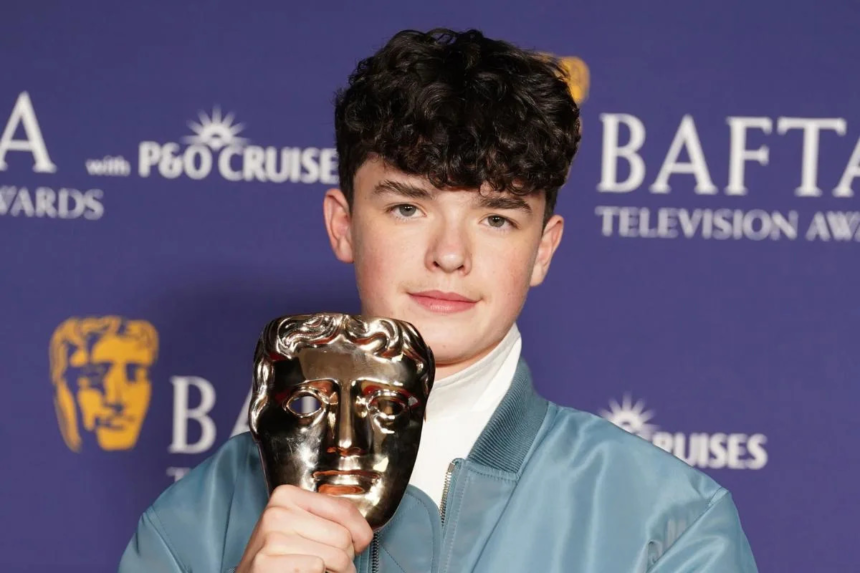
His latest triumph came at the 2026 BAFTA Television Awards, where he won Best Supporting Actor for his emotionally devastating performance in Netflix’s Adolescence. The victory was more than another trophy on a crowded shelf — it cemented Cooper’s place among the most extraordinary breakout stars the television industry has ever seen.
For many viewers, Cooper’s rise feels almost impossible. He had no professional acting credits before Adolescence. He was only 13 years old when he landed the role. Yet by 16, he had already completed an unprecedented awards sweep that included an Emmy, Golden Globe, SAG Award, Critics Choice Award, and now a BAFTA.
The achievement has sparked widespread discussion not only about Cooper’s talent, but also about the future of young actors, streaming television, and the changing dynamics of modern fame.

A BAFTA Win That Made Television History
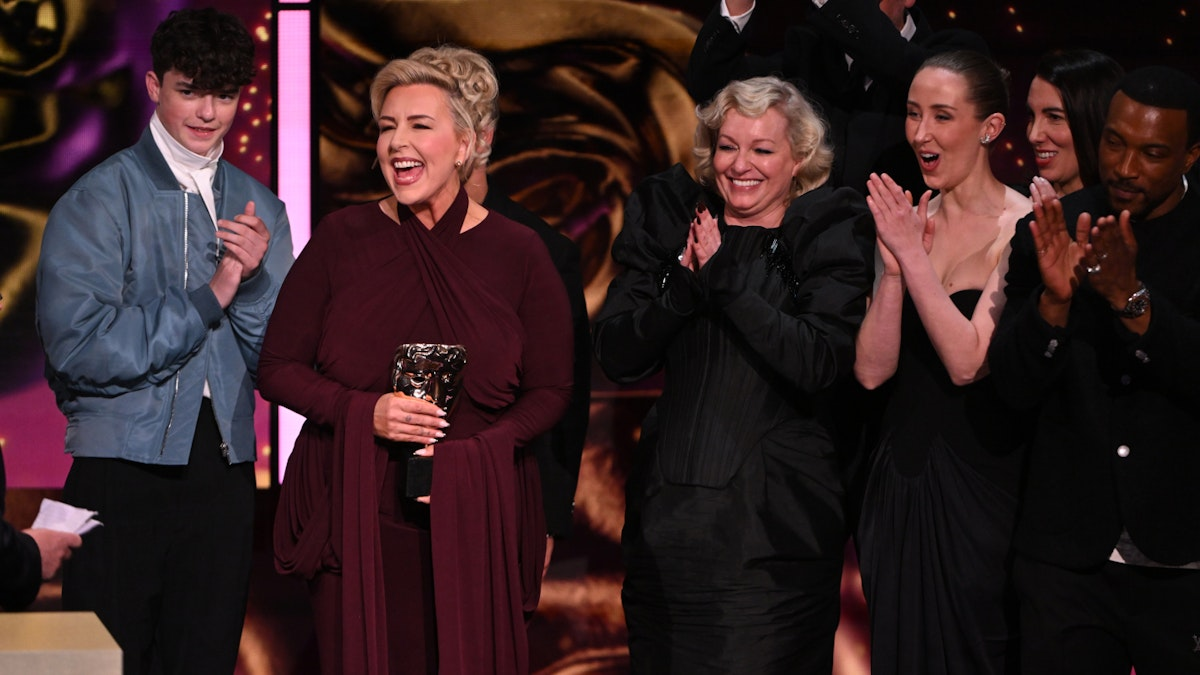
The defining moment arrived at London’s Royal Festival Hall during the 2026 BAFTA Television Awards. Cooper beat a competitive field that included respected actors Ashley Walters, Fehinti Balogun, Joshua McGuire, Paddy Considine, and Rafael Mathé.


When his name was announced, the teenager appeared visibly stunned.
“Wow, it’s heavy that, to be fair,” Cooper joked as he accepted the award.
Reflecting on how quickly his life had changed, he added:
“A year ago I was presenting an award and now I’m collecting one, so this is a bit mad.”


The speech quickly became one of the ceremony’s most talked-about moments. Cooper thanked the Adolescence team, describing them as family, before sharing a deeply personal reflection inspired by John Lennon.
“In the words of John Lennon, you won’t get anything unless you have the vision to imagine it,” he said.
He then offered what instantly became a viral quote among fans online:
“So in my eyes, I think you only need three things to succeed: one, you need an obsession; two, you need a dream; and three, you need The Beatles.”
The combination of humility, humor, and sincerity turned the speech into a defining cultural moment of the BAFTAs.
The Performance That Changed Everything
The Netflix drama Adolescence was already attracting enormous attention before the BAFTAs. Created by Jack Thorne and Stephen Graham, the four-part psychological limited series explored themes of youth violence, online radicalization, masculinity, and incel culture.
Cooper played Jamie Miller, a 13-year-old boy accused of murdering a schoolgirl.
The role demanded emotional precision far beyond Cooper’s years. Much of the series revolved around ambiguity — viewers were constantly forced to question Jamie’s innocence, vulnerability, and psychological state.
One episode in particular became a television phenomenon.
The installment featured an extended one-shot sequence in which Jamie meets clinical psychologist Briony Ariston, played by Erin Doherty. Filmed without cuts, the emotionally exhausting confrontation required Cooper to sustain intense dramatic tension for nearly an hour.
Critics widely described the episode as one of the finest television performances of the decade.
What made the achievement even more remarkable was the fact that Cooper had never acted professionally before.
“It was hard,” Cooper later admitted while speaking after the BAFTA win.
“I’m not going to say everything was easy. It was hard to do that and to do that in front of a stranger that I’ve never met. So it was difficult, but everyone around me got me there.”
From Football Dreams to Hollywood Recognition
Long before the awards and red carpets, Cooper was simply a teenager from Warrington who originally wanted to become a footballer.
His interest in acting reportedly began after watching Tom Holland in The Impossible. Inspired by Holland’s performance, Cooper joined weekly acting sessions at Drama MOB, a Manchester-based drama school and talent agency.
The school would later become an important part of his story.
Drama MOB founders Esther Morgan and Coronation Street actress Tina O’Brien described Cooper as focused, energetic, and deeply committed to improving his craft.
At the time, no one imagined how quickly his career would explode.
Cooper auditioned for Adolescence against more than 500 other young performers. Despite having no screen experience, he secured the role that would eventually launch him onto the global stage.
The success of Adolescence also changed perceptions among young boys interested in drama and performing arts.
According to Drama MOB, Cooper’s success has inspired a major increase in boys enrolling in acting classes.
“There’s been a bigger uptake since Owen,” Esther Morgan explained. “Other boys going, ‘Oh actually, it’s alright to do drama.’”
Why Adolescence Became a Cultural Phenomenon
The success of Adolescence extended far beyond awards recognition.
After its release on Netflix, the series became one of the platform’s most-watched English-language productions, reportedly surpassing 141 million views within its first three months.
But viewership numbers only told part of the story.
The show ignited national conversations across the United Kingdom about online safety, toxic internet communities, teenage radicalization, and the emotional struggles facing young men.
Its themes proved so influential that co-writer Jack Thorne reportedly met Prime Minister Keir Starmer at Downing Street to discuss the issues explored in the series.
Ashley Walters, who played detective DI Luke Bascombe, later described the public reaction as “beyond our wildest dreams.”
“When you make TV you always want to create conversations and do something that moves people forward,” Walters said.
“But the way this has done that has been… beyond our wildest dreams.”
A “Once in a Generational Talent”
Among Cooper’s biggest supporters is Adolescence co-creator Stephen Graham, who starred in the series as Jamie’s father, Eddie Miller.
Graham has repeatedly praised Cooper’s extraordinary instincts as a performer, describing him as a “once in a generational talent.”
The praise carries enormous weight within the British television industry.
Graham is widely regarded as one of Britain’s finest dramatic actors, known for acclaimed performances in This Is England, Boardwalk Empire, Boiling Point, and Bodies. For an actor of his stature to publicly champion Cooper so strongly has only intensified industry excitement surrounding the teenager’s future.
At the BAFTAs, the emotional impact of the show was evident throughout the evening.
Christine Tremarco, who portrayed Jamie’s mother Manda Miller, also won Best Supporting Actress, creating a double victory for Adolescence.
“I feel so privileged to be standing up here holding this BAFTA,” Tremarco said during her speech.
The Streaming Era’s New Kind of Star
Cooper’s rapid rise reflects a larger transformation happening within entertainment.
In previous generations, young actors often spent years slowly building careers through small television appearances or studio films. Streaming platforms have changed that dynamic entirely.
A global Netflix release can now introduce a newcomer to millions of viewers overnight.
Industry observers have noted that Cooper’s success demonstrates how streaming television increasingly functions as the primary launchpad for international talent.
Unlike traditional celebrity culture, where fame often developed gradually, modern streaming success can instantly create worldwide recognition. Cooper’s awards sweep shows just how dramatically the industry has evolved.
And because Adolescence tackled socially urgent themes, Cooper’s fame also became tied to broader cultural conversations rather than simple celebrity hype.
The Emotional Impact of Sudden Fame
Despite the extraordinary recognition, Cooper has continued to speak openly about how overwhelming the experience has been.
Speaking after his BAFTA victory, he reflected on the emotional changes the show brought into his life.
“It’s changed my life because I’ve met all these beautiful people,” he said.
“Me and my family have travelled the world so it’s just been amazing.”
For many fans, those comments reinforced why Cooper has become such a compelling public figure. Even amid historic success, he continues to project the excitement and disbelief of an ordinary teenager trying to process an extraordinary moment.
What Comes Next for Owen Cooper?
That question now dominates conversations across the entertainment industry.
Few actors — let alone teenage actors — have entered the industry with this level of acclaim. Cooper already possesses nearly every major television acting honor available.
The challenge now becomes sustainability.
Can he successfully transition into film? Will he continue working in prestige television? Could he become one of Britain’s defining actors of his generation?
No one yet knows the answer.
But what is clear is that Owen Cooper has already achieved something historically rare. He turned a debut role into one of the most celebrated television performances of the modern streaming era.
And remarkably, his career is only beginning.
As one industry observer noted after the BAFTAs, a win of this magnitude would typically represent the peak of a career.
For Owen Cooper, it may simply be chapter one.