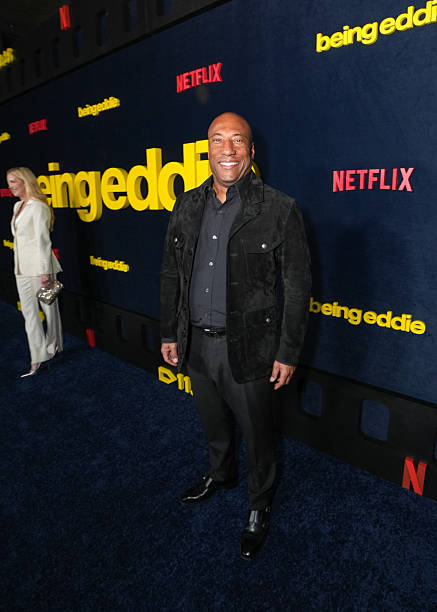
Byron Allen Biography: The Comedy Prodigy Who Built a Billion-Dollar Media Empire
Byron Allen is one of the most unusual power players in American entertainment: a former teenage stand-up comedian who turned a modest production company into a sprawling media enterprise spanning syndicated television, cable networks, streaming channels, film distribution, local stations, weather programming, courtroom shows, comedy formats, and late-night television. Born Byron Allen Folks, he moved from Detroit to Los Angeles as a child and built a career that now sits at the intersection of Hollywood, broadcast media, entrepreneurship, civil-rights advocacy, and high-stakes corporate dealmaking.
- Byron Allen Quick Facts Snapshot
- From Detroit to Los Angeles: The Early Life That Shaped Byron Allen’s Ambition
- Comedy Beginnings and the First Breakthrough on National Television
- The Founding of Entertainment Studios and the Long Game of Ownership
- Allen Media Group: The Company Behind Byron Allen’s Fortune
- Byron Allen Movies and Film Production: A Strategic Expansion into Theatrical and Genre Entertainment
- Byron Allen TV Shows: From Real People to Comics Unleashed and Courtroom Syndication
- Byron Allen Net Worth 2026: How He Built an Estimated Billion-Dollar Fortune
- Lifestyle, Assets, and the Business Discipline Behind the Wealth
- Byron Allen Wife Jennifer Lucas, Marriage, and Family Life
- Byron Allen News: CBS Late Night, McDonald’s Settlement, Station Sales, and Media Strategy
- Byron Allen Reddit Discussions and Online Public Interest
- Notable Achievements and Major Career Milestones
- Interesting Facts and Lesser-Known Details About Byron Allen
- Influence, Impact, and Legacy in American Media
- Byron Allen’s Current Status and What Comes Next
- Final Reflection: Why Byron Allen Remains One of Entertainment’s Most Underrated Power Players
His story is not simply a celebrity biography. It is a long-range business case study in ownership, distribution, patience, and scale. Byron Allen’s career began in comedy clubs and network studios, but his defining achievement is Allen Media Group, formerly Entertainment Studios, a privately held company that owns major media assets including The Weather Channel, Local Now, cable networks, syndicated series, and entertainment programming. His estimated net worth in 2026 is widely placed around $1 billion, though exact valuation is difficult because much of his wealth is tied to privately held media assets rather than publicly traded stock.
Byron Allen Quick Facts Snapshot
| Category | Details |
|---|---|
| Full Name | Byron Allen Folks |
| Known As | Byron Allen |
| Date of Birth / Age | April 22, 1961; 65 years old in 2026 |
| Place of Birth | Detroit, Michigan, United States |
| Nationality | American |
| Profession | Businessman, media executive, television producer, film producer, comedian, host |
| Current Status | Founder, chairman and CEO of Allen Media Group; active media owner and producer |
| Net Worth | Estimated around $1 billion in 2026 |
| Income Sources | Allen Media Group, cable networks, TV syndication, film distribution, advertising sales, station ownership, streaming/FAST channels, real estate investments |
| Relationship Status | Married |
| Wife | Jennifer Lucas, television and film producer |
| Children | Three: Chloe Ava, Olivia Rose, and Lucas Byron |
| Major Company | Allen Media Group, formerly Entertainment Studios |
| Major Assets | The Weather Channel, Local Now, Comedy.TV, Cars.TV, ES.TV, JusticeCentral.TV, Pets.TV, Recipe.TV, MyDestination.TV, The Weather Channel en Español |
| Major Career Milestones | Teenage stand-up success, early appearance on The Tonight Show, co-hosting Real People, founding Entertainment Studios in 1993, acquiring The Weather Channel in 2018, expanding into CBS late-night programming |
| Known For | Building one of the largest independent media companies in the United States, producing syndicated TV, acquiring major media assets, and championing Black media ownership |
From Detroit to Los Angeles: The Early Life That Shaped Byron Allen’s Ambition
Byron Allen was born on April 22, 1961, in Detroit, Michigan, as Byron Allen Folks. His early years changed dramatically when he moved to Los Angeles with his mother, Carolyn Folks, after his parents divorced. That move placed him close to the entertainment industry at a formative age, giving him access to studio environments most aspiring performers only dream of entering.
His mother worked as a publicist at NBC Studios in Burbank, and Allen often accompanied her to the studio lot. As a child, he watched the machinery of television from the inside: sets, tapings, comedians, production crews, hosts, publicists, and executives. That early exposure became a practical education in how the entertainment business actually worked, not merely how it looked on screen.


Allen’s fascination with television was unusually hands-on. He spent time around shows such as The Tonight Show, Sanford and Son, and Chico and the Man, absorbing the rhythm of comedy and production. The image of a young Byron Allen sitting behind Johnny Carson’s desk in an empty studio and pretending to host foreshadowed the career he would later create: part performer, part producer, part owner.
That background gave the Byron Allen biography its defining pattern. He was never only chasing fame. From an early age, he seemed interested in the entire operating system of entertainment: who owned the show, who sold the advertising, who controlled the time slot, who distributed the program, and who collected the long-term revenue.


Comedy Beginnings and the First Breakthrough on National Television
Byron Allen’s career began in stand-up comedy while he was still a teenager. He developed his act early, and his confidence as a young performer helped him enter rooms filled with older, more established comedians. His big early breakthrough came through national television, where his youth became part of his mystique. He became known as one of the youngest comedians to appear on The Tonight Show Starring Johnny Carson, a major credential at a time when Carson’s platform could transform a comic’s career.
The significance of that moment cannot be overstated. In the late 1970s and early 1980s, The Tonight Show was one of the most powerful gatekeepers in American comedy. A strong appearance could validate a performer overnight. For Allen, it did more than showcase his timing; it introduced him to the network ecosystem that he would later learn to navigate as a business owner.
His performing career soon expanded into television. Allen became a co-host on NBC’s Real People, a popular reality-style human-interest show that ran from 1979 to 1984. The program gave him mainstream visibility and taught him the mechanics of unscripted television long before “reality TV” became a dominant entertainment category.
This early phase of Byron Allen’s career matters because it created credibility on both sides of the camera. He knew how talent thought, but he also understood how television formats were packaged, sold, scheduled, and repeated. That dual fluency would become one of his greatest business advantages.


The Founding of Entertainment Studios and the Long Game of Ownership
In 1993, Byron Allen founded the company that would later become Allen Media Group. At the time, the move did not look like the beginning of a billion-dollar media empire. It was a lean independent operation built around low-cost programming, advertiser relationships, syndication, and control of rights.
Allen’s model was disciplined and countercultural. Instead of relying primarily on traditional network commissions, he built shows that could be distributed broadly and monetized through advertising. This approach reduced dependence on the approval of a single studio or network executive. It also allowed him to retain ownership, library value, and control over his content.
Entertainment Studios developed a large slate of syndicated programming, including courtroom shows, entertainment series, comedy formats, and lifestyle content. The company’s growth was not driven by one breakout scripted series but by volume, repeatability, and distribution economics. In an industry obsessed with glamour, Allen focused on inventory.
That strategy explains much of Byron Allen’s net worth. His wealth came from owning media assets, not simply appearing in them. The core of his business success has been the ability to create content inexpensively, distribute it widely, sell advertising around it, and reinvest the proceeds into bigger acquisitions.
Allen Media Group: The Company Behind Byron Allen’s Fortune
Allen Media Group is now the centerpiece of Byron Allen’s career. The company describes itself as one of the largest cable network portfolios in the industry, with a lineup that includes The Weather Channel, Comedy.TV, Cars.TV, ES.TV, JusticeCentral.TV, MyDestination.TV, Pets.TV, Recipe.TV, Local Now, and The Weather Channel en Español.
The Weather Channel remains the crown jewel. Allen’s company acquired the television network in 2018 in a deal widely reported at approximately $300 million. The acquisition did not include Weather.com, which had previously been sold separately, but it gave Allen a legacy cable brand with national reach, strong advertiser recognition, and significant value during major weather events.
The purchase was a turning point in the Byron Allen career story. It signaled that he was no longer merely an independent producer or syndication entrepreneur. He had become a serious media asset buyer. The Weather Channel deal repositioned his company from a content supplier into a broader media ownership platform.
Allen Media Group also operates in streaming and digital distribution through properties such as Local Now and other FAST-style channels. This matters because the media business has moved away from a purely cable-and-broadcast model. Allen’s strategy has therefore expanded across traditional linear television, digital platforms, ad-supported streaming, and syndication.
Byron Allen Movies and Film Production: A Strategic Expansion into Theatrical and Genre Entertainment
Byron Allen movies and TV shows are best understood through his role as a producer, distributor, executive, and media owner rather than as a traditional actor-centered filmography. His company has been linked to films such as 47 Meters Down, Replicas, Hostiles, The Hurricane Heist, and other entertainment releases that expanded Allen Media Group’s presence beyond syndicated television.
Film gave Allen another avenue for library-building and distribution. Instead of chasing only prestige dramas or celebrity vehicles, his company often targeted commercially recognizable genres, including thrillers, action, survival films, and broad-market entertainment. This aligned with the same philosophy that shaped his television empire: content should be ownable, distributable, monetizable, and reusable across platforms.
Byron Allen’s film work also overlaps with his family life. His wife, Jennifer Lucas, is a producer whose credits have been associated with projects including 47 Meters Down, Replicas, and Boss Level. Their partnership reflects a household deeply embedded in the production business rather than a celebrity marriage detached from the work itself.
For searchers looking for Byron Allen movies, the most accurate framing is that his influence is often behind the camera and behind the balance sheet. His film career is less about red-carpet stardom and more about financing, producing, distributing, and using content as part of a broader media asset strategy.
Byron Allen TV Shows: From Real People to Comics Unleashed and Courtroom Syndication
Byron Allen TV shows span several decades and several formats. His early on-camera visibility came through Real People, but his larger television footprint came later through Entertainment Studios and Allen Media Group. Shows associated with his career include The Byron Allen Show, Comics Unleashed with Byron Allen, Funny You Should Ask, America’s Court with Judge Ross, and other syndicated formats.
Comics Unleashed with Byron Allen is especially important to his public profile. The half-hour comedy talk format was created and hosted by Allen and originally launched in syndication in 2006. The series features comedians performing and interacting in a panel-style structure, allowing Allen to combine his roots in stand-up with his business model of efficiently produced, repeatable entertainment.
The show returned to greater national attention when CBS used it in late-night programming. It aired on CBS from September 2023 to January 2024 as part of the network’s late-night scheduling transition, and it returned again for the 2025–2026 season after After Midnight ended. CBS announced that Comics Unleashed would move to the 11:35 p.m. slot after The Late Show with Stephen Colbert concluded, with Funny You Should Ask following in the next hour.
This latest CBS chapter made Byron Allen newsworthy again because it placed him inside one of the most symbolic time slots in American television. Late-night television has historically been built around expensive host-driven franchises. Allen’s model is different: a lower-cost, advertiser-supported time-buy arrangement that gives his company significant commercial control while reducing CBS’s production exposure.
Byron Allen Net Worth 2026: How He Built an Estimated Billion-Dollar Fortune
Byron Allen net worth estimates in 2026 commonly place him around $1 billion, although estimates vary because Allen Media Group is privately held. Some assessments place the range below or near that figure depending on assumptions about cable assets, local station valuations, debt, advertising revenue, real estate, and private company multiples.
The biggest driver of Byron Allen’s net worth is ownership. His fortune is not built primarily on salary, comedy specials, acting fees, or endorsement deals. It is built on media equity: television networks, syndicated programming, film libraries, advertising rights, channel distribution, and acquired assets. The Weather Channel acquisition, the growth of Local Now, and the company’s cable network portfolio are central to the valuation story.
His income sources are diversified across several entertainment categories. Allen Media Group can generate revenue from advertising sales, carriage relationships, syndication, licensing, film distribution, streaming channels, and local broadcast assets. This is why the Byron Allen net worth conversation is more complex than the net worth of a performer whose earnings come primarily from contracts.
His real estate activity has also attracted attention. Allen has been associated with luxury residences in markets such as Los Angeles, Malibu, Aspen, Maui, and New York. In 2022, he purchased a Malibu mansion for a reported $100 million, and in 2025 he sold a Manhattan Billionaires’ Row condo for $82.5 million, making headlines in luxury real estate circles.
Lifestyle, Assets, and the Business Discipline Behind the Wealth
Byron Allen’s lifestyle reflects ultra-high-net-worth status, but his public image is less flashy than many entertainment billionaires. He is known more for acquisitions, lawsuits, programming deals, and ownership plays than for celebrity spectacle. That difference has helped shape his reputation as a quiet but relentless operator.
His homes and real estate holdings indicate substantial personal wealth, yet the most valuable part of his lifestyle is access: access to networks, advertisers, banks, legal teams, media executives, talent, and acquisition targets. In the modern entertainment business, those relationships are as important as any single property.
Allen’s approach to wealth is deeply tied to leverage and reinvestment. The more programming he controls, the more advertising inventory he can sell. The more networks and channels he owns, the stronger his distribution footprint becomes. The more scale he builds, the more attractive his company becomes to advertisers looking for targeted audiences across multiple platforms.
That discipline is the hidden engine of the Byron Allen career arc. He moved from stand-up stages to ownership tables by understanding that the greatest power in entertainment often belongs not to the person in front of the camera, but to the person who owns the camera, the show, the network, and the advertising minutes.
Byron Allen Wife Jennifer Lucas, Marriage, and Family Life
Byron Allen is married to Jennifer Lucas, a television and film producer. The couple married in 2007 and have three children: daughters Chloe Ava and Olivia Rose, and son Lucas Byron. Their marriage has often been described in entertainment coverage as a producer-to-producer partnership, with both figures connected to film and television production.
Jennifer Lucas has maintained a professional identity of her own in entertainment. Her production work has been associated with films including 47 Meters Down, Replicas, and Boss Level, making her more than simply “Byron Allen’s wife.” She is part of the broader production ecosystem surrounding Allen Media Group and related entertainment ventures.
The Byron Allen family story is notable because Allen has built a major media empire while maintaining a relatively private domestic life. Unlike many entertainment figures whose relationships become tabloid fixtures, Allen and Lucas have largely kept the focus on business, family stability, and industry work.
For readers searching Byron Allen relationships, there is no widely documented public dating history that overshadows his marriage. His known relationship profile is centered on Jennifer Lucas, their long marriage, and their three children.
Byron Allen News: CBS Late Night, McDonald’s Settlement, Station Sales, and Media Strategy
Byron Allen news in 2025 and 2026 has been dominated by several major developments: the CBS late-night arrangement, the settlement of a long-running McDonald’s lawsuit, Allen Media Group’s station portfolio moves, and continuing scrutiny of his company’s media strategy.
The CBS late-night story placed Allen at the center of a historic programming shift. After The Late Show with Stephen Colbert moved toward its May 2026 finale, CBS confirmed that Comics Unleashed with Byron Allen would take over the 11:35 p.m. slot beginning May 22, 2026. Funny You Should Ask would follow in the next late-night hour, creating a two-hour block connected to Allen Media Group.
The move sparked debate because it represented a different economics model for late-night television. Rather than CBS producing an expensive flagship talk show, Allen Media Group would buy time and sell advertising. That structure made the deal commercially attractive to CBS while giving Allen national exposure and direct access to late-night ad revenue.
Another major news event was the settlement of Allen’s $10 billion racial discrimination lawsuit against McDonald’s. The legal fight had centered on advertising practices and allegations involving Black-owned media. The settlement in 2025 ended a high-profile dispute that had drawn attention to corporate ad spending, media ownership, and racial equity in advertising markets.
Allen Media Group also made headlines with local television station sales. In 2025, the company agreed to sell 10 local TV stations to Gray Media in a deal valued at $171 million, part of a broader period of portfolio adjustment and cost management in a difficult advertising and interest-rate environment.
Byron Allen Reddit Discussions and Online Public Interest
Search interest around “Byron Allen Reddit” tends to rise when Allen becomes part of a broader media controversy or programming change. Online discussions often focus on his net worth, how Allen Media Group makes money, why CBS would use a time-buy arrangement, whether Comics Unleashed can work in late night, and how Allen built such a large company without the same mainstream celebrity recognition as other media moguls.
The CBS late-night move intensified those discussions because it involved beloved late-night institutions, Stephen Colbert’s exit, and a major shift in network economics. Many casual viewers knew Allen as a host or producer but were less familiar with his role as a media buyer, station owner, network owner, and advertising operator.
That online curiosity is part of his current relevance. Byron Allen is not a conventional celebrity trending because of scandal or performance alone. He trends because his business decisions intersect with major media transitions: cable decline, streaming growth, late-night cost pressures, advertiser fragmentation, and the future of independent media ownership.
In that sense, Reddit-style discussion around Allen often reveals a gap between public perception and industry reality. Viewers may ask, “Who is Byron Allen?” while media insiders recognize him as a long-term operator who has spent decades accumulating distribution, programming, and advertising leverage.
Notable Achievements and Major Career Milestones
One of Byron Allen’s most important achievements is becoming a rare Black owner of a large, multi-platform media company in the United States. Allen Media Group’s portfolio gives him influence across news-adjacent programming, weather, comedy, syndicated television, digital streaming, and local media.
His acquisition of The Weather Channel stands as a signature milestone. The deal gave Allen a trusted national brand and changed how the industry viewed his company’s ambitions. It also gave him a platform with utility value: weather programming is not purely entertainment, and severe weather coverage remains essential for audiences and advertisers.
Another major milestone was his effort to pursue large media acquisitions, including high-profile interest in Paramount-related assets and other legacy media properties. Even when such bids did not result in completed deals, they signaled Allen’s ambition to compete in the upper tier of American media consolidation.
His legal activism in advertising has also become part of his legacy. Allen’s lawsuits and public pressure campaigns have challenged how major corporations allocate ad dollars to Black-owned media. Whether viewed through a business lens, civil-rights lens, or media-economics lens, that advocacy has kept him central to conversations about ownership and representation.
Interesting Facts and Lesser-Known Details About Byron Allen
Byron Allen’s first entertainment education came not from a formal film school environment, but from being a child on the NBC lot with his mother. That proximity to production gave him a rare understanding of television’s business culture long before he became a media executive.
His earliest dream was linked to hosting. The childhood image of Allen sitting at Johnny Carson’s desk is almost cinematic because his later career circled back to late-night television decades later. In 2026, Comics Unleashed moving into CBS’s 11:35 p.m. slot gave that early fascination a remarkable full-circle quality.
Allen’s company also built an unusually broad library of court shows and syndicated programming. Courtroom television may not have the glamour of prestige drama, but it is an efficient and durable format: episodes can be produced at scale, scheduled flexibly, and sold across multiple stations and markets.
Another lesser-known aspect of Allen’s career is that his business model often depends on advertising relationships as much as content creation. His ability to package audiences for advertisers has been one of the defining features of his rise.
Influence, Impact, and Legacy in American Media
Byron Allen’s influence lies in ownership. Hollywood has many successful performers, but relatively few figures who move from performance to durable media control. Allen’s transition from comedian to media proprietor makes him part of a smaller group of entertainment figures who understand that cultural influence is magnified by asset ownership.
His legacy is also tied to independent distribution. He built a company outside the traditional studio hierarchy and used syndication, cable, and advertising to create scale. That path offers a different blueprint for entertainment success, especially for entrepreneurs who do not begin with major studio backing.
Allen’s impact on Black media ownership is especially significant. In an industry where ownership has historically been concentrated, Allen’s company represents a major example of Black-owned media scale. His public fights over advertising equity have further positioned him as a figure challenging structural barriers in media economics.
At the same time, his career is not without controversy or criticism. Allen Media Group has faced scrutiny over cost-cutting, station sales, local weather staffing changes, and the economics of time-buy programming. Those debates are part of the complexity of his profile: he is both a trailblazing owner and a hard-nosed media capitalist operating in a difficult industry.
Byron Allen’s Current Status and What Comes Next
As of 2026, Byron Allen remains active as founder, chairman, and CEO of Allen Media Group. His immediate public relevance is tied strongly to CBS late night, where Comics Unleashed and Funny You Should Ask are positioned as part of a new lower-cost programming model after the end of The Late Show with Stephen Colbert.
The larger question is whether Allen can turn that time slot into a sustainable late-night business. The opportunity is enormous, but so is the challenge. Late-night television has changed dramatically due to streaming, social media clips, fragmented audiences, and declining linear viewership. Allen’s model is built for cost efficiency, but it must still compete for attention in a crowded entertainment environment.
Allen Media Group’s future will likely depend on balancing legacy assets with digital growth. The Weather Channel remains a strong brand, Local Now gives the company a streaming footprint, and the cable networks provide advertising inventory. The challenge is maintaining relevance as viewers continue to shift away from traditional television.
Still, Byron Allen has built his career by entering spaces where others underestimated him. From teenage stand-up to media billionaire, from syndication to The Weather Channel, from courtroom shows to CBS late night, his career has repeatedly demonstrated a willingness to play the long game.
Final Reflection: Why Byron Allen Remains One of Entertainment’s Most Underrated Power Players
Byron Allen’s biography is a story of transformation: comedian to host, host to producer, producer to distributor, distributor to media owner, and media owner to billionaire-level mogul. His life and career show how entertainment power is built not only through fame, but through control of content, advertising, distribution, and assets.
His estimated net worth, family life with Jennifer Lucas, film and television credits, CBS late-night role, and Allen Media Group empire all point to the same conclusion: Byron Allen is not merely a personality in American entertainment. He is an architect of independent media ownership.
For audiences searching Byron Allen movies, Byron Allen TV shows, Byron Allen wife, Byron Allen Reddit, Byron Allen news, Byron Allen age, Byron Allen relationships, Byron Allen family, Byron Allen career, and Byron Allen net worth 2026, the most important takeaway is that his public profile only reveals part of the story. The real Byron Allen story is behind the screen: a decades-long accumulation of rights, channels, brands, ad inventory, and negotiating power.