Google Fitbit Air: Why the Screenless Fitness Tracker Could Redefine Everyday Health Wearables
Google’s Fitbit Air arrives at a moment when wearable technology is quietly changing shape. For years, the smartwatch has been the dominant symbol of connected health: a bright screen on the wrist, filled with notifications, workouts, apps, calls, and quick-glance data. But a growing group of users now appears to want the opposite—less screen, less bulk, fewer distractions, and more continuous health monitoring.
- The Rise of the Quiet Wearable
- A Tiny Tracker Built Around Continuous Monitoring
- Battery Life Is Part of the Pitch
- What Fitbit Air Can Do Without a Screen
- The Google Health Rebrand Adds a Bigger Strategic Layer
- Pricing and Availability Put Fitbit Air in a Competitive Position
- Colors, Bands, and the Fashion Factor
- Why This Matters for the Wearables Market
- A Device for People Who Want Less Tech on Their Wrist
- Conclusion: Fitbit Air Signals a Smaller, Smarter Wearable Future
That is the space Google is entering with the Fitbit Air, a tiny screenless tracker designed for all-day and all-night health tracking. Instead of trying to replace a smartwatch, the device focuses on passive monitoring, comfort, battery life, and app-based insights. It is small, light, and built around the idea that the best health tracker may sometimes be the one users barely notice they are wearing.
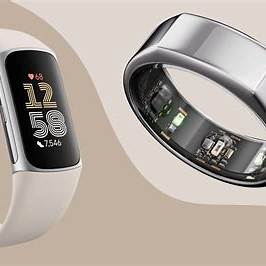
The launch also places Google in direct conversation with a fast-growing category led by screenless or low-distraction wearables such as the Oura Ring and Whoop band. While the Apple Watch remains the most popular wearable overall, purchases of fitness trackers in the U.S. grew 88% between 2024 and 2025, while smart-ring purchases alone grew 195%, according to the market-research data included in the provided material. Oura and Whoop have also attracted major investor attention, with Oura raising more than $900 million and Whoop raising $575 million in March, with both valued at over $10 billion.


The Rise of the Quiet Wearable
The Fitbit Air reflects a broader shift in wearable design: health tracking is becoming less about screens and more about sensors.
Traditional smartwatches are useful because they are interactive. They show notifications, display workout stats, run apps, and function as miniature phone companions. But that same interactivity can become a weakness for users who mainly want continuous health data. A screen adds size, drains battery, and turns the device into another attention-demanding object.


Screenless trackers solve a different problem. They are built to disappear into daily life. The user wears the device, the sensors collect data, and the phone app becomes the place where insights are reviewed. This is why products like Oura and Whoop have found an audience among people who value sleep tracking, recovery scores, heart rate trends, and long-term wellness data more than on-wrist apps.
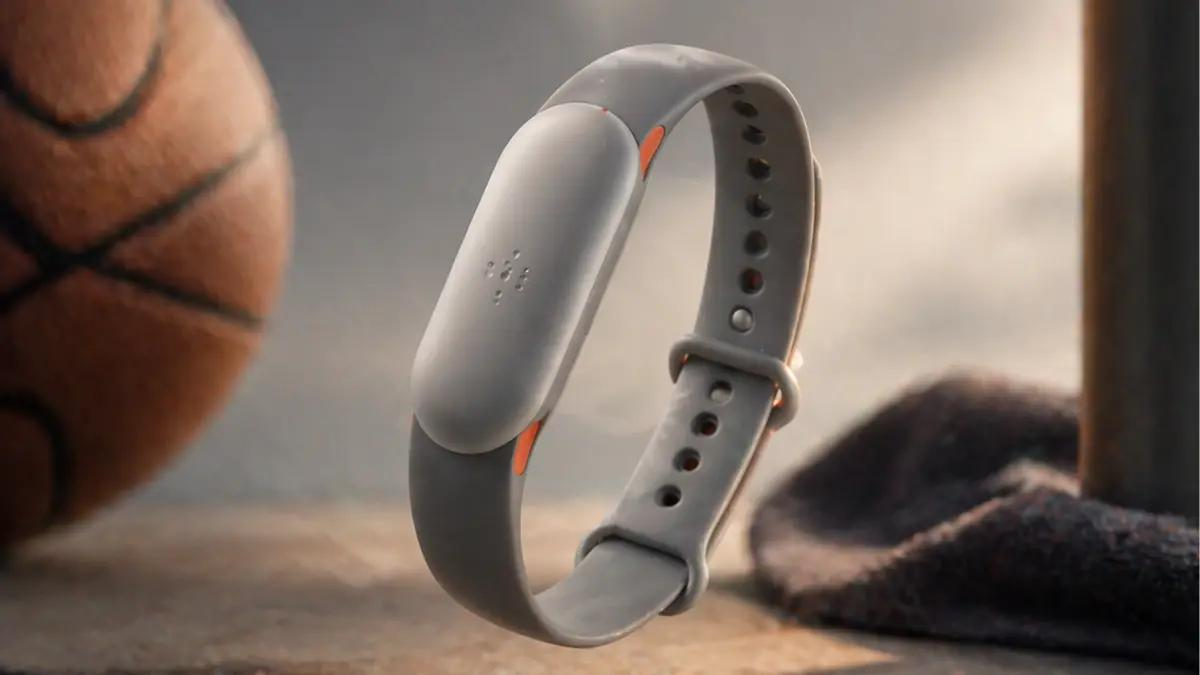
The Fitbit Air follows that philosophy. It has no display, uses a small “pebble” design, and relies on a paired phone for health data and notifications.
A Tiny Tracker Built Around Continuous Monitoring
The Fitbit Air is described as the smallest tracker in Google’s current Fitbit lineup. Its pebble measures 34.9mm long, 17mm wide, and 8.3mm thick. The pebble alone weighs 5.2 grams, while the device with a band weighs 12 grams. That makes it significantly lighter than most smartwatches and small enough to support the core promise of the product: wear it constantly without feeling burdened.
The housing uses recycled polycarbonate and PBT plastics, while the standard bands use textile material with a stainless steel buckle. The device is also water-resistant up to 50 meters, which positions it for daily use, workouts, and sleep tracking without requiring constant removal.


Despite its small size, the Fitbit Air includes a broad sensor package. The device features an optical heart rate monitor, a 3-axis accelerometer and gyroscope, red and infrared sensors for SpO2 monitoring, a device temperature sensor, and a vibration motor. It can track 24/7 heart rate, resting heart rate, heart rate variability, blood oxygen levels, sleep duration, sleep stages, and heart rhythm, including atrial fibrillation alerts.
Those features make clear that Fitbit Air is not simply a minimalist step counter. It is designed as a health-monitoring device first, with fitness tracking as part of a larger wellness picture.
Battery Life Is Part of the Pitch
One of the strongest practical arguments for a screenless tracker is battery life. Google rates the Fitbit Air for up to seven days of use. A full charge takes 90 minutes, while a five-minute quick charge can provide one day of use. The device uses a lithium-polymer battery and Bluetooth 5.0.
That matters because health tracking becomes more useful when it is continuous. A watch that needs frequent charging can create data gaps, especially overnight. By contrast, a lighter device with longer battery life can more easily capture sleep, heart rate variability, recovery trends, and overnight oxygen patterns.
For users who already own a Pixel Watch, Google is also positioning the Fitbit Air as a companion device. A person can wear the Pixel Watch during the day and switch to the Fitbit Air at night while keeping health metrics continuous.
That approach is strategically important. Google does not need the Fitbit Air to replace the smartwatch. Instead, it can expand the wearable ecosystem by giving users a second, simpler device for moments when a watch feels too large or distracting.
What Fitbit Air Can Do Without a Screen
The absence of a display changes how users interact with the device. Fitbit Air works through the Google Health app and is compatible with Android and iOS. Workouts can be started manually, while automatic activity detection can recognize common activities and adapt to the user over time.
The device also connects with Google Health Coach for personalized guidance. The app supports image-based workout logging, including photos of cardio machines or whiteboard circuit routines.
This shows how Google may be thinking about the future of fitness tracking. The device collects data quietly; the app interprets it. Instead of asking users to constantly check a screen, Fitbit Air pushes the experience toward coaching, trends, and longer-term behavioral insight.
That model could appeal to people who want health feedback without turning their wrist into another notification center. It may also appeal to users who find smartwatch interfaces too busy but still want reliable data on sleep, recovery, heart rhythm, and activity.
The Google Health Rebrand Adds a Bigger Strategic Layer
Fitbit Air is not only a hardware launch. It also appears tied to Google’s broader restructuring of its health and fitness software.
According to the provided reporting, the device is marketed as the “Google Fitbit Air,” while Fitbit Premium is being rebranded as “Google Health.” The personal health coach currently in public preview is described as becoming “Google Health Coach.”
That shift matters because it brings health and wellness features more visibly under the Google brand. Fitbit remains present in the hardware name, but the software experience is moving closer to Google Health. For users, that could mean a more unified health platform. For Google, it may help connect wearables, AI coaching, subscriptions, and Pixel devices under one consumer health identity.
It also introduces a key question: how much of the Fitbit Air experience will depend on subscription-based services? The standard Fitbit Air includes a three-month Google Health Premium trial, and accessory pricing starts separately.
That trial may help users experience the coaching layer, but long-term adoption could depend on whether the device remains useful without paid features. Screenless trackers often rely heavily on software interpretation. If too many insights sit behind a subscription, some buyers may hesitate.
Pricing and Availability Put Fitbit Air in a Competitive Position
The standard Fitbit Air is available for preorder at $99.99 and includes a three-month Google Health Premium trial. Accessory bands start at $34.99. A Stephen Curry Special Edition Performance Loop band in rye brown with orange accents costs $129.99 and reaches U.S. stores on May 26.
That $99.99 price is central to the product’s appeal. It places Fitbit Air below many premium smartwatches and potentially makes it a more accessible entry point into continuous health tracking. It also gives Google a clearer way to compete with performance-focused screenless wearables, especially for users who may not want a higher-cost device or a heavily subscription-dependent model.
The Stephen Curry connection also gives the launch a sports and lifestyle angle. The provided material notes that Curry had already been seen wearing the device before its name was widely known, helping build early interest around the screenless Fitbit concept.
Colors, Bands, and the Fashion Factor
The screenless wearable market is not only about sensors. Design matters because these devices are meant to be worn constantly.
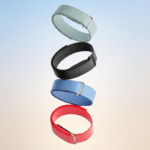
Earlier information indicated that the Fitbit Air would come in three color options: Obsidian, Lavender, and Berry, with a “Snow” or white charging cable. Several bands were also listed, including Performance Loop Band options in Obsidian, Fog, Lavender, and Berry; Active Band options in Obsidian, Fog, Berry, and Lavender; Elevated SoftFlex Band options in Obsidian, Moonstone, and Porcelain; and Metal Mesh Band options in Silver and Warm Gold.
That accessory strategy suggests Google understands that screenless wearables are also personal objects. Unlike a smartwatch, where the display dominates the design, a screenless tracker depends heavily on shape, material, color, and comfort. If users are expected to wear it during workouts, workdays, and sleep, it must feel less like a gadget and more like a wearable accessory.
Why This Matters for the Wearables Market
Fitbit Air enters the market at a time when consumer health technology is moving from “tracking” to “interpretation.” Counting steps and recording workouts are no longer enough. Users increasingly want devices that explain patterns: whether they slept well, how recovered they are, whether their heart rate variability is changing, and how daily habits affect long-term health.
That trend gives companies with strong software ecosystems an advantage. Google can connect sensors, AI coaching, mobile apps, and subscription services into a broader health experience. The Fitbit Air is small, but its strategic role could be large: it gives Google a low-profile device that can collect continuous data and feed a more personalized coaching system.
The challenge is trust. Health data is sensitive. Users may welcome better insights, but they also want clarity about what is collected, how it is used, and which features require payment. The more Google places Fitbit health experiences under the Google Health brand, the more important transparency becomes.
A Device for People Who Want Less Tech on Their Wrist
The most interesting thing about Fitbit Air is that it does not try to do everything. It does not have a screen. It does not attempt to be a phone replacement. It does not compete with smartwatches on apps or notifications. Instead, it focuses on being small, comfortable, and consistent.
That could be exactly what many users want. Someone who already owns a smartwatch may use Fitbit Air for sleep. Someone who dislikes smartwatches may use it as a simple health tracker. Someone focused on recovery and wellness may prefer a device that quietly records data without demanding attention.
In that sense, the Fitbit Air represents a more mature phase of wearable technology. The future may not be one device for every situation. It may be a mix of devices: a smartwatch when users want interaction, a screenless band when they want comfort, and an app-based coach when they want interpretation.
Conclusion: Fitbit Air Signals a Smaller, Smarter Wearable Future
The Google Fitbit Air is more than a compact fitness band. It is a sign of where health wearables are heading: toward lighter hardware, longer battery life, passive tracking, and AI-assisted interpretation.
By removing the screen, Google is making a clear bet that many users do not need another display on their body. They need a device that can track heart rate, sleep, blood oxygen, heart rhythm, movement, and recovery with minimal friction. Combined with Google Health and Google Health Coach, the Fitbit Air could become part of a broader health platform built around continuous data and personalized guidance.
Its success will depend on comfort, accuracy, battery life, pricing, and how much value remains available without ongoing subscription costs. But the direction is clear: the next wave of wearable health technology may not be louder, brighter, or more feature-packed. It may be quieter, smaller, and always on.