Google Fitbit Air Review: A Screenless Fitness Band Built for the AI Health Era
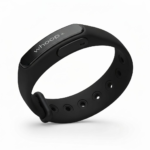
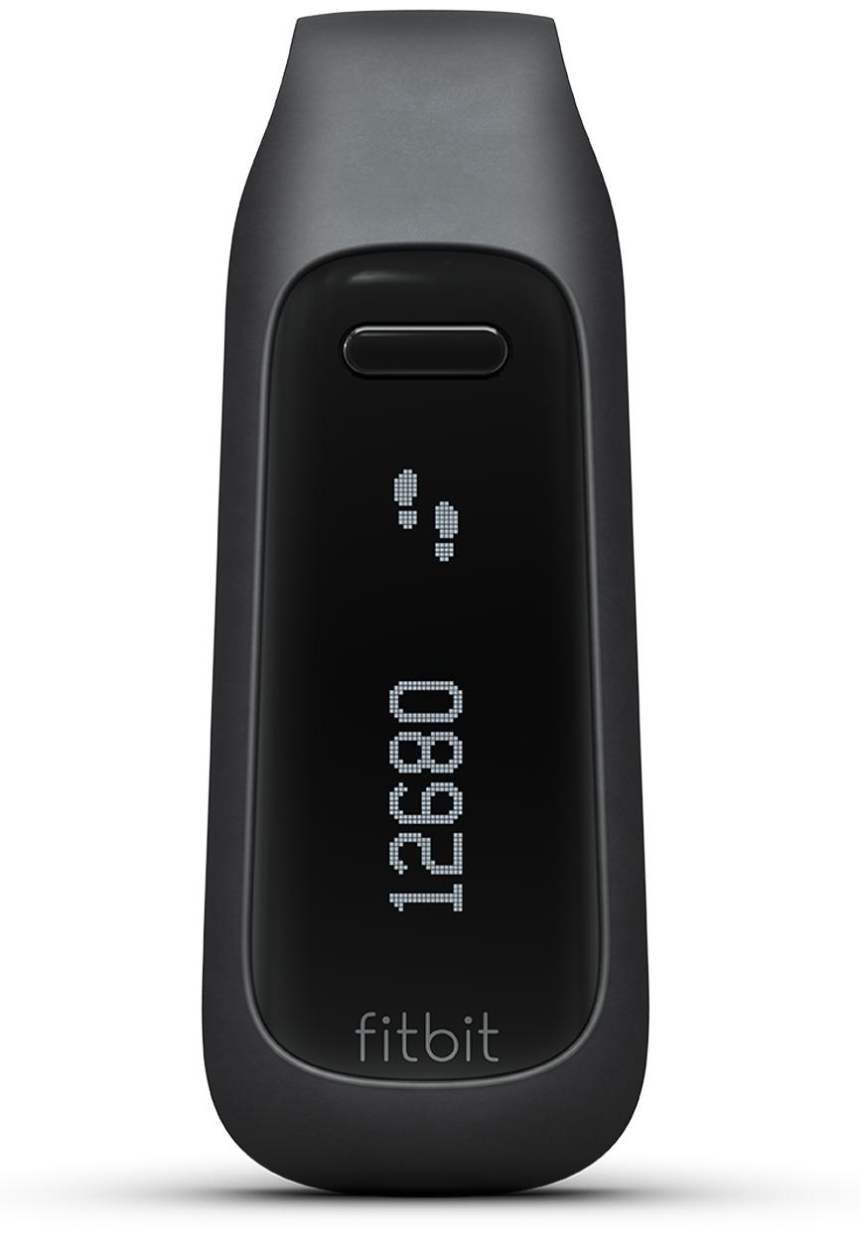
Google’s Fitbit Air is not a smartwatch in the traditional sense. It has no display, no flood of notifications, no app grid, no wrist-based music controls, and no visible dashboard competing for attention during a workout. Instead, it is a slim, screenless fitness tracker designed to fade into the background while collecting health data continuously.
- A Minimalist Design With a Bigger Purpose
- What the Fitbit Air Tracks
- The Real Product Is Google Health Coach
- Google Health Replaces the Fitbit App
- Price, Subscription, and the Whoop Comparison
- Battery Life: Good, But Not Class-Leading
- Design, Bands, and Everyday Wear
- The Privacy Question
- Early Verdict: Who Is Fitbit Air For?
- Conclusion: A Small Band With Big Strategic Weight
That minimalist approach may look like a return to Fitbit’s early days, when the brand became popular through simple step-counting devices. But the Fitbit Air is not just a nostalgic reset. It is Google’s clearest signal yet that the future of Fitbit may be less about the device on the wrist and more about the intelligence behind it.
At around $99 to $100, the Fitbit Air enters the market as a direct rival to Whoop, smart rings, and other “set and forget” wearables. But its biggest selling point is not the band itself. It is Google Health Coach, an AI-powered coaching system built on Gemini and positioned at the center of Google’s redesigned health ecosystem.


A Minimalist Design With a Bigger Purpose
The Fitbit Air’s design is intentionally restrained. It is a screenless oval tracker that sits inside interchangeable bands, with a removable sensor module that can be swapped between strap styles. Google says the device is slim, lightweight, and meant to collect data quietly in the background rather than interrupt users with real-time stats.
That is the key distinction between the Air and devices such as the Pixel Watch. The Pixel Watch is for people who want a full smartwatch experience: display, apps, notifications, and Google services on the wrist. The Fitbit Air is for people who want health tracking without the constant pull of a screen.


This makes the Air closer in spirit to Whoop than to a Fitbit Charge or smartwatch. Both Fitbit Air and Whoop are controlled primarily through a smartphone app, and both rely on automatic workout detection rather than on-device workout controls. The advantage is reduced distraction. The trade-off is obvious: anyone who wants to glance at pace, time, heart rate, notifications, or payments from the wrist will find the Air too limited.
What the Fitbit Air Tracks
Despite its simple exterior, the Fitbit Air includes a broad set of health and fitness tracking tools. It can monitor heart rate 24/7, heart rate variability, SpO2 blood oxygen levels, temperature variation, sleep, cardio load, training readiness, steps, distance, and automatic activity detection. It also supports irregular heart rhythm notifications for potential signs of atrial fibrillation and is water-resistant up to 50 meters.
Its sensor package includes an optical heart rate monitor, 3-axis accelerometer and gyroscope, red and infrared sensors for oxygen saturation monitoring, and a device temperature sensor. The device is compatible with Android 11.0 or higher and Apple iOS 16.4 or higher, giving it broader reach than the Android-only Pixel Watch.
However, the Air is not Google’s most advanced wearable from a sensor standpoint. The source information notes that it uses an older sensor setup than the Pixel Watch 4, which includes a multipath optical heart rate sensor and a far-field temperature sensor. That could matter for users who care deeply about peak heart-rate accuracy, advanced insights, or more demanding training analysis.


The Real Product Is Google Health Coach
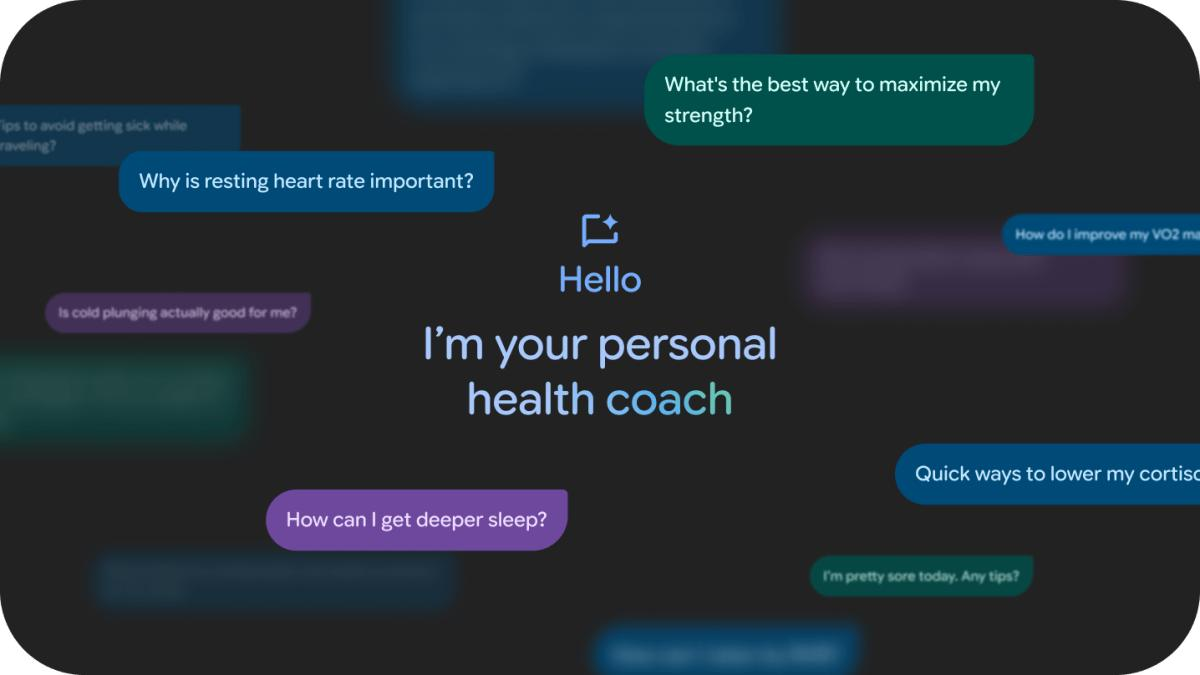
The Fitbit Air is best understood as a data collector for Google Health Coach. Google describes the device as “designed for Google Health Coach,” an AI-powered personalized coach built with Gemini. The Health Coach uses fitness, sleep, heart rate, menstrual cycle data, recovery signals, and user goals to generate recommendations that go beyond static graphs.
Google says the coach creates realistic, tailored fitness plans and “takes the guesswork out of rest and recovery.” It is designed to combine a user’s health and fitness metrics into a “complete overview of your wellness journey.”
This is where the Fitbit Air becomes more interesting. A screenless tracker on its own is not new. What Google is trying to do is make the tracker a quiet sensor layer for an AI coach that interprets the data, explains it, and turns it into daily guidance.
The coach can suggest workouts, build adaptive plans, recommend recovery windows, analyze sleep disruptions, and adjust guidance based on real-time performance and schedule. Some workout recommendations include video examples. The system can also support Smart Wake alarms, which use sleep data to wake users at a better point in their sleep cycle.
Google Health Replaces the Fitbit App
The Fitbit Air also arrives alongside a major software shift. Google is rebranding the Fitbit app as Google Health, part of a broader effort to unify Fitbit devices, Pixel Watch, services, and AI-based coaching under one ecosystem.
For longtime Fitbit users, that shift may feel like the end of an era. Fitbit branding remains on hardware for now, but the app transition suggests Google wants health tracking to live under its own name, with Gemini-based coaching as the central experience.
The new Google Health app is designed to support both Fitbit Air and Pixel Watch data. Users can wear both devices, switch between them, or filter metrics by device. That suggests Google is not positioning the Air as a Pixel Watch replacement. Instead, it sees the Air as a complementary tracker: something light enough to wear overnight, during workouts, or during times when a smartwatch feels too distracting.
Price, Subscription, and the Whoop Comparison
The Fitbit Air’s biggest market advantage is price. The device costs about $99 to $100, while accessory bands start at around $35. It also includes three months of Google Health Premium, after which the subscription renews at about $10 per month or $100 per year.
That pricing makes it much cheaper to enter than Whoop, which operates around a membership model. The source comparison notes that Whoop’s cheapest annual plan starts at £169/$169 for 12 months, with higher tiers costing more. Unlike Fitbit Air, Whoop cannot meaningfully be used without a subscription.
This gives Fitbit Air a strong practical advantage: buyers can still use the free Google Health app for basic health and fitness tracking. Google Health Premium unlocks more advanced AI coaching features, but the hardware itself is not entirely locked behind a subscription.
That difference may be decisive for casual users. Whoop remains a mature and feature-rich platform with strong recovery, sleep, and strain analysis. But Fitbit Air offers a lower-cost path into screenless fitness tracking, especially for users who already trust Fitbit-style tracking or want access to Google’s AI coaching without committing to a more expensive wearable subscription.
Battery Life: Good, But Not Class-Leading
Screenless wearables usually have one major advantage over smartwatches: battery life. Fitbit Air follows that pattern with up to seven days of battery life on a single charge. Google also says it can charge from zero to 100% in about 90 minutes, and a five-minute charge can provide roughly one additional day of power.
That is a major improvement over many full-display smartwatches, which often require charging every day or two. But it does not beat Whoop, which promises up to 14 days of battery life and offers a wireless power pack on some plans that can charge the band while it is being worn.
For most users, a week of battery life will be enough. But for endurance athletes, frequent travelers, or people who want uninterrupted long-term tracking, Whoop still has an edge.
Design, Bands, and Everyday Wear
Fitbit Air launches with several band options. The Performance Loop is designed for everyday wear and is made from recycled materials. The Active Band is a sweat- and waterproof silicone option for workouts. The Elevated Modern Band is intended to look more polished for daily use.
The standard color options include Obsidian, Fog, Berry, and Lavender. A limited Stephen Curry Special Edition band in orange and gray will also be available, tying into Curry’s role as a performance adviser for Health Coach.
Google’s decision to work with Stephen Curry is notable. It positions the Fitbit Air not merely as a budget tracker, but as a performance and recovery device aimed at people who want coaching, consistency, and health insights without wearing a bulky smartwatch.
Still, Fitbit is taking a more conservative accessory approach than Whoop. Whoop offers alternate mounts, including body-worn options beyond the wrist. Fitbit Air, for now, appears focused on wrist-based bands.
The Privacy Question
Any AI-powered health product raises a serious privacy question: how much personal data should users hand over for better recommendations?
That concern is especially relevant here because Google Health Coach depends on data. The more information users provide, the more personalized its guidance may become. The source information notes that Google is exploring ways for users to import medical records into the app, making privacy even more important.
As part of Google’s 2020 acquisition of Fitbit, the company agreed to keep Fitbit health data separate from its advertising business for 10 years. Google says data collected by Fitbit Air and other Fitbit devices will not be used for advertising. Even so, experts have warned that anonymized health data can sometimes be traced back to individuals, and that future use depends on policies that can change over time.
For buyers, the takeaway is simple: the Fitbit Air is not just a wearable purchase. It is also a data relationship with Google. Anyone considering it should review the privacy terms carefully and keep track of how Google Health policies evolve.
Early Verdict: Who Is Fitbit Air For?
The Fitbit Air looks best suited for users who want a low-profile health tracker, strong sleep and recovery insights, and AI-powered coaching without the distraction of a smartwatch. It may appeal especially to people who already use Fitbit, want longer battery life than a smartwatch, or are curious about Google Health Coach.
It is less ideal for users who need a display, built-in GPS, on-wrist workout controls, payment features, notifications, or real-time training feedback. The lack of GPS also separates it from trackers such as the Fitbit Charge 6, making it more dependent on phone-based or app-centered workflows.
As an early review based on the available launch information, the Fitbit Air appears to be less about reinventing wearable hardware and more about changing the role of wearable hardware. The band collects. The app interprets. The AI coach recommends.
That may be exactly where fitness wearables are heading.
Conclusion: A Small Band With Big Strategic Weight
Google Fitbit Air is a minimalist tracker with a strategic purpose. It strips away the smartwatch experience and focuses on continuous health tracking, recovery insights, and AI-powered coaching. Its price gives it an immediate advantage over Whoop, while its iOS and Android compatibility gives Google a way to bring Health Coach to users beyond the Pixel ecosystem.
The unresolved questions are performance, accuracy, privacy, and whether Google Health Coach can deliver advice that feels genuinely useful rather than generic. But as a product concept, the Fitbit Air is one of Google’s clearest moves yet toward a future where wearables become invisible sensors and AI becomes the interface.
For users who want a quiet, affordable, screenless tracker built around long-term health trends rather than wrist-based distraction, Fitbit Air could be one of the most important wearable launches of the year.