Anna Wintour: The Architect of Fashion Power and the Met Gala’s Enduring Vision
A Night That Reinforces a Legacy
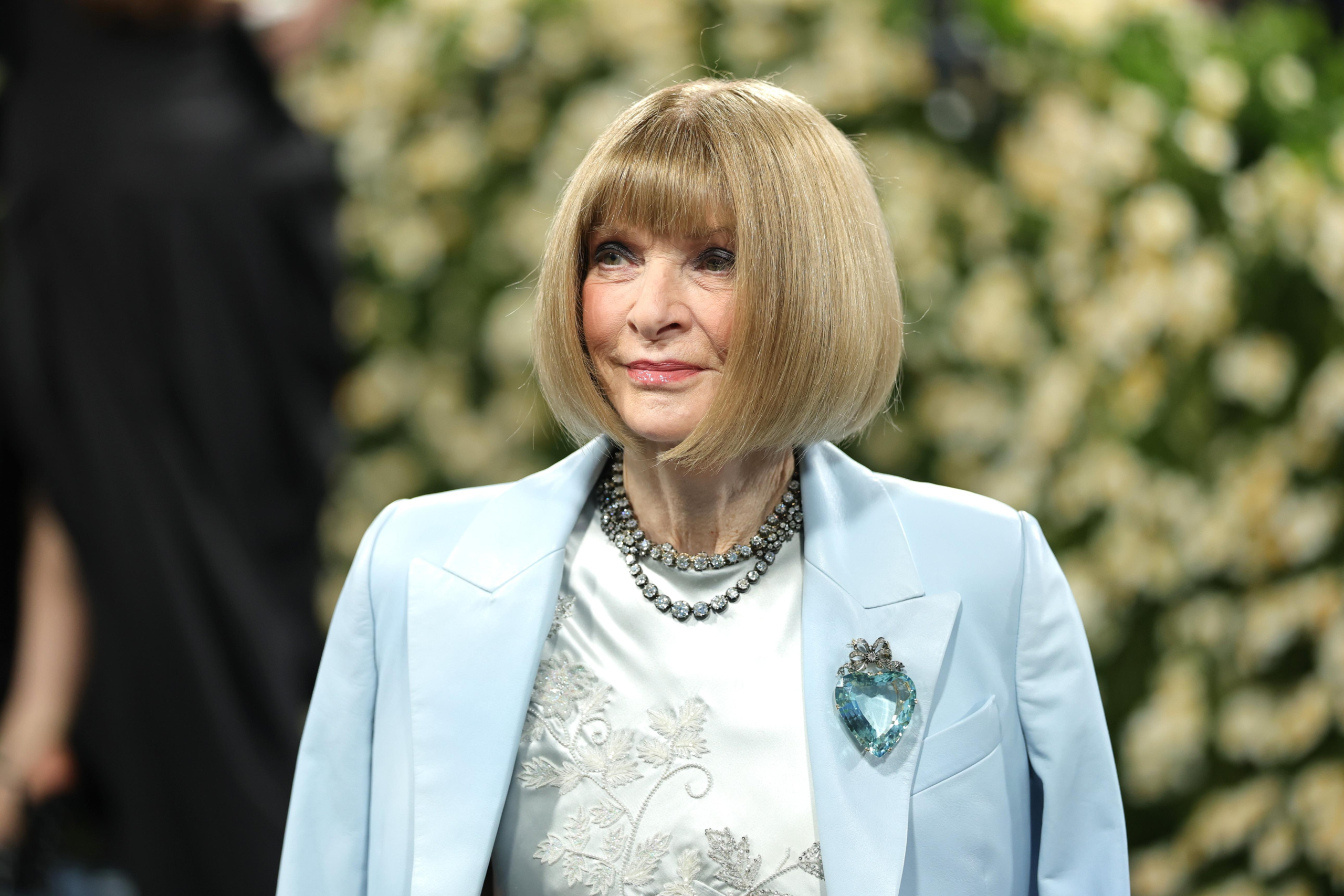
On the first Monday of May 2026, the Metropolitan Museum of Art once again transformed into fashion’s grandest stage—and at the center of it all stood Anna Wintour. Draped in a striking turquoise ensemble, she made an entrance that was both theatrical and unmistakably her own, reaffirming her position as the defining force behind the Met Gala.
Wintour’s look—a feathery turquoise jacket layered over a turquoise and black embroidered Chanel gown—was a deliberate interpretation of the evening’s theme, Costume Art. With oversized sunglasses, a jeweled statement necklace, and her signature bob, the 76-year-old fashion icon delivered what has become expected: a masterclass in controlled spectacle.
Yet beyond the visual drama lies a deeper story—one of transformation, influence, and sustained cultural authority.
The Evolution of a Fashion Powerhouse
Anna Wintour’s presence at the Met Gala in 2026 marked a significant transition in her career. After serving as editor-in-chief of Vogue for 37 years, she stepped back in 2025, ushering in a new editorial era under Chloe Malle.
But stepping back did not mean stepping away.
Wintour now operates as Chief Content Officer of Condé Nast and Global Editorial Director of Vogue, overseeing a vast media empire that includes Vanity Fair, GQ, Glamour, WIRED, and Bon Appétit. Her influence has arguably expanded, shifting from editorial decision-making to strategic cultural leadership.
Reflecting on this transition, Wintour emphasized mentorship and innovation:
“I find that my greatest pleasure is helping the next generation of impassioned editors storm the field with their own ideas…”
This evolution signals not a retreat, but a recalibration of power—one that positions her as both architect and guardian of fashion media’s future.
The Met Gala: A Platform Shaped by One Vision
Few cultural events are as closely tied to a single individual as the Met Gala is to Anna Wintour.
Since taking the helm in 1995, she has transformed the annual fundraiser for the Costume Institute into a global phenomenon—where fashion, celebrity, art, and philanthropy intersect. By 2026, the event remains her “favorite day of the year,” a sentiment that underscores her personal investment in its continued success.
This year’s theme, Costume Art, encouraged guests to embrace theatricality and creativity. The red carpet became a canvas of couture experimentation, with figures like Beyoncé, Venus Williams, and Nicole Kidman serving as co-chairs alongside Wintour.
The event’s structure also reflects her meticulous control. Strict rules—no phones, no smoking, and even curated menus avoiding ingredients like onions and garlic—are designed to preserve an atmosphere of exclusivity and conversation.
In Wintour’s philosophy, the Gala is not just about fashion—it is about experience.
A Signature Style That Evolves—Carefully
Wintour’s fashion choices have long balanced consistency with subtle reinvention. The 2026 Met Gala exemplified this dynamic.
While her Chanel ensemble adhered to her recognizable aesthetic, it was her jewelry that drew particular attention. She wore a transformable Van Cleef & Arpels necklace, known as the “Simone,” featuring aquamarine, pink sapphires, mint garnets, pearls, and onyx.
The piece could be worn in six different configurations—an embodiment of versatility and historical reference, evoking the glamour of the 1920s.
This calculated departure from her usual shorter necklaces demonstrated Wintour’s approach to style: evolution without abandoning identity.
Leadership in a Changing Cultural Landscape
The 2026 Met Gala also reflected broader shifts in power dynamics within fashion and media.
The appointment of honorary chairs Lauren Sánchez Bezos and Jeff Bezos—secured through significant financial contributions—sparked conversation about the increasing influence of wealth in shaping cultural institutions. Wintour, however, embraced the development, stating:
“We’re very grateful for her incredible generosity… So we’re thrilled she’s part of the night.”
Her response highlights a pragmatic understanding of modern patronage: cultural events at this scale rely on both artistic vision and financial backing.
At the same time, the Gala’s co-chairs—spanning music, sports, and film—illustrate fashion’s expanding intersection with other industries, reinforcing Wintour’s role as a connector across cultural domains.
The Met Gala as Cultural Theater
Beyond fashion, the 2026 event leaned heavily into performance and narrative.
Broadway star Joshua Henry opened the evening with a live rendition of Whitney Houston’s I Wanna Dance With Somebody, transforming the museum steps into a theatrical stage.
Wintour herself was seen swaying subtly to the music—a rare moment of informality that humanized an otherwise famously composed public figure.
These moments underscore the Gala’s evolution from a society fundraiser into a multi-dimensional cultural spectacle.
A Career That Continues to Shape the Industry
Anna Wintour’s influence extends far beyond a single event.
She has inspired films like The Devil Wears Prada and continues to shape public perceptions of fashion leadership. Even in 2026, her career is reaching new milestones, with cultural narratives—such as the sequel to the iconic film—intertwining with her real-life legacy.
Her leadership style—often described as exacting—has built an ecosystem where creativity operates within clearly defined parameters. It is this balance that has allowed her to maintain relevance across decades of industry transformation.
What Comes Next for Anna Wintour?
As Wintour moves deeper into her role as a global media strategist, several trends are likely to define her next chapter:
- Increased focus on mentorship and succession planning
- Expansion of Condé Nast’s multimedia influence
- Continued dominance of the Met Gala as a cultural institution
- Greater integration of fashion with technology and global culture
Her trajectory suggests a shift from editor to institution-builder—a figure whose influence is embedded not just in publications, but in the frameworks that sustain them.
Conclusion: The Enduring Authority of Anna Wintour
Anna Wintour’s appearance at the 2026 Met Gala was more than a fashion moment—it was a reaffirmation of her enduring authority in an industry that rarely stands still.
From her carefully curated outfit to her strategic leadership roles, she continues to define what power looks like in fashion and media. Even as she passes editorial responsibilities to a new generation, her presence remains central—guiding, shaping, and elevating the cultural conversation.
In a world of constant reinvention, Anna Wintour has mastered the art of remaining both timeless and ahead of her time.