Rethinking Smartphone Performance From the Inside Out
In an era where smartphone manufacturers compete fiercely on raw specifications, Xiaomi is taking a different route with the Redmi K90 Max—a device that doesn’t just chase peak performance but instead focuses on sustaining it. Positioned as a performance-first flagship, the K90 Max introduces a feature rarely seen in mainstream smartphones: a built-in active cooling fan.
This unconventional approach signals a shift in how mobile devices are engineered for gaming and heavy workloads. Rather than allowing performance throttling under heat, Xiaomi is attempting to eliminate the problem entirely.
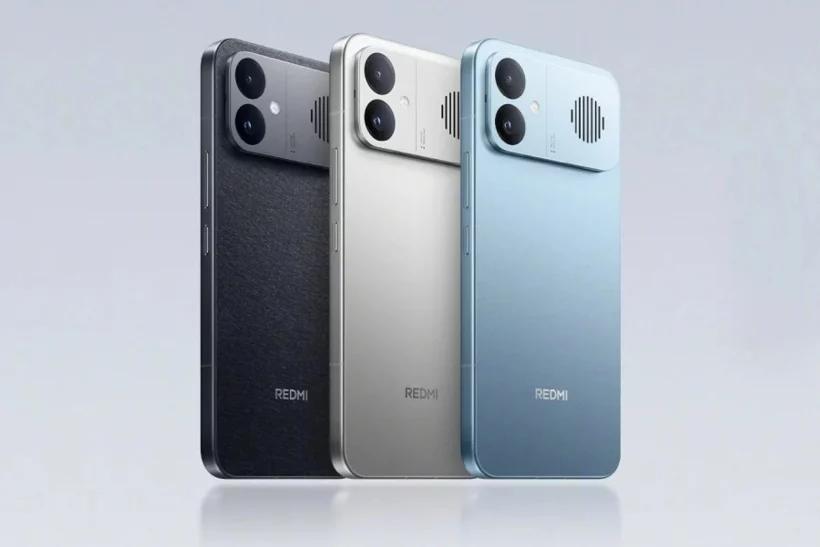
The Cooling Revolution: An Engineering Gamble That Could Pay Off
At the heart of the Redmi K90 Max lies its most distinctive innovation—a mechanical cooling system with an 18.1 mm fan, integrated directly into the smartphone’s body.
Unlike traditional passive cooling solutions, this system uses:
- A compact fan with forward-leaning blades
- A sealed air duct system
- Vortex-style airflow to reduce turbulence
According to Xiaomi, the system can reduce chip temperatures by up to 10°C within 100 seconds, all while maintaining noise levels below 32 dB.
The cooling module has also undergone extensive durability testing, with claims of 50,000 hours of operational lifespan.
Interestingly, early buyers in China are offered a six-year warranty on the cooling system, along with free maintenance services—an unusual move that underscores Xiaomi’s confidence in this experimental design.
A Design Trade-Off
While the innovation is impressive, it introduces practical challenges. The fan vents are positioned on the rear camera module, which could be partially blocked by the user’s hand during gameplay, potentially affecting airflow.
Performance That Blurs the Line Between Mobile and PC
Under the hood, the Redmi K90 Max is powered by the MediaTek Dimensity 9500 chipset, one of the latest flagship processors in the mobile space.
This is paired with:
- A dedicated D2 graphics chip for AI-driven rendering and gaming optimization
- Up to 16GB LPDDR5X Ultra RAM
- Up to 1TB UFS 4.1 storage
The result is a device capable of delivering high-refresh-rate gaming at up to 165Hz, even under sustained loads.
Benchmark claims suggest the phone achieves over 4 million points on AnTuTu v11, placing it firmly among the most powerful smartphones available.
Display Technology Built for Competitive Gaming
The Redmi K90 Max features a 6.83-inch AMOLED display with:
- Resolution of approximately 1.5K (2722 × 1280)
- Refresh rate up to 165Hz
- Peak brightness reaching 3500 nits
- Full DCI-P3 color gamut
The panel also incorporates M10 luminous technology and eye-protection features, making it suitable for extended gaming sessions.
Combined with ultra-narrow bezels, the display enhances immersion—critical for competitive and high-speed gaming.
Gaming-Centric System Optimization
Xiaomi’s strategy extends beyond hardware. The K90 Max integrates system-wide optimizations designed specifically for gamers:
- 400 Hz gyroscope for precise motion tracking
- Optimized touch zones for better responsiveness
- Three-microphone array tuned for landscape gaming
- Dual Surge T1+ chips to improve network stability and reduce latency
These enhancements suggest a holistic approach, where hardware, software, and connectivity are aligned toward one goal: seamless gaming performance.
Battery Power Without Compromise
Another standout feature is the device’s massive 8,500–8,550 mAh battery, significantly larger than most flagship smartphones.
It supports:
- 100W fast charging
- 22.5W reverse charging
- Bypass charging for gaming while plugged in
This ensures long sessions without sacrificing performance or device longevity.
Cameras, Audio, and Premium Features
Despite its gaming focus, the Redmi K90 Max does not neglect traditional flagship features:
- 50MP main camera with OIS
- 8MP ultra-wide lens
- 20MP front-facing camera
Audio is delivered through Bose-tuned stereo speakers, offering balanced output for both gaming and media consumption.
Additional features include:
- Ultrasonic fingerprint scanner
- X-axis linear vibration motor
- Aluminum alloy frame with slim profile
Durability That Defies Expectations
Perhaps one of the most surprising aspects is the device’s durability. Despite housing a mechanical fan, the K90 Max boasts:
- IP66, IP68, and IP69 ratings for water and dust resistance
This level of protection is rare—even among smartphones without moving parts—making it a significant engineering achievement.
Pricing and Market Positioning
The Redmi K90 Max is available in multiple configurations:
- 12GB / 256GB – around $510
- 12GB / 512GB – $585
- 16GB / 256GB – $560
- 16GB / 512GB – $630
- 16GB / 1TB – up to $735
Color options include silver, blue, and black, aligning with its premium yet gamer-oriented aesthetic.
What This Means for the Future of Smartphones
The Redmi K90 Max is more than just another high-end device—it represents a philosophical shift in smartphone design.
For years, manufacturers have chased higher benchmark scores, often ignoring the fact that performance drops under sustained use. Xiaomi’s approach addresses this gap directly, focusing on thermal stability as a core performance metric.
If successful, this could:
- Redefine expectations for gaming smartphones
- Push competitors toward active cooling solutions
- Blur the boundary between mobile devices and gaming PCs
Conclusion: A Risky Innovation With Huge Potential
The Xiaomi Redmi K90 Max is a bold experiment that challenges conventional smartphone engineering. By integrating a mechanical cooling system, Xiaomi is tackling one of the most persistent limitations in mobile performance: heat.
While there are trade-offs—particularly in ergonomics—the device offers a compelling vision of what future smartphones could become: powerful, stable, and built for sustained performance, not just short bursts of speed.
Whether this approach becomes the new industry standard remains to be seen. But one thing is certain—the Redmi K90 Max has already sparked the conversation.