

World Quantum Day 2026: The Race Toward a Quantum Future
A Global Turning Point for Science and Strategy
On April 14, 2026, the world once again marked World Quantum Day—a rapidly growing global event that has evolved from a scientific awareness campaign into a strategic checkpoint for the future of technology, security, and innovation.
Originally created to promote public understanding of quantum science, the day now reflects something far more consequential. It signals a decisive shift: quantum technology is no longer confined to research laboratories. It is actively shaping national strategies, corporate decisions, and the foundations of digital infrastructure worldwide.
This transformation defines the 2026 edition of World Quantum Day. It is not simply about celebrating physics—it is about preparing for a technological transition that could rival the impact of the internet itself.
Why April 14 Matters: The Science Behind the Date
The timing of World Quantum Day is not arbitrary. April 14—written as 4.14—references the first digits of Planck’s constant, a fundamental value in quantum physics that governs how energy behaves at the smallest scales.
This constant underpins the entire framework of quantum mechanics, marking the boundary where classical physics gives way to the probabilistic and often counterintuitive behavior of particles.
Since its launch by a global network of scientists across more than 65 countries, World Quantum Day has grown into a decentralized, worldwide movement involving educators, policymakers, researchers, and industry leaders.
From Theory to Reality: Quantum Technology Comes of Age
For decades, quantum science was considered abstract and largely theoretical. That perception has changed dramatically.
By 2026, quantum technologies are being actively tested and deployed across multiple sectors:
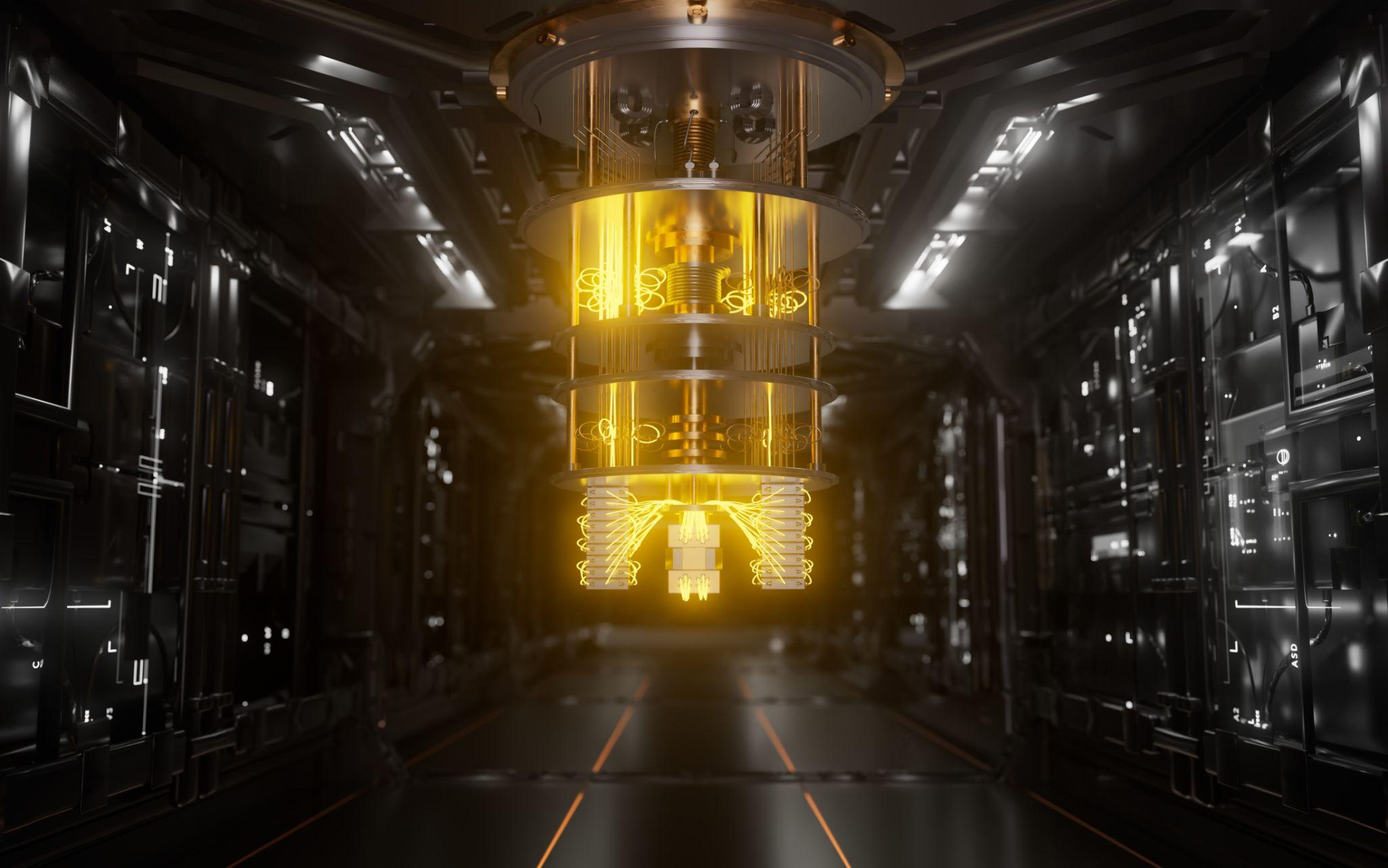
- Computing: Quantum computers use qubits, enabling calculations beyond classical limits
- Communication: Quantum encryption promises fundamentally secure data transmission
- Sensing: Ultra-sensitive measurements in navigation, medicine, and environmental monitoring
- Materials science: Advanced simulations for energy and industrial innovation
These developments are no longer experimental curiosities—they are becoming core components of economic and technological strategy.
Major technology companies and research institutions are investing heavily in quantum systems, while governments across the U.S., Europe, and Asia are integrating quantum into national policy frameworks.
The Quantum Risk Factor: A Race Against Time
While the opportunities are significant, the risks are equally profound.
One of the most urgent concerns is cybersecurity. Experts warn that future quantum computers could break widely used encryption systems such as RSA, potentially exposing sensitive financial, governmental, and personal data.
The concept of “Q-Day”—the moment when quantum machines can crack modern encryption—is now a central topic of discussion. Estimates vary, but some projections suggest this could happen as early as 2030.
Industry leaders are already sounding the alarm:
“Recent advances mean the timeline for quantum disruption is no longer theoretical… The organizations that prepare early will define the next phase of secure computing.”
This urgency has triggered a global push toward post-quantum cryptography, with organizations advised to audit their systems, identify vulnerable data, and begin transitioning to quantum-resistant security frameworks.
A New Arena of Global Competition
Quantum technology is now widely viewed as a defining field of the next decade.
Countries are competing to achieve quantum advantage—the point where quantum systems outperform classical computers in meaningful tasks. This has led to:
- Billions in government funding
- Strategic alliances between academia and industry
- Rapid expansion of cloud-based quantum platforms
The stakes are high. Leadership in quantum computing is increasingly linked to economic competitiveness and national security.
Beyond Technology: Ethics, Society, and Workforce
World Quantum Day 2026 also highlights a broader shift: quantum technology is not just a technical challenge—it is a societal one.
The transition to a quantum-enabled world raises questions about:
- Ethics and governance: Who controls powerful quantum systems?
- Education and workforce: How do countries train quantum-skilled professionals?
- Public understanding: How can complex science be made accessible?
Initiatives such as research grants and interdisciplinary programs are already exploring how quantum technology intersects with policy, culture, and the arts.
At the same time, workforce development is emerging as a bottleneck, with demand growing for expertise not only in physics but also in engineering, cybersecurity, and software development.
How the World Marks World Quantum Day
Unlike traditional global observances, World Quantum Day is decentralized and participatory.
Across the world, activities include:
- Public lectures and university events
- Lab tours and scientific demonstrations
- Industry panels and innovation showcases
- Educational campaigns and online workshops
The goal is clear: bridge the gap between cutting-edge science and public understanding.
This approach reflects a fundamental belief—that the future of quantum technology should not be shaped solely by specialists, but by an informed global community.
The Bigger Picture: A Technology Already Among Us
One of the more subtle messages of World Quantum Day is that quantum science is not entirely new to everyday life.
Many modern technologies already rely on quantum principles:
- Lasers used in communications and medicine
- MRI scanners in healthcare
- GPS systems requiring ultra-precise timing
- Semiconductor electronics powering digital devices
These examples demonstrate that the quantum revolution is not just coming—it has already begun.
What Comes Next: The Quantum Decade
Looking ahead, several trends are expected to define the next phase of quantum development:
- Secure systems transition: Widespread adoption of quantum-resistant encryption
- Commercial breakthroughs: Scalable, fault-tolerant quantum computers
- Industry integration: Applications in healthcare, finance, and logistics
- Expanded access: Cloud-based quantum tools for businesses and researchers
Experts emphasize that preparation must start now.
“Technology leaders must act now to secure systems and build quantum-ready capabilities… Delaying action increases both risk exposure and long-term costs.”
Conclusion: More Than a Celebration
World Quantum Day 2026 represents a critical inflection point.
What began as an effort to promote awareness of quantum science has become a global platform for aligning policy, industry, and public understanding around a transformative technology.
The message is direct: quantum computing and related technologies will reshape how the world computes, communicates, and secures information. The only remaining question is how prepared society will be when that transformation accelerates.
Understanding the implications today is no longer optional—it is strategic.


