

Wordle Hints Today: April 14 Puzzle, Strategy, and the Global Habit Behind the Game
The Daily Puzzle That Became a Global Ritual
Every day, millions of players open a simple five-letter puzzle and attempt to solve it within six guesses. What appears at first glance to be a casual word game has evolved into a structured daily habit—one that blends logic, language, and routine.
Search trends around phrases like “Wordle hints today,” “Wordle help April 13,” and “today’s Wordle answer” reflect how deeply embedded the game has become in digital culture. The daily puzzle is not just entertainment—it is a synchronized global activity.
At the center of this phenomenon is Wordle, created by software engineer Josh Wardle as a private project before becoming a viral sensation in 2021. Its later acquisition by a major digital publisher in early 2022 transformed it into a permanent fixture in the online puzzle ecosystem.
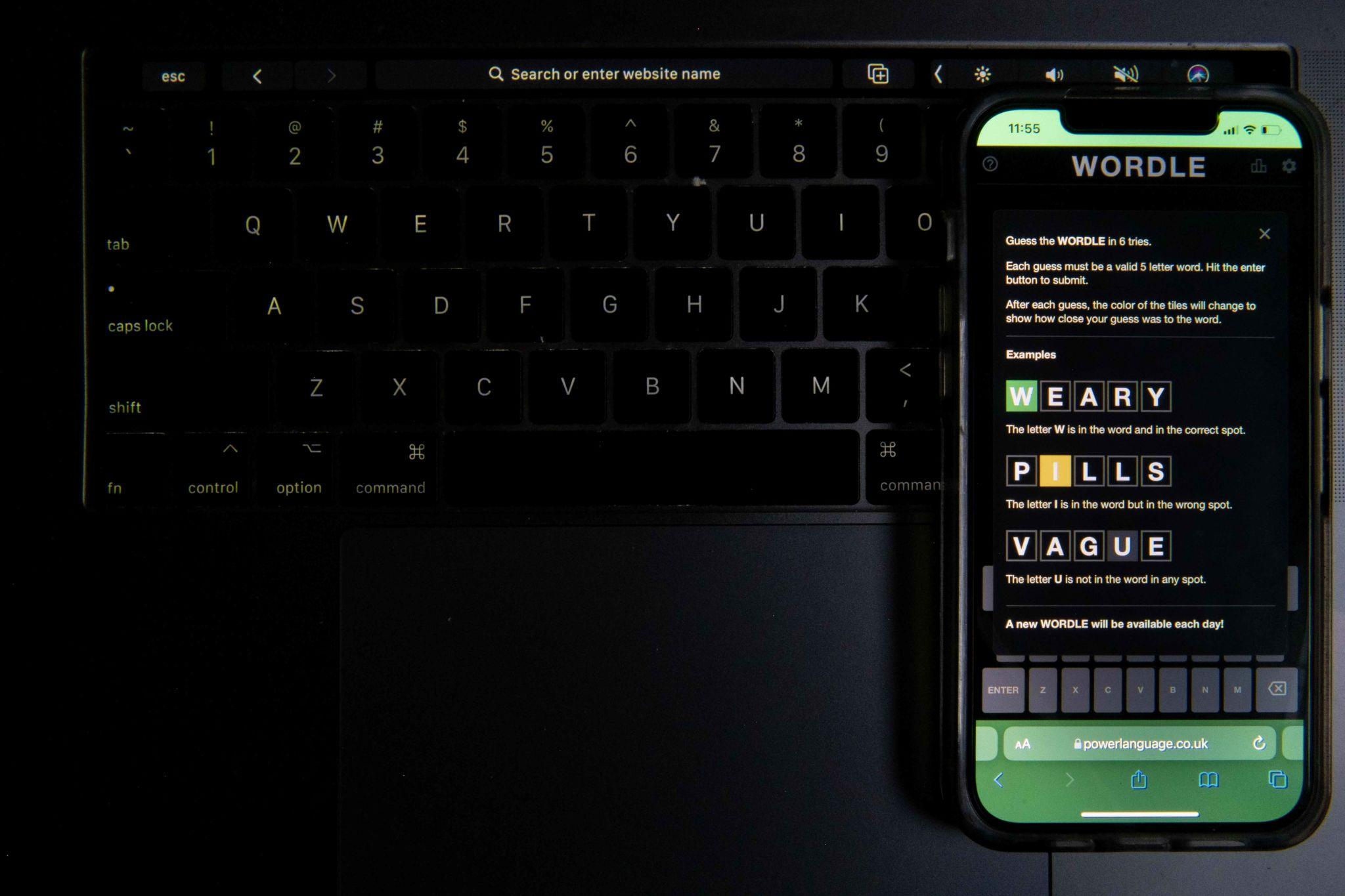
How Wordle Works—and Why It Keeps Players Hooked
Wordle’s design is deliberately minimal:
- One five-letter word per day
- Six attempts to solve it
- Color-coded feedback after each guess
The mechanics are straightforward but precise:
- Green indicates a correct letter in the correct position
- Yellow signals a correct letter in the wrong position
- Gray shows the letter is not in the word
This system creates a structured deduction loop. Players refine each guess using previous feedback, gradually narrowing possibilities through elimination and pattern recognition.
The game refreshes daily at midnight, reinforcing a consistent routine. Importantly, every player receives the same word, turning an individual puzzle into a shared global challenge.
Wordle #1760: April 14, 2026 — Hints and Breakdown
The April 14 puzzle (Wordle #1760) presented a moderately challenging word. Players relied on layered hints designed to guide without revealing the answer too quickly.
Key Hints for Today’s Wordle
- The word starts with the letter C
- It contains one primary vowel
- It includes a repeated letter
- It can function as both a noun and a verb
- It relates to a repeating process or a type of ride
- The word ends with E
- The letter Y appears in the second position
Additional contextual hints described it as something that “follows life, water, spin and motor,” reinforcing its conceptual meaning.
Final Answer
The solution to Wordle #1760 is:
CYCLE
This word carries dual meaning—referring both to a physical object (a bicycle) and an abstract concept (a repeating sequence). Its structure, particularly the repeated consonant and limited vowel count, contributed to the puzzle’s difficulty.
Recent Wordle Answers: A Pattern of Variation
Wordle deliberately avoids repetition, ensuring each puzzle feels distinct. Recent answers illustrate this variation:
- April 13 — ELFIN
- April 12 — ALLEY
- April 11 — PRUDE
- April 10 — CAROM
This rotating vocabulary prevents predictability and keeps the deduction process fresh, even for experienced players.
Strategy: How Players Improve Their Wordle Performance
While the puzzle appears simple, consistent success depends on structured strategy.
These steps will guide players toward more efficient solving:
1. Start With High-Value Words
Use opening guesses that include common vowels and consonants. Words like “CRANE” or “SLATE” are widely used because they maximize early information.
2. Avoid Early Letter Repetition
In the first two guesses, prioritize covering new letters rather than repeating known ones. This expands the information set quickly.
3. Analyze Feedback Precisely
- Lock in green letters immediately
- Reposition yellow letters logically
- Eliminate gray letters entirely
4. Recognize Patterns
Words like “CYCLE” demonstrate structural complexity—repeated letters and conceptual clues rather than obvious vocabulary.
5. Build Vocabulary Awareness
Familiarity with less common words improves performance over time, especially in later guesses.
These strategies emphasize that Wordle is less about guessing and more about systematic deduction.
Why Wordle Still Dominates Search Trends in 2026
Wordle’s sustained popularity is not accidental. Its design aligns with key behavioral and digital principles:
Controlled Scarcity
Only one puzzle per day prevents overuse and maintains anticipation.
Shared Experience
All players face the same challenge, enabling global conversations and comparisons.
Simplicity
The absence of complex features lowers the barrier to entry.
Habit Formation
Daily resets encourage routine engagement and streak-building.
The result is a rare balance: a game that is both minimal and deeply engaging.
Cultural Impact: Beyond a Simple Word Game
Wordle has influenced digital behavior in several measurable ways:
Social Sharing Without Spoilers
The emoji grid format allows players to share results without revealing answers, creating a unique communication system.
Cognitive Engagement
The puzzle acts as a daily mental exercise, combining linguistic recall with logical reasoning.
Market Replication
Its success has led to numerous variations—multi-word formats, themed puzzles, and spin-offs like Quordle and Dordle.
Massive Usage Scale
Players collectively engaged with the game billions of times in a single year, reflecting its global reach.
The Hidden Layer: Accessibility and Technical Barriers
While Wordle is conceptually accessible, its delivery introduces a less visible issue—technical access.
Some users encounter browser compatibility messages before reaching the puzzle. These notices emphasize that the platform is built for modern web technologies and may not function on unsupported browsers.
This introduces a subtle divide:
- Users with updated systems access the puzzle seamlessly
- Others face delays or restrictions before even seeing the content
The implication is clear: accessibility is not just about design simplicity but also about technological compatibility.
The Meaning Behind “CYCLE”
The April 14 answer—CYCLE—is more than just a word. It reflects the structure of Wordle itself:
- A daily loop
- A repeating challenge
- A continuous engagement pattern
Each day resets the experience while maintaining consistent rules. The puzzle is both independent and part of a larger sequence.
Conclusion: A Game Defined by Simplicity and Repetition
Wordle’s enduring success lies in disciplined design. It does not rely on expansion, monetization complexity, or feature overload. Instead, it operates within strict constraints:
- One puzzle
- One word
- One shared experience
The April 14 puzzle encapsulates this philosophy. A single word—CYCLE—captures both the solution and the system behind it.
As the next puzzle arrives, the process repeats. The grid resets. The guesses begin again. And millions of players return, not just to solve a word, but to maintain a habit.


