Vogue: Where Fashion Becomes Cultural Narrative
Introduction: Beyond a Magazine, a Global Lens on Style
“Vogue” is often described simply as a fashion publication—but that definition barely scratches the surface. In reality, Vogue operates as a cultural institution, a global curator of aesthetics, and a powerful narrator of how fashion intersects with identity, heritage, and innovation. Across its platforms, Vogue doesn’t just document style; it shapes it, framing clothing as a language of history, art, and societal values.
Recent features—from red carpet spectacles at the Met Gala to deeply rooted textile traditions—highlight how Vogue bridges the past and present, luxury and craft, celebrity and culture.
Fashion as Cultural Preservation: The Revival of Craft
One of Vogue’s most compelling roles today lies in spotlighting traditional craftsmanship in a modern context. A recent feature on Genelia Deshmukh illustrates this shift clearly.
Deshmukh appeared in a Jamdani sari from Chokhana, a craft sustained by only around 300 weavers, underscoring the fragility and importance of preserving heritage textiles.
The sari itself was more than clothing—it was a living archive of technique and artistry. Hand-inserted motifs in vibrant tones were woven into a gold-beige base, while fine white jaal work created a delicate lattice effect. The result was both visually rich and remarkably lightweight, a defining trait of Jamdani.
The styling choices reinforced this narrative. Traditional Maharashtrian jewellery, including layered navratna pieces and a Raani haar, anchored the look in regional identity while maintaining contemporary elegance.
Even Vogue’s own editorial guidance emphasized restraint:
“Lighten up the look by removing the neckpieces, let the ornate sari take centre stage.”
This approach reflects a broader editorial direction—prioritizing textile storytelling over excessive ornamentation.
The Met Gala as Vogue’s Cultural Stage
If heritage craftsmanship represents Vogue’s roots, the Met Gala embodies its forward-looking spectacle. The 2026 edition, themed around “Costume Art,” became a showcase for how fashion merges with artistic expression.
SZA: A Global Tapestry of Materials and Meaning
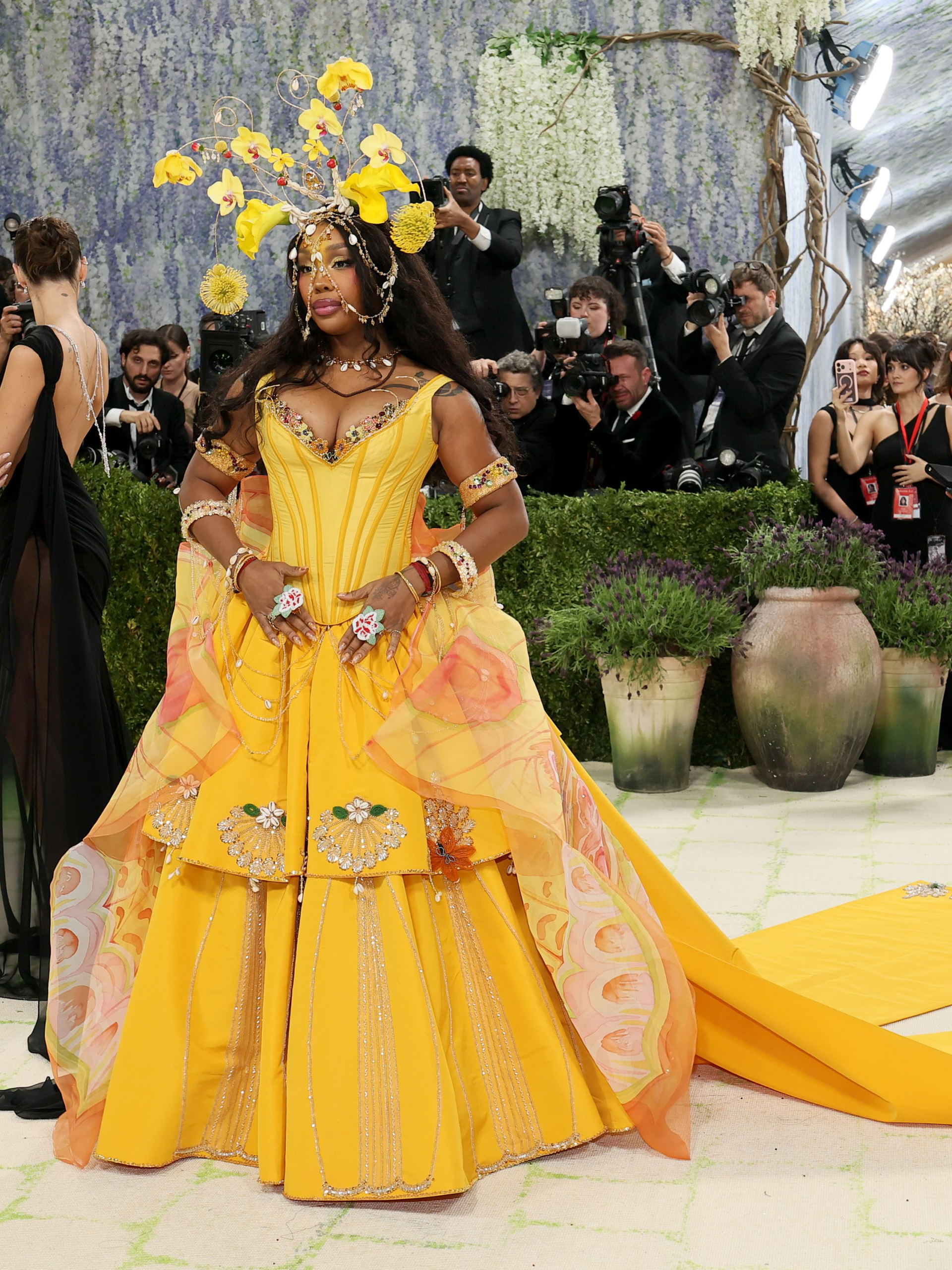
SZA’s Met Gala look exemplified Vogue’s fascination with cross-cultural dialogue. Designed by Emily Adams Bode Aujla, the gown incorporated over a hundred yards of fabric sourced from diverse materials such as tulle, silk faille, and lace.
The design drew inspiration from multiple eras and movements, including the Wiener Werkstätte and 18th-century silhouettes, resulting in a layered narrative of regality and craftsmanship.
Significantly, the gown featured floral appliqués cut from old saris—an intentional nod to sustainability and global craft traditions.
As Bode Aujla explained:
“SZA’s look for this year’s Met Gala is both tied to her own whimsical personal narrative and has an art-based historical significance.”
Here, Vogue frames fashion as both personal storytelling and historical dialogue.
Individual Identity in a Collective Spotlight: Blackpink’s Fashion Study
Vogue also uses high-profile events to explore individuality within collective identity. Blackpink’s appearance at the 2026 Met Gala serves as a prime example.
Each member interpreted the same theme differently, working with distinct fashion houses:
- Jisoo (Dior): Floral embroidery inspired by garden scenes and art history
- Jennie (Chanel): A meticulously crafted dress with 15,000 embroidered elements, requiring 540 hours of work
- Lisa (Robert Wun): A conceptual gown incorporating 3D-scanned arm motifs tied to Thai dance
- Rosé (Saint Laurent): A minimalist black gown referencing Georges Braque’s “The Birds”
Together, these looks illustrated how fashion can express multiple narratives simultaneously—cultural heritage, artistic reference, and personal identity—within a single event.
Vogue’s coverage emphasized this diversity, framing the group not as a unified image but as four distinct creative voices.
Fashion Meets Fine Art: Kim Kardashian’s Sculptural Statement
Perhaps the most literal merging of fashion and art came through Kim Kardashian’s 2026 Met Gala ensemble.
Collaborating with British pop artist Allen Jones, Kardashian wore a tangerine fiberglass breastplate derived from a cast dating back to the late 1960s.
The piece was not only historically rooted but also industrially crafted—painted in an auto body shop over three weeks.
Kardashian described her inspiration succinctly:
“Allen Jones would be iconic. Sexy. Classic. Cool. Innovative.”
Paired with an artisanal leather skirt featuring hand-painted strokes, the look blurred boundaries between sculpture, performance, and wearable design.
Vogue’s Editorial Power: Framing Fashion as Meaning
Across these examples, a consistent editorial philosophy emerges. Vogue does not merely showcase clothing—it contextualizes it.
Key themes include:
1. Craft as Narrative
From Jamdani weaving to sari-based appliqués, Vogue highlights the human stories behind garments.
2. Fashion as Art
Whether through historical references or sculptural forms, clothing is presented as a medium of artistic expression.
3. Identity and Individuality
Coverage emphasizes personal interpretation, especially in high-profile group appearances.
4. Global Interconnection
Designs frequently draw from multiple cultures, reflecting a globalized fashion ecosystem.
The Broader Cultural Impact
Vogue’s influence extends far beyond runway trends or celebrity style.
Reviving Heritage
By spotlighting endangered crafts like Jamdani, Vogue contributes to their visibility and potential survival.
Shaping Consumer Perception
Readers are encouraged to value craftsmanship, sustainability, and storytelling over fast fashion.
Bridging Art and Fashion
The publication consistently positions fashion within the broader art world, elevating its cultural significance.
Defining Aspirational Culture
Through curated imagery and narratives, Vogue continues to define what modern luxury and style represent.
Conclusion: Vogue as a Cultural Architect
To understand Vogue is to recognize it as more than a magazine—it is a cultural architect. Through its editorial lens, fashion becomes a site where history, identity, artistry, and innovation converge.
From the delicate threads of a Jamdani sari to the sculptural boldness of a fiberglass breastplate, Vogue demonstrates that clothing is never just fabric. It is expression, heritage, and narrative woven together.
In an increasingly interconnected world, Vogue’s role remains pivotal: interpreting style not as fleeting trend, but as enduring cultural dialogue.