A Celebration Turned Crisis
What was meant to be one of Washington’s most prestigious social and political gatherings descended into chaos on Saturday evening when gunfire erupted at the annual White House Correspondents’ Association dinner. The high-profile gala, attended by U.S. President Donald Trump, senior officials, journalists, and celebrities, was abruptly halted as security forces rushed to evacuate the president amid what he later described as a “would-be assassin” attack.
The incident unfolded inside and around the Washington Hilton, a venue steeped in political history, where hundreds of black-tie guests were forced to seek cover under tables as panic spread through the ballroom.
The Moment Shots Rang Out
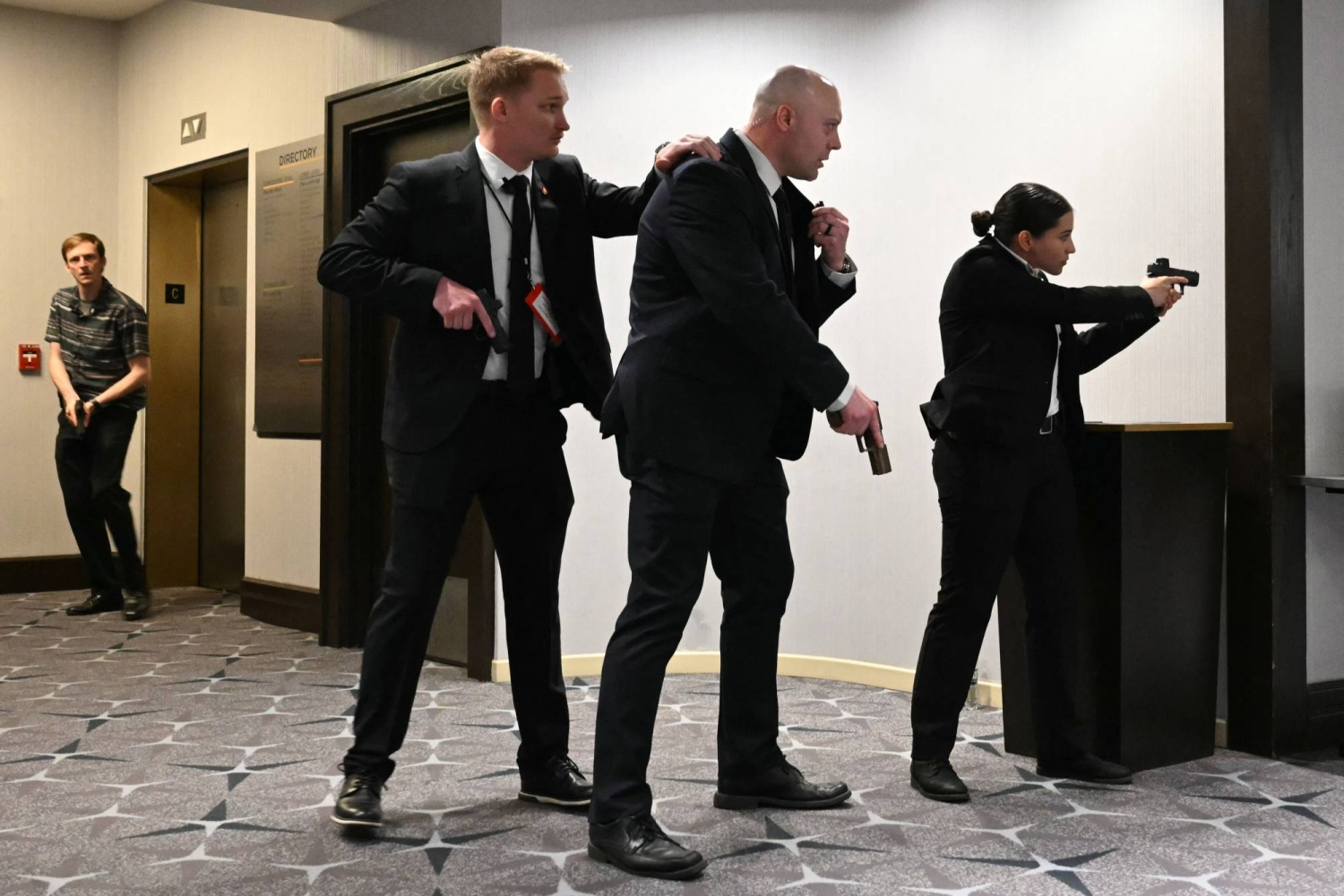
Shortly after the evening’s proceedings began, a gunman attempted to breach a Secret Service checkpoint just outside the main ballroom. Armed with multiple weapons—including a shotgun, handgun, and knives—the attacker triggered a rapid and forceful response from law enforcement.
Inside the venue, the atmosphere shifted instantly from celebration to fear. Guests reported hearing loud bangs before security teams stormed the stage, surrounding the president and escorting him away. Journalists and attendees dove for safety as instructions echoed through the hall: “Get down, get down!”
Within moments, Secret Service agents had evacuated Donald Trump, First Lady Melania Trump, and other top officials, including Vice President JD Vance, while armed teams secured the area.
A Swift Security Response
Despite the intensity of the situation, authorities confirmed that no dignitaries or guests were injured. A Secret Service officer was struck by gunfire, but a ballistic vest prevented serious harm, underscoring the effectiveness of protective measures in place.
Law enforcement engaged the suspect near the checkpoint, eventually detaining him. The individual, identified as 31-year-old Cole Tomas Allen, was taken into custody and later transported to a hospital for evaluation. He is expected to face federal charges, including firearms-related offenses and assault on a federal officer.
Officials indicated that the suspect acted alone, with early reports suggesting he intended to target members of the Trump administration.
Inside the Ballroom: Fear and Confusion
Eyewitness accounts paint a vivid picture of the confusion that gripped the room. Guests described a tense and disorienting environment, with conflicting instructions about whether to remain in place or evacuate. Some attendees remained under tables for extended periods, unsure of the scale of the threat.
Prominent figures in attendance, including lawmakers and media personalities, recounted being physically pushed to the ground by security personnel as a precaution. Others described hearing screams and witnessing armed officers sweeping through the room with weapons drawn.
Outside, helicopters circled overhead while emergency teams secured the perimeter, turning the iconic venue into a heavily guarded scene.
A Venue with Historical Echoes
The Washington Hilton’s role in this incident has drawn attention due to its past. The hotel was the site of the 1981 assassination attempt on President Ronald Reagan, an event that left a lasting mark on U.S. political history.
The parallel has not gone unnoticed. For many observers, the recurrence of violence at the same location has intensified concerns about presidential security and the symbolic weight of such incidents.
Trump’s Response: “A Dangerous Profession”
Later that evening, President Trump addressed the nation from the White House, flanked by senior law enforcement officials. He praised the swift actions of the Secret Service, emphasizing that their response prevented a potentially far more tragic outcome.
“It’s a dangerous profession,” Trump remarked, reflecting on the risks associated with the presidency. He also suggested that such attacks often target leaders who have had a significant impact, drawing historical comparisons to past presidents.
In a more reflective tone, Trump noted the unity displayed in the aftermath of the incident, describing how individuals across political lines came together during the crisis.
Security Under Scrutiny
The shooting has reignited debate over security protocols at high-profile events. Despite multiple layers of screening—including ticket verification and magnetometer checks—the suspect was reportedly able to enter the hotel as a registered guest, bypassing outer security measures.
Investigators are now reviewing surveillance footage and security procedures to determine how weapons were brought into the venue. The breach has raised broader questions about balancing accessibility with stringent protection in public spaces hosting national leaders.
A Pattern of Threats
This incident is not isolated. Trump has previously survived an assassination attempt during a campaign rally in 2024, adding to a growing list of threats against political figures in recent years.
The recurrence of such events highlights a troubling trend, with security agencies facing increasing challenges in anticipating and neutralizing threats in an era of heightened political tension.
What Happens Next?
Authorities continue to investigate the suspect’s motives, background, and potential connections. While initial assessments suggest a lone actor, officials have not ruled out additional charges or findings as the case develops.
The White House Correspondents’ Association has confirmed that the annual dinner will be rescheduled, signaling an effort to restore normalcy after the disruption.
Conclusion: A Stark Reminder
The evacuation of Donald Trump from a high-security event underscores the persistent risks surrounding modern political leadership. While the swift response of security forces prevented casualties, the incident serves as a stark reminder of the vulnerabilities that remain.
Beyond the immediate shock, the shooting raises deeper questions about security preparedness, political polarization, and the safety of public institutions. As investigations continue, the event is likely to shape discussions around presidential protection and public event security for months to come.


