
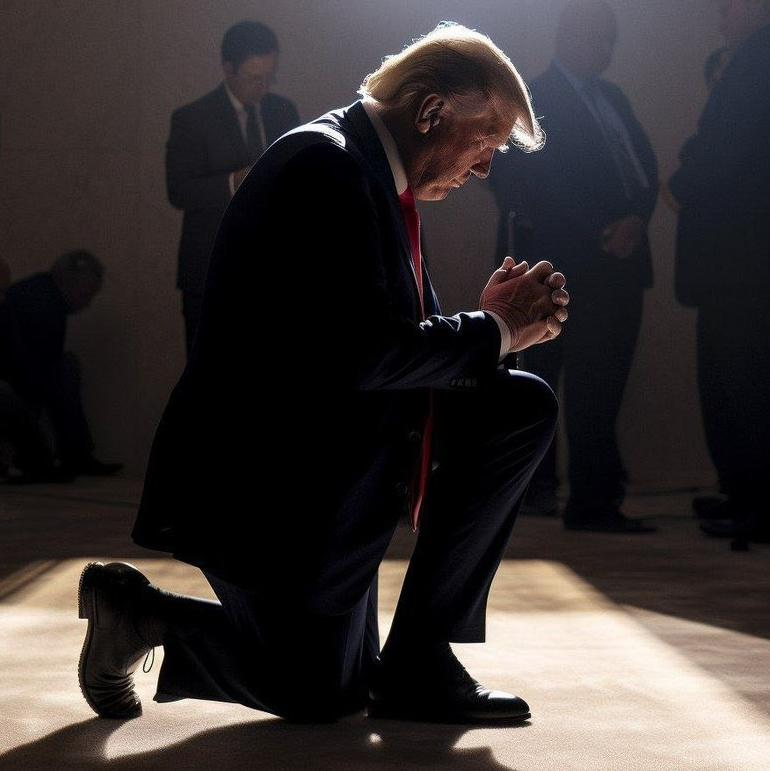
Trump’s “Jesus Image” Controversy: A Cultural Flashpoint in the Age of AI
Introduction: When Politics, Religion, and AI Collide
In April 2026, Donald Trump ignited one of the most unusual and contentious cultural debates of his presidency after posting an AI-generated image portraying himself in a Christ-like form. The image, shared on his platform Truth Social, depicted him clad in flowing robes, bathed in divine light, and appearing to heal a sick man.
Within hours, the post triggered widespread backlash—from religious leaders, political commentators, celebrities, and even segments of his own conservative base. The episode, which culminated in the image’s deletion, has since evolved into a broader discussion about political communication, religious sensitivity, and the expanding role of artificial intelligence in shaping public discourse.
This article examines the controversy in depth, tracing its origins, reactions, and wider implications.
The Image That Sparked Outrage
The now-deleted image showed Trump positioned as a figure resembling Jesus Christ—a powerful and symbolic representation in Christian theology. According to descriptions, the scene included:
- Trump wearing white and red robes traditionally associated with religious imagery
- A glowing, divine light emanating from his hands
- A sick man lying in a hospital bed, seemingly being healed
- A demonic figure hovering in the background
The visual composition strongly mirrored classical depictions of divine healing and spiritual authority.
The post appeared shortly after Trump published a lengthy critique of Pope Leo XIV, whom he described as “weak on crime.” This timing intensified the reaction, framing the image not just as provocative, but as part of a broader confrontation with religious leadership.
Immediate Backlash: From Supporters to Critics
Religious and Conservative Reaction
The backlash was notable not only for its scale but for its diversity. Criticism came from across ideological lines, including Trump’s own supporters.
Many conservative Christian voices described the image as offensive and irreverent. Some labeled it “blasphemy,” arguing that equating a political figure with a sacred religious symbol crossed a line.
One critic stated bluntly:
“God shall not be mocked.”
Religious organizations also responded forcefully. A Christian group demanded the image be removed immediately and called for a public apology, emphasizing that believers had been “deeply upset” by the depiction.
Cultural and Celebrity Criticism
Public figures amplified the backlash. Comedian Jon Stewart mocked Trump’s explanation, questioning whether the public was expected to accept it at face value.
Musician Jack White went further, criticizing both Trump and his supporters, asking how Christians could continue backing him after what he called “blasphemy.”
The intensity of these reactions reflects how deeply symbolic religious imagery remains in contemporary culture—especially when used in political messaging.
The White House Response: “It Was a Joke”
As criticism mounted, the administration moved to contain the fallout.
Vice President JD Vance defended the post, describing it as misunderstood humor:
“I think the president was posting a joke… he took it down because he recognized that a lot of people weren’t understanding his humor.”
Vance also framed Trump’s communication style as deliberately unfiltered, arguing that it allows him to connect directly with the public.
Trump himself offered a different explanation. He insisted that he had not intended to portray himself as Jesus:
“I thought it was me as a doctor.”
He added:
“I make people better.”
The president maintained that the image had been misunderstood and removed it to avoid confusion.
The Vatican Tensions and Broader Political Context
The controversy did not occur in isolation. It unfolded against a backdrop of escalating tensions between Trump and the Vatican.
Trump had recently criticized Pope Leo XIV, linking him to political adversaries and accusing him of weakness. The Pope, in turn, had been outspoken on moral and geopolitical issues, including conflict in the Middle East.
The confrontation highlighted a deeper divide:
- Trump’s position: Political authority should remain separate from religious critique
- Vatican stance: Moral leadership includes speaking on global political issues
Vice President Vance underscored this divide, suggesting the Vatican should focus on “matters of morality” while the U.S. president handles public policy.
AI, Memes, and “Memetic Warfare”
The incident also underscores a growing trend: the use of AI-generated imagery in political communication.
Observers have described this approach as “memetic warfare”—a strategy that blends humor, provocation, and viral imagery to shape narratives and dominate attention cycles.
Key characteristics include:
- Rapid content creation using AI tools
- Ambiguity between satire and serious messaging
- High emotional impact designed for social media virality
This was not the first time Trump had used such tactics, but the religious framing made this instance particularly sensitive.
Why This Incident Matters
1. Redefining Political Communication
The controversy illustrates how modern political figures increasingly bypass traditional media filters. Trump’s direct use of social media—combined with AI-generated content—allows for rapid, unmediated messaging, but also increases the risk of backlash.
2. Religious Sensitivity in Public Discourse
The reaction highlights the enduring significance of religious symbols. Even in a highly polarized political environment, certain boundaries remain widely recognized—and crossing them can provoke bipartisan criticism.
3. The Risks of AI-Generated Content
AI tools enable highly realistic and symbolic imagery, but they also blur intent and interpretation. In this case:
- Supporters struggled to interpret whether the image was satire, symbolism, or self-aggrandizement
- Critics viewed it as a deliberate provocation
This ambiguity is likely to become more common as AI-generated media proliferates.
Future Implications: What Comes Next?
The Trump “Jesus image” controversy may signal several emerging trends:
- Increased scrutiny of AI in politics: Governments and platforms may face pressure to regulate or label AI-generated content
- Heightened sensitivity around religious imagery: Political actors may become more cautious—or more provocative
- Continued use of viral tactics: Despite backlash, the attention generated may reinforce the strategic value of such posts
Importantly, the episode demonstrates that even in an era of constant controversy, certain actions can still trigger significant and unexpected reactions.
Conclusion: A Defining Moment in Digital Politics
The brief life cycle of Trump’s AI-generated “Jesus” image—from posting to deletion—encapsulates a complex intersection of politics, religion, and technology.
What began as a single social media post quickly escalated into a global conversation about respect, symbolism, and the evolving nature of political communication.
Whether interpreted as humor, misjudgment, or calculated provocation, the incident leaves a clear takeaway: in the digital age, imagery is no longer just visual—it is ideological, cultural, and deeply consequential.


