


Tony Dokoupil: Inside a Tumultuous Chapter in American Broadcast News
A Network Anchor Under the Microscope
In the high-stakes world of American broadcast journalism, few roles carry as much symbolic weight as anchoring a flagship evening news program. For Tony Dokoupil, stepping into that role at CBS News marked a defining career moment—one that has quickly evolved into a complex test of leadership, audience trust, and institutional direction.
What began as a strategic move to reinvigorate a legacy broadcast has, within months, turned into a case study in the challenges facing traditional media. Ratings declines, editorial controversies, and shifting audience expectations have all converged, placing Dokoupil at the center of a broader industry reckoning.
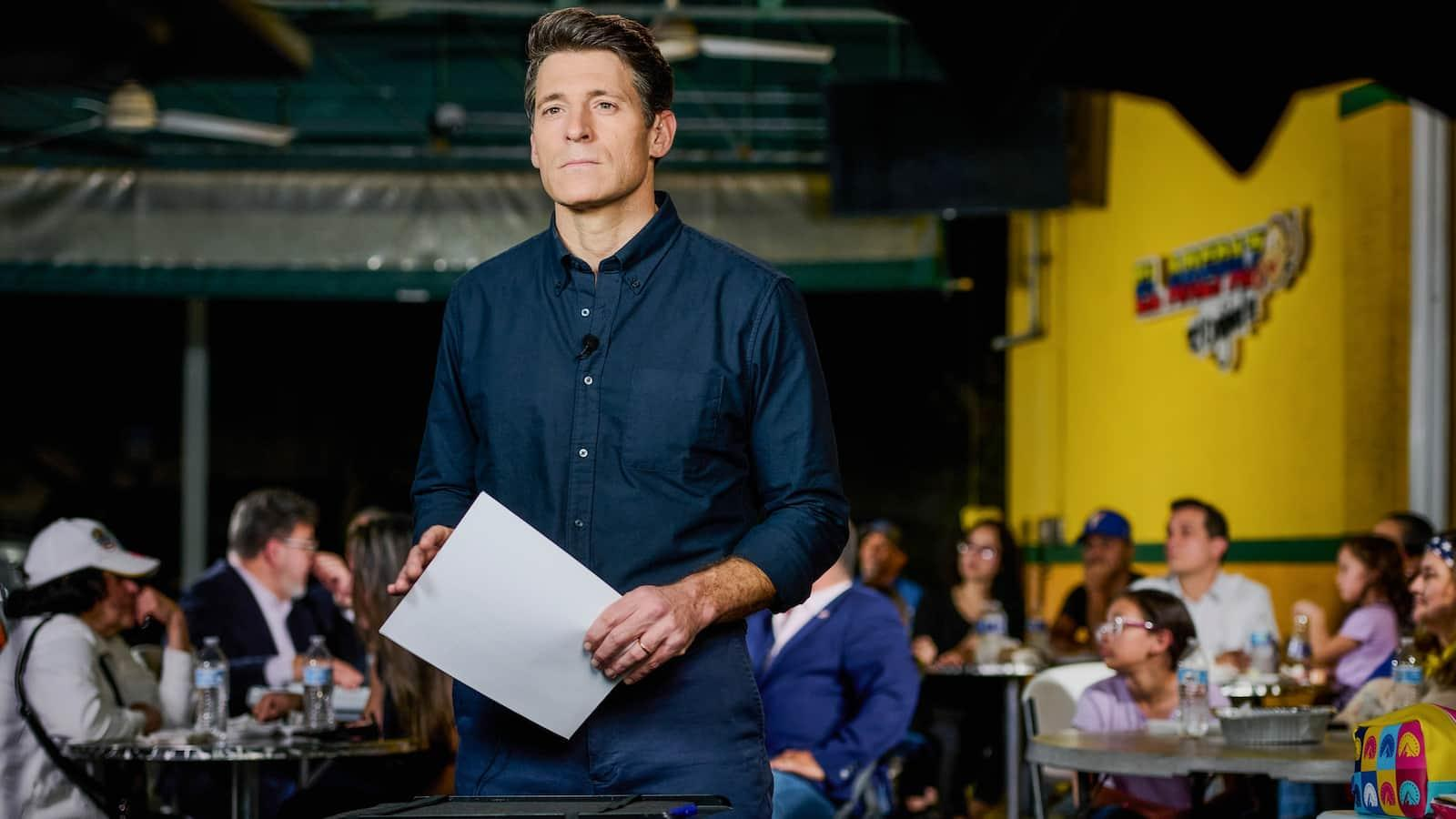
The Transition: A New Era for CBS Evening News
When Dokoupil officially took over the anchor chair on January 5, 2026, the expectations were clear: stabilize and rebuild a struggling news brand. The appointment came under the leadership of Bari Weiss, who positioned him as a figure capable of restoring credibility and reconnecting with viewers.
In a formal statement, Weiss framed the decision in ideological and journalistic terms:
“We live in a time in which many people have lost trust in the media. Tony Dokoupil is the person to win it back. That’s because he believes in old school journalistic values — asking the hard questions, following the facts wherever they lead and holding power to account.”
The strategy emphasized a return to traditional reporting principles. However, execution—and audience reception—has proven far more complicated.
The Numbers: A Rapid Decline in Viewership
A Troubling Ratings Trajectory
Within months of his debut, the data began to signal a clear downward trend. For the week ending April 6, 2026:
- Total viewers: 3.807 million
- Week-over-week change: down 8%
- Key demographic (25–54): 477,000 viewers
- Demographic decline: down 16%
These figures place CBS Evening News significantly behind its competitors. By comparison:
- ABC World News Tonight averaged 8.417 million viewers
- NBC Nightly News drew 6.434 million viewers
The gap is not marginal—it is structural. CBS is trailing by millions of viewers, with limited evidence of recovery momentum.
Year-Over-Year Decline
The situation becomes more acute when viewed over a longer timeline:
- CBS Evening News is down 23% year-over-year
This suggests that the decline cannot be attributed solely to short-term fluctuations or specific news cycles. Instead, it reflects deeper audience disengagement.
Early Challenges: On-Air Performance and Audience Connection
From the outset, Dokoupil’s tenure faced technical and stylistic hurdles. His early broadcasts included:
- Teleprompter misreads
- Awkward on-air transitions
- A delivery style that critics argue has not resonated with the traditional evening news audience
While such issues are not uncommon during transitions, their persistence has raised questions about fit and positioning.
More critically, analysts note that the program has struggled to attract new viewers while also failing to retain its existing base:
“Tony Dokoupil, now several months on the job, has not been pulling in new viewers, or even retaining many existing ones, for that matter.”
Editorial Strategy and Institutional Turbulence
A Shift in Direction
Dokoupil’s appointment did not occur in isolation. It coincided with a broader editorial shift within CBS News under new leadership. The network’s evolving approach—characterized by a perceived tilt toward certain political narratives—has sparked internal and external debate.
This transition has been accompanied by:
- Staff departures
- Buyouts and layoffs
- Reduced emphasis on legacy programming formats
At the same time, high-profile editorial decisions and controversies have further complicated the network’s public image.
Internal Friction and Audience Perception
Industry insiders describe an environment of uncertainty, with tensions between strategic direction and audience expectations. For viewers, the result has been a perception of inconsistency—both in tone and content.
The outcome is visible in the ratings: audiences appear to be migrating toward more stable alternatives.
A Moment of Public Scrutiny
Beyond ratings, Dokoupil’s role has also intersected with broader news events that test the responsiveness of the broadcast.
On April 19, for example, he stepped away from the anchor desk during a breaking news segment, with Jericka Duncan stepping in to deliver coverage of a shooting near the University of Iowa. The report detailed multiple injuries and ongoing investigations, prompting strong viewer reactions online.
Such moments highlight the pressure inherent in the role: the anchor is not only a presenter but also a focal point for public trust during critical events.
Competitive Landscape: Why Rivals Are Winning
The dominance of competing broadcasts is not accidental. Each network has developed a distinct positioning:
- David Muir has maintained consistent audience loyalty and brand clarity
- Tom Llamas leads a stable second-place program with strong demographic performance
In contrast, CBS faces a dual challenge:
- Rebuilding audience trust
- Differentiating its editorial identity without alienating viewers
Without resolving these issues, incremental changes are unlikely to reverse the trend.
Structural Challenges Facing Broadcast News
Dokoupil’s situation also reflects broader industry dynamics:
- Fragmentation of media consumption: Viewers increasingly rely on digital platforms rather than traditional broadcasts
- Declining trust in institutions: News organizations face skepticism across political and demographic lines
- Competition beyond television: Streaming, social media, and independent outlets dilute audience attention
In this context, the anchor alone cannot determine success. The entire ecosystem—content strategy, distribution, and brand positioning—must align.
What Comes Next for Tony Dokoupil?
Short-Term Outlook
Four months into his tenure, the immediate priorities are clear:
- Stabilize weekly viewership
- Improve performance in the 25–54 demographic
- Rebuild consistency in editorial delivery
However, current trends indicate limited short-term recovery without structural changes.
Strategic Decisions Ahead
CBS leadership faces a set of critical decisions:
- Maintain current direction and allow time for adjustment
- Refine editorial strategy to better align with audience expectations
- Consider personnel changes if performance does not improve
Each option carries reputational and financial implications.
Conclusion: A Defining Test of Modern Journalism
Tony Dokoupil’s tenure at CBS Evening News has quickly evolved into more than a personal career milestone. It represents a broader inflection point for legacy media institutions navigating a rapidly changing landscape.
The numbers tell a clear story: declining viewership, widening competitive gaps, and uncertain audience engagement. Yet the underlying issue is more complex. At its core, this is a question of how traditional journalism adapts—without losing its identity—in an era of fragmented attention and shifting trust.
Whether Dokoupil ultimately succeeds or not will depend less on individual performance and more on the network’s ability to reconcile its strategy with the expectations of a modern audience.
For now, the trajectory remains uncertain, and the stakes—both for the anchor and the institution—continue to rise.


