
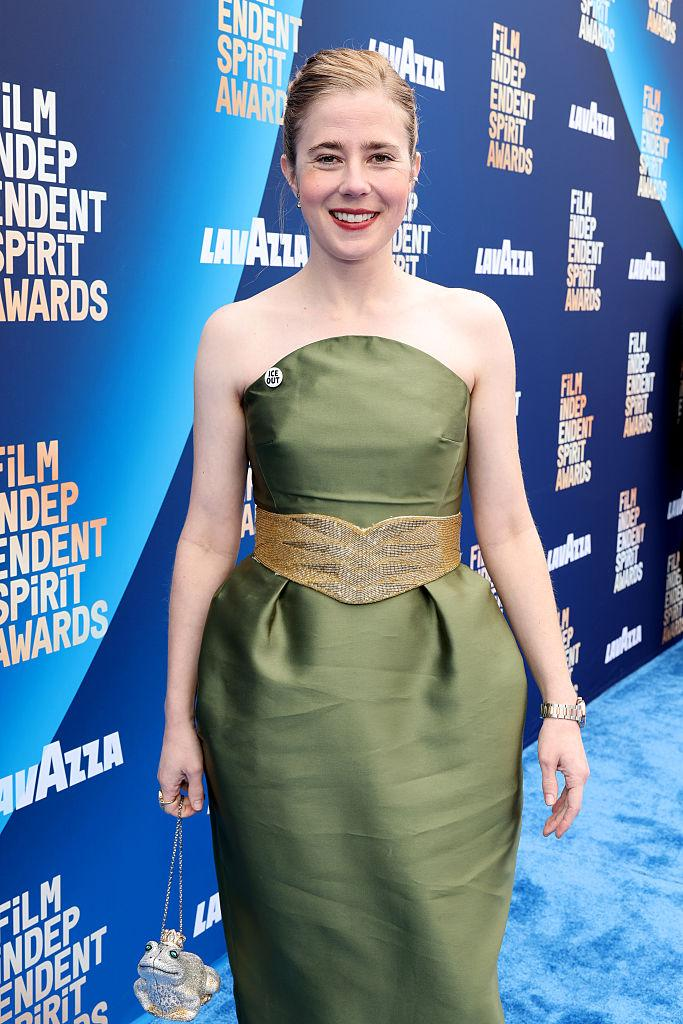
Taylor Dearden: The Rising Actress Shaping a New Era of Authentic Storytelling
In an industry increasingly defined by representation and authenticity, Taylor Dearden has emerged as a compelling figure to watch. While her name may initially resonate due to her lineage—being the daughter of acclaimed actor Bryan Cranston and actress Robin Dearden—her growing body of work reflects a career built on merit, nuance, and a distinct artistic identity.
At the center of her current rise is her performance as Dr. Melissa “Mel” King in the Emmy-winning medical drama The Pitt. Through this role, Dearden is not only expanding her professional profile but also contributing to a broader cultural conversation around neurodiversity and representation in mainstream television.

A Legacy in Entertainment, A Path of Her Own
Taylor Dearden was born into a household deeply embedded in the entertainment industry. Her father, Bryan Cranston, is widely recognized for his transformative role as Walter White in Breaking Bad and as Hal in Malcolm in the Middle. Her mother, Robin Dearden, has sustained a long-standing career in acting, with the couple married since 1989 and often appearing together at high-profile events, including the Olivier Awards 2026 in London.
Despite this legacy, Dearden’s trajectory has not been defined solely by her family background. Instead, she has gradually established herself through carefully chosen roles that emphasize character depth over visibility alone. This deliberate approach has positioned her as part of a newer generation of actors prioritizing substance and social relevance.
Breakthrough Role: Dr. Mel King in The Pitt
Dearden’s portrayal of Dr. Mel King in The Pitt represents a critical turning point in her career. The series, set within a high-pressure trauma medical center, is noted for its unfiltered realism and layered character development.
A Character Rooted in Empathy and Complexity
Dr. Mel King stands out among the ensemble cast for her empathetic and intuitive approach to patient care. Unlike traditional portrayals of medical professionals, Mel’s strength lies not only in clinical expertise but also in her emotional intelligence.
Her character is deeply shaped by her relationship with her younger sister Becca, who is autistic and lives in an assisted-living facility due to higher support needs. As Becca’s primary guardian, Mel navigates both personal and professional challenges, bringing a lived understanding of neurodiversity into her medical practice.
This dynamic allows the show to explore how personal experiences influence professional conduct—particularly in high-stakes environments like emergency medicine.
Neurodiversity Representation: A Defining Element
One of the most significant aspects of Dearden’s performance is its contribution to the evolving portrayal of neurodivergent individuals on screen.
Subtle Yet Impactful Characterization
Throughout the series, Mel exhibits traits that have led many viewers to interpret her as autistic:
- She engages in stimming behaviors
- She struggles with interpreting sarcasm
- She experiences emotions with notable intensity
- She demonstrates focused attention on specific cases and individuals
Rather than presenting these traits as limitations, the series frames them as part of a broader cognitive and emotional spectrum that enhances her capabilities.
This nuanced approach has resonated strongly with audiences, particularly within neurodivergent communities. Many viewers report feeling “seen” by the character—an indication of the show’s commitment to authenticity rather than tokenism.
Audience Reception and Cultural Impact
The reception to Dearden’s performance has been shaped by both critical appreciation and grassroots audience engagement.
A key dimension of this response lies in how The Pitt challenges long-standing stereotypes. For decades, portrayals of autistic individuals have often leaned toward extremes—either minimizing their emotional awareness or exaggerating their differences. Mel King’s character disrupts this narrative.
As one viewer and autism advocate noted, the character demonstrates that autistic individuals can possess deep empathy and a strong capacity to understand others’ emotions—countering a persistent misconception.
Personal Insight and Artistic Intent
Dearden herself has engaged with the interpretation of her character in a measured and thoughtful way. In an interview, she described Mel as a capable individual who navigates complex challenges with resilience:
“Recognizing that something’s hard for anyone and then being able to overcome it if you are neurodivergent, hopefully that should just make it even sweeter,” she said.
This perspective underscores a broader artistic intent: to normalize neurodiversity rather than isolate it as an anomaly.
Authenticity Through Lived Experience
Another dimension that enhances the credibility of Dearden’s performance is the connection between the actors and the material. Both Dearden and her on-screen sister Tal Anderson are neurodivergent, bringing personal insight into their roles.
This alignment between lived experience and character portrayal contributes to the show’s realism, allowing it to move beyond surface-level representation. It also reflects a growing industry trend toward inclusive casting and storytelling.
The Broader Context: Representation in Modern Television
Dearden’s work in The Pitt aligns with a larger shift in television toward more inclusive narratives. As streaming platforms like HBO Max continue to invest in character-driven storytelling, there is increasing demand for content that reflects diverse lived experiences.
In this context, Dearden’s performance can be understood as part of a broader transformation—one where representation is not an afterthought but a foundational element of storytelling.
Family, Visibility, and Public Interest
While Dearden maintains a relatively private public profile, interest in her personal life is often linked to her family’s visibility.
Her parents, Bryan Cranston and Robin Dearden, continue to attract media attention, particularly during high-profile events and projects. Recent appearances, such as the Olivier Awards 2026, have reinforced the family’s presence in the global entertainment landscape.
At the same time, Dearden’s absence from such events—like her parents’ recent red carpet appearance—highlights her focus on professional work rather than public spectacle.
What Comes Next for Taylor Dearden?
Given the trajectory of her current role and the critical response it has generated, Dearden appears well-positioned for continued growth within the industry.
Potential Future Directions
- Expanded roles in character-driven dramas
- Increased involvement in projects centered on social themes
- Greater visibility in award circuits and critical discussions
- Opportunities in film and streaming platforms beyond television
As audiences increasingly prioritize authenticity and depth, actors like Dearden—who embody these qualities—are likely to play a central role in shaping the next phase of entertainment.
Conclusion: A Career Defined by Substance
Taylor Dearden’s emergence is not merely a product of industry connections but a reflection of evolving audience expectations and storytelling standards. Through her work in The Pitt, she has demonstrated a capacity to engage with complex themes while delivering performances grounded in realism.
Her portrayal of Dr. Mel King stands as a case study in how thoughtful acting and inclusive writing can intersect to produce meaningful cultural impact. In a landscape often driven by visibility, Dearden’s approach—measured, intentional, and authentic—offers a different model for success.


