
A Diplomatic Dance: Queen Camilla, Donald Trump, and the Subtle Power of Royal Influence
Introduction: When Diplomacy Meets Personality
State visits are often defined by carefully choreographed gestures, symbolic exchanges, and polished speeches. Yet, during King Charles III and Queen Camilla’s four-day visit to the United States in April 2026, moments of personality—particularly involving Queen Camilla and President Donald Trump—emerged as defining features of the trip.
From warm public praise to understated royal gestures and even a lighthearted cultural misunderstanding, the interactions between Queen Camilla and Trump offered a revealing glimpse into how modern diplomacy blends tradition with human nuance.
A High-Stakes Visit Framed by History
The visit marked King Charles III’s first official state trip to the United States as monarch, coinciding with celebrations of America’s 250th anniversary of independence.
Despite the historical weight of the occasion—rooted in a past that once severed colonial ties—the trip emphasized the enduring “special relationship” between the United Kingdom and the United States.
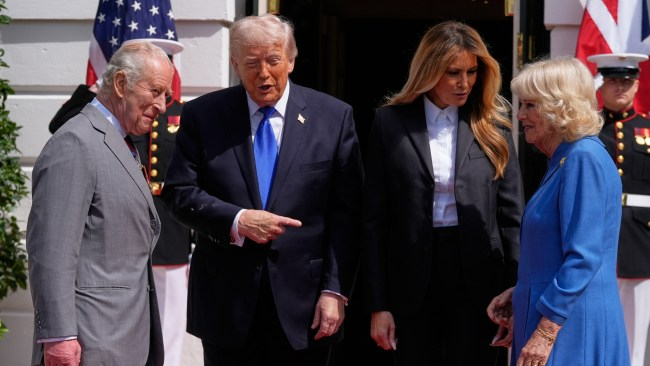
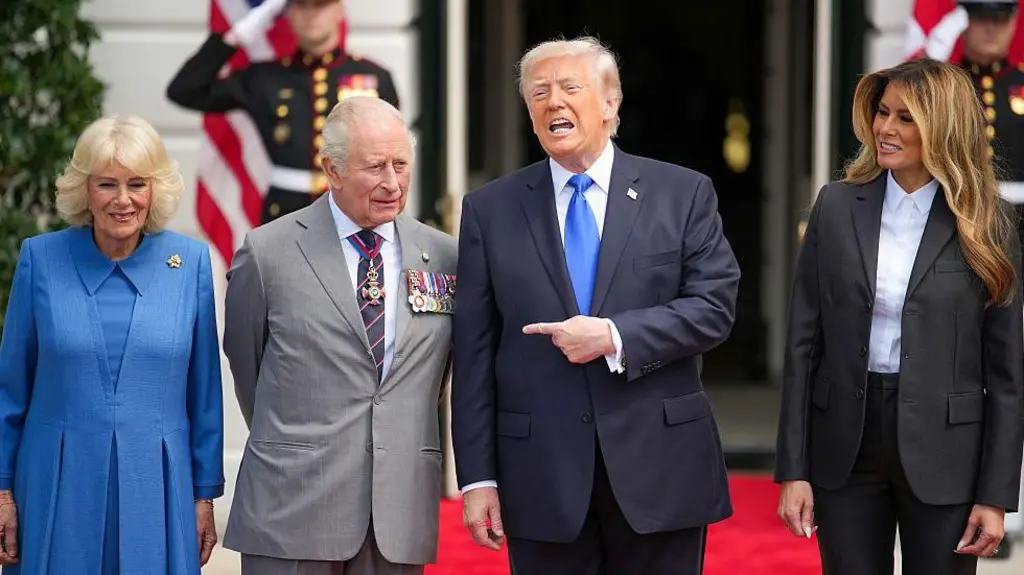
Across Washington, D.C., New York City, and Virginia, the royal couple engaged in ceremonial duties, community outreach, and cultural exchanges, culminating in a farewell ceremony at the White House hosted by President Trump and First Lady Melania Trump.
Trump’s Praise: A Personal Tone in Formal Diplomacy
Donald Trump’s interactions with the royal couple were notably warm and direct, reflecting his characteristic communication style. During the farewell meeting, he did not hold back his admiration.
He described King Charles as:
“Great king. The greatest king in my book.”
Turning to Queen Camilla, Trump offered a more personal compliment:
“Your majesty, you look beautiful.”
He later added broadly:
“Great people. We need more people like that in our country.”
These remarks stood out for their informality, contrasting with the typically restrained language of diplomatic engagements. They underscored a relationship that, while ceremonial, carried a distinctly human dimension.
Queen Camilla’s Quiet Diplomacy
While Trump’s style leaned toward overt expression, Queen Camilla’s approach reflected a more traditional, understated form of diplomacy.
One of the most notable gestures came during the farewell ceremony, when Camilla wore a Tiffany brooch previously gifted by Melania Trump. The piece—an 18k gold floral design adorned with diamonds and rubies—was interpreted as a deliberate and symbolic nod to the First Lady.
Observers described the move as a “masterclass in fashion-as-diplomacy,” suggesting that such choices are rarely accidental and often planned with precision.
In the realm of royal protocol, where words are carefully measured, attire can communicate messages just as effectively—sometimes more so.
A Lighthearted Moment: Humor Across Cultures
Amid the formalities, one unexpected moment captured public attention—a brief exchange between Queen Camilla and Melania Trump during a rain-soaked White House welcome.
According to a lip reader, Camilla reportedly remarked:
“Oh, it’s rather wet.”
After Melania agreed, the Queen added:
“We shall have soggy bottoms.”
The phrase, familiar to British audiences through “The Great British Bake Off,” appeared to cause mild confusion, with Melania reportedly repeating:
“Soggy bottom?”
Though the exact wording cannot be independently verified, the moment highlighted the subtle cultural differences that can arise even in highly choreographed diplomatic settings. It also showed Camilla’s willingness to inject humor into formal occasions—humanizing the royal presence.
Beyond Words: Symbolism and Exchange
The visit was rich with symbolic gestures beyond conversation. Gifts exchanged between the two sides carried historical and cultural meaning:
- President Trump presented King Charles with a copy of an 1785 letter by John Adams
- The King gifted Trump a framed replica of the 1879 design plans for the Resolute Desk
- Queen Camilla and Melania Trump exchanged jewelry and engraved silver pieces
These exchanges reinforced mutual respect while subtly reinforcing shared heritage and diplomatic goodwill.
The Broader Context: Unity Despite Complexity
The visit unfolded against a complex backdrop. In New York, the royal couple encountered a less enthusiastic reception from local leadership, including comments about the historic Kohinoor diamond and its colonial legacy.
Yet, the overarching tone of the trip remained one of cooperation and shared purpose. King Charles emphasized the cultural and historical ties binding the two nations, describing them as rooted in “shared creativity, enterprise, and values.”
Even policy gestures reflected this spirit—Trump announced plans to remove certain whisky tariffs “in honor of the King and Queen,” signaling economic goodwill tied to the visit.
Final Day: Ceremony, Community, and Departure
The visit concluded with a series of symbolic events in Virginia:
- A wreath-laying at Arlington National Cemetery
- Participation in a block party celebrating America’s 250th anniversary
- Visits to Shenandoah National Park and a horse-racing farm
The farewell at the White House marked the closing chapter of a packed itinerary that balanced ceremonial duties with personal engagement.
Conclusion: The Power of Subtle Influence
Queen Camilla’s interactions with Donald Trump during the 2026 state visit illustrate the evolving nature of diplomacy in the modern era.
While Trump’s approach emphasized direct praise and visible warmth, Camilla operated through nuance—using symbolism, humor, and understated gestures to convey respect and connection.
Together, these contrasting styles created a dynamic interplay that defined the visit. Beyond policy announcements and official ceremonies, it was these human moments—compliments exchanged, jokes misunderstood, and symbols carefully chosen—that ultimately shaped the narrative.
In diplomacy, as this visit demonstrated, influence is not only exercised through power or policy—but often through presence, perception, and the quiet language of gesture.


