A Breakout Performance That Shifted the Series
In the high-stakes atmosphere of NBA playoff basketball, momentum often swings on the brilliance of a single player. For the Boston Celtics in Game 4 against the Philadelphia 76ers, that player was Payton Pritchard.
On a night when the Celtics secured a commanding 128-96 victory to take a 3-1 series lead, Pritchard delivered a performance that not only defined the game but also etched his name into franchise playoff history. Coming off the bench, the 28-year-old guard exploded for a career-playoff-high 32 points, reshaping the narrative of the series and reaffirming Boston’s depth.
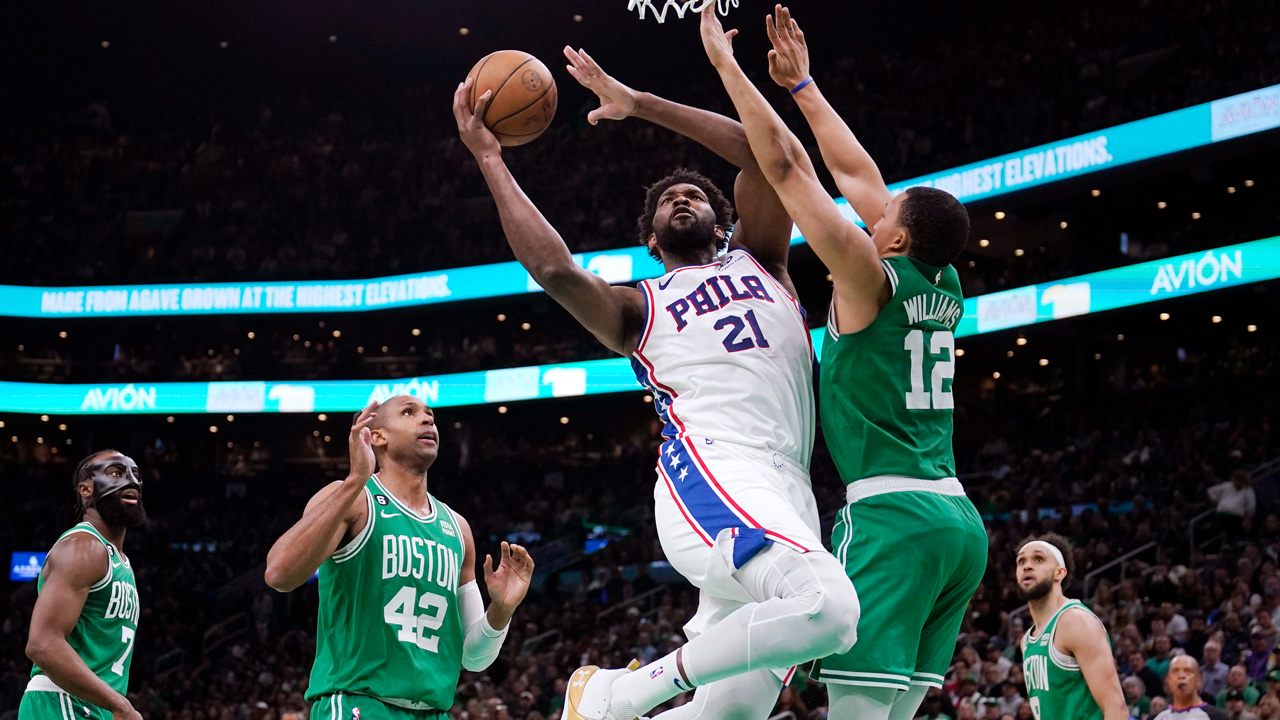
From Supporting Role to Offensive Catalyst
Pritchard’s impact was immediate and relentless. Entering the game as part of Boston’s second unit, he quickly altered the pace and energy, scoring 13 points in the first quarter alone and igniting a decisive run that gave the Celtics early control.
His stat line told only part of the story:
- 32 points (career playoff high)
- 6 three-pointers
- 12-of-21 shooting from the field
- 4 rebounds, 5 assists (from broader reports)
Beyond the numbers, it was his timing and shot-making that stood out. Every time Philadelphia threatened to close the gap, Pritchard responded—whether with a deep three, a driving finish, or a composed playmaking decision.
“Try to change the energy, try to change the pace of the game,” Pritchard explained after the win, highlighting his mindset when stepping onto the floor.
Joining Elite Company in Celtics History
Pritchard’s performance carried historical weight. By scoring 30 or more points off the bench in a playoff game, he became just the third player in Celtics history to accomplish the feat.
Only Kevin McHale—who did it twice—and Eddie House had previously reached that mark. Both players were key contributors to championship teams, placing Pritchard’s achievement in elite company and suggesting its broader significance within the franchise’s legacy.
His scoring outburst also contributed to another rare milestone. Alongside Jayson Tatum, Pritchard became part of just the eighth duo in NBA playoff history to each record at least 30 points and five three-pointers in the same game, a feat not seen since Luka Dončić and Jalen Brunson in 2022.
The Psychology of a Breakout Night
What makes Pritchard’s performance particularly compelling is the psychological dimension behind it.
Just one game earlier, he struggled significantly, scoring only four points in Game 2. That disappointment became a catalyst for his resurgence.
“Definitely very disappointed at Game 2,” he admitted. “I felt like I was kind of a shell of myself… So just coming out, just kind of trying to forget about it and just come out with a different aggression.”
That shift in mindset—toward aggression, pace, and confidence—was evident in Game 4. Pritchard attacked the paint more decisively, which in turn opened up his perimeter shooting, creating a complete offensive performance.
A Unique Edge: Confidence, Rhythm, and ‘Friendly Banter’
Pritchard’s personality also played a role in his performance. During the game, he was seen engaging with Hall of Famer Reggie Miller, who was on the broadcast call—a dynamic that added an unusual but revealing layer to his night.
“It’s not an angry thing,” Pritchard said. “But no, there’s a love between our relationship.”
He described the interaction as “friendly banter,” noting that it actually fuels his rhythm during games. This blend of confidence and emotional engagement has become part of his competitive identity—one that was fully on display in Philadelphia.
Celtics’ Depth Becomes the Decisive Factor
While stars like Jayson Tatum (30 points, 11 assists, 7 rebounds) and Jaylen Brown (20 points) delivered strong performances, Game 4 underscored a critical advantage for Boston: depth.
The Celtics’ bench outscored Philadelphia’s reserves significantly in the first half, helping build a lead that the Sixers never seriously threatened.
Boston’s overall performance was equally dominant:
- 24 three-pointers (franchise playoff record)
- 51–30 rebounding advantage
- Over 30-point margin of victory
Even the return of Joel Embiid—who posted 26 points, 10 rebounds, and 6 assists—was not enough to disrupt Boston’s rhythm.
Turning Point in the Series
The Celtics’ Game 4 victory marked the third blowout in a series that has otherwise featured swings in momentum. Boston dominated Game 1, Philadelphia responded in Game 2, and the Celtics reclaimed control in Games 3 and 4.
Now leading 3-1, Boston sits in a historically favorable position—teams trailing 3-1 in NBA playoff series come back to win only about 4% of the time.
For the Celtics, the focus shifts to Game 5 at TD Garden, where they have the opportunity to close out the series and secure valuable rest before the next round.
“You have to go back home and take care of Game 5. That’s the most important thing,” Pritchard emphasized.
What This Means for Payton Pritchard’s Role
Pritchard’s Game 4 performance may represent more than a single standout night—it could signal a broader evolution in his role.
Historically viewed as a high-energy bench scorer, he demonstrated the ability to:
- Control tempo
- Stretch defenses with perimeter shooting
- Provide consistent scoring bursts
- Maintain offensive stability
Celtics coach Joe Mazzulla underscored this value, noting that the team performs best when Pritchard is aggressive and fully engaged in the game plan.
As the playoffs progress, Boston’s championship aspirations may increasingly depend on such contributions from its supporting cast.
Conclusion: A Defining Moment in the Making
Playoff basketball often reveals hidden layers within a team—and within players themselves. For Payton Pritchard, Game 4 against the 76ers was a defining moment.
It was a performance built on resilience after struggle, fueled by confidence, and executed with precision. More importantly, it demonstrated that in a team loaded with star power, the difference-maker can emerge from anywhere.
As the Celtics return to Boston with a chance to close out the series, one thing is clear: Payton Pritchard is no longer just a role player in this postseason story—he is one of its central figures.


