


Paul McCartney’s SNL Return Turned the Season Finale Into a Celebration of Music History
At 83 years old, Paul McCartney is still doing something many legendary artists stop attempting long before reaching their eighth decade: proving himself night after night on live television.
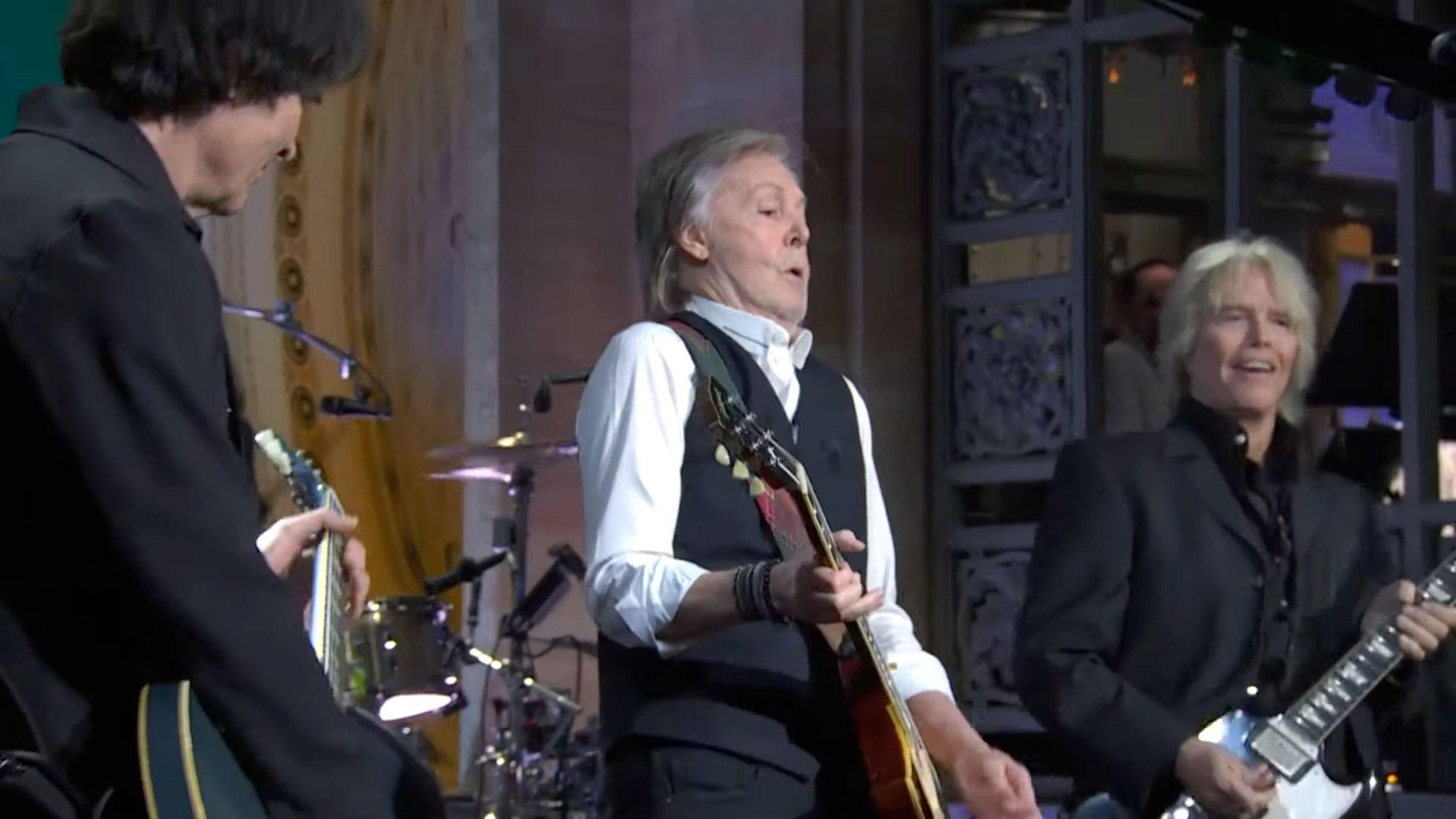
That spirit was on full display during the Season 51 finale of Saturday Night Live on May 16, where McCartney returned as musical guest alongside host Will Ferrell and delivered one of the most talked-about appearances of the year. The former Beatle didn’t simply perform two scheduled songs and leave the stage. Instead, he transformed the episode into a sprawling mix of nostalgia, comedy, surprise, and live rock energy that reminded viewers why his relationship with SNL spans nearly half a century.
For longtime fans, the appearance carried emotional weight. For younger viewers, it was another introduction to an artist who continues to operate as both a living archive of rock history and an active contemporary musician preparing to release new material.
A Season Finale Built Around a Music Icon
NBC heavily promoted the finale weeks in advance, billing the combination of Will Ferrell and Paul McCartney as a major television event. Ferrell returned for his sixth time as host, while McCartney appeared as musical guest ahead of the release of his new album, The Boys of Dungeon Lane, scheduled for May 29.
The appearance marked McCartney’s first standard SNL musical guest spot since 2012, though he had also appeared during the show’s 50th anniversary celebrations earlier in 2025.
What unfolded during the episode felt less like a routine promotional stop and more like a retrospective on McCartney’s enduring cultural presence.
He appeared throughout the broadcast, not only performing songs but participating directly in sketches and comedy segments. During Ferrell’s opening monologue, McCartney jokingly interrupted to insist that he—not Ferrell—was actually hosting the show. Red Hot Chili Peppers drummer Chad Smith also joined the running gag, pretending to be Ferrell’s lookalike replacement host before eventually taking his place behind the drums for McCartney’s performances.
Later in the episode, McCartney appeared in a mechanic sketch alongside Ferrell and Marcello Hernandez, leaning fully into exaggerated British humor and absurd automotive jargon. The comedy appearances reinforced a quality McCartney has maintained throughout his career: an eagerness to participate rather than simply preserve his legend from a distance.
“Days We Left Behind” Opened the Night on an Emotional Note
McCartney’s first musical performance introduced viewers to “Days We Left Behind,” the lead single from The Boys of Dungeon Lane. The song reflects on his childhood memories growing up in Liverpool and references places connected to his early life and friendship with John Lennon.
Behind him, SNL projected images from McCartney’s youth and early Beatles days, adding a deeply reflective atmosphere to the performance. Chad Smith joined on drums while McCartney led the band through the melancholy track.
Earlier this year, McCartney described the song as rooted in memory and personal history:
“I was thinking just that, about the days I left behind and I do often wonder if I’m just writing about the past, but then I think how can you write about anything else?”
The track itself became a focal point of discussion after the broadcast. Some viewers praised its emotional honesty and reflective tone, while others focused on the natural aging of McCartney’s voice. Online reactions ranged from admiration to criticism, with debate erupting across social media immediately after the episode aired.
Still, many fans defended the performance passionately, arguing that simply witnessing McCartney continue performing live at 83 was remarkable in itself.
One supporter wrote:
“Look, the only correct take about watching Paul McCartney at 83 in 2026, on SNL no less, is that it’s a privilege to still witness him do this.”
The divided reactions highlighted a broader cultural conversation surrounding aging performers in modern entertainment. While some audiences expect technical perfection, others increasingly value authenticity, longevity, and emotional connection over flawless vocals.
“Band on the Run” Brought the Energy Back
If the first song emphasized reflection, McCartney’s second performance shifted the mood dramatically.
He returned later in the episode to perform “Band on the Run,” the Grammy-winning Wings classic from 1973. The performance injected energy into Studio 8H, with McCartney’s bass playing once again drawing praise from fans and critics alike.
The song also carried historical significance within McCartney’s SNL legacy. He previously performed “Band on the Run” during an earlier stint as musical guest in 2010, making the 2026 version feel both nostalgic and celebratory.
For many viewers, the performance demonstrated the contrast that has defined McCartney’s career for decades: the ability to move seamlessly between intimate songwriting and arena-sized rock anthems.
The Surprise Encore That Became the Night’s Biggest Moment
Then came the moment nobody expected.
As the episode wrapped up and the traditional SNL goodnights began, McCartney quietly moved back toward the stage with his band. Without formal introduction, he launched into “Coming Up,” the upbeat 1980 hit from McCartney II.
The surprise encore instantly became one of the finale’s defining moments.
Cast members danced and sang along as the credits rolled, turning the ending into something closer to a live concert celebration than a standard television sign-off. Viewers who stayed through the credits were rewarded with an energetic finale that many considered the highlight of the night.
The performance also carried symbolic resonance. McCartney originally debuted “Coming Up” on Saturday Night Live during Season 5 in 1980. Bringing it back during the close of Season 51 created a full-circle television moment spanning nearly five decades.
Why McCartney’s SNL Legacy Still Matters
McCartney’s relationship with Saturday Night Live stretches back to the show’s formative years. His first appearance came in 1980, and over the decades he has become one of the program’s defining musical guests.
His appearances have mirrored different eras of his career:
- Early post-Beatles reinvention with Wings
- Solo experimentation during the McCartney II era
- Legacy performances during anniversary specials
- Contemporary releases tied to new albums and tours
That longevity gives his SNL appearances unusual cultural significance. Few artists have maintained relevance across enough decades to appear on the same program during both its fifth and fifty-first seasons.
In many ways, McCartney’s 2026 appearance represented exactly what SNL has historically done best: combining comedy, live music, unpredictability, and pop culture history into a single broadcast.
The New Album Driving the Comeback
Much of the excitement surrounding the performance also stems from anticipation for The Boys of Dungeon Lane, McCartney’s first solo album since 2020’s McCartney III.
The project reportedly explores themes tied to Liverpool, memory, class, childhood, and personal reflection. Producer Andrew Watt collaborated with McCartney between dates on his acclaimed Got Back tour.
Additional songs reportedly include “Salesman Saint” and “Home to Us,” the latter featuring McCartney’s first duet with fellow Beatles legend Ringo Starr.
The album’s nostalgic direction fits naturally with the emotional tone of his SNL performances, particularly “Days We Left Behind.”
A Reminder That Live Television Still Creates Real Moments
In an era dominated by short-form clips and algorithm-driven media, McCartney’s SNL appearance reminded audiences that live television can still produce genuinely memorable moments.
The performances were imperfect, spontaneous, emotional, and unpredictable—all qualities that increasingly stand out in heavily polished entertainment culture.
Whether viewers focused on the emotional storytelling of “Days We Left Behind,” the classic rock energy of “Band on the Run,” or the joyous surprise of “Coming Up,” the finale succeeded in doing something rare: creating a shared cultural event that sparked conversation across generations.
And perhaps that is the most remarkable part of Paul McCartney’s continued career.
More than sixty years after Beatlemania began, he is still finding new ways to surprise audiences.


