
Olivia Rodrigo, Barcelona and the New Power of Pop Culture in Football
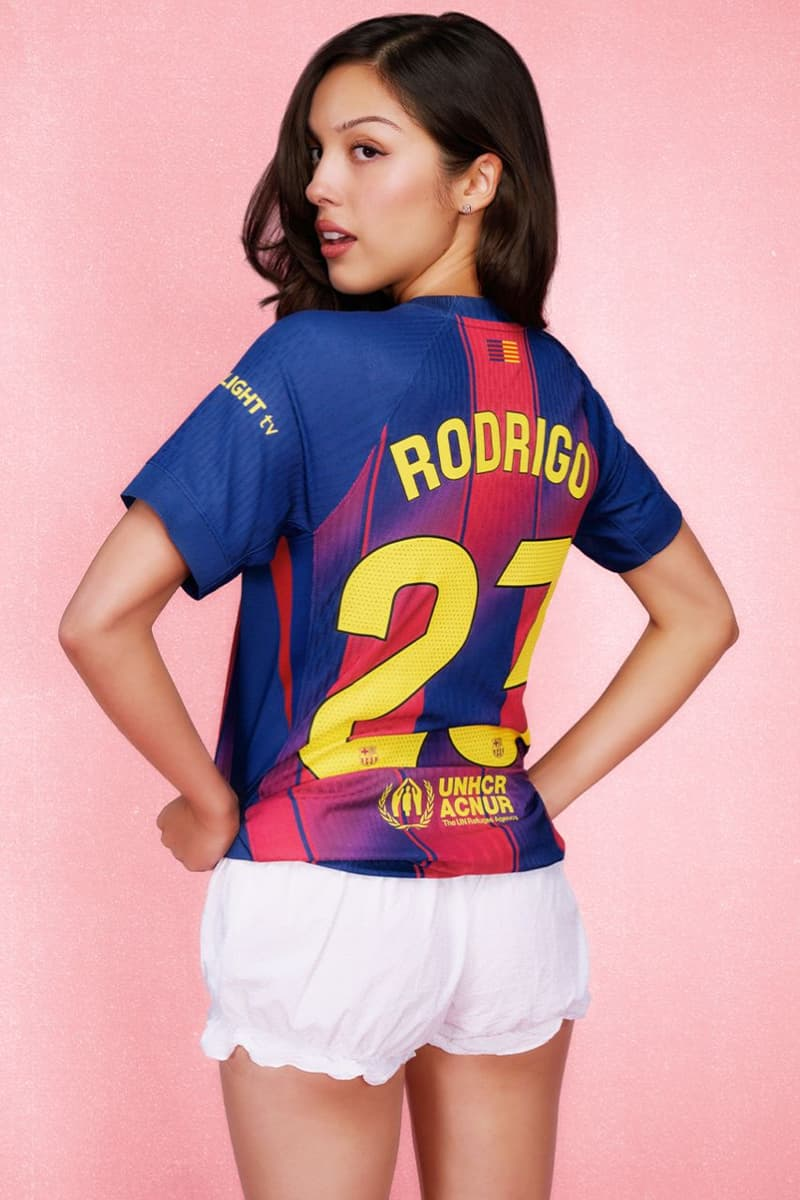
When Olivia Rodrigo appeared in Barcelona colors ahead of El Clasico, it was more than a celebrity endorsement. It was a carefully timed cultural moment connecting one of the world’s most followed football clubs with one of pop music’s most influential young stars.
Barcelona’s latest special-edition shirt, featuring Rodrigo’s “OR” heart emblem in place of Spotify’s usual front-of-shirt branding, turned a major football fixture into a global entertainment crossover. The move came as Barcelona prepared to host Real Madrid in a decisive El Clasico, with the team in position to secure the La Liga title with a win or draw.
For Rodrigo, the collaboration placed her at the center of one of sport’s most-watched rivalries. For Barcelona and Spotify, it was another demonstration of how football shirts have become cultural billboards — not just for sponsors, but for music, fashion, fandom and global identity.
A Pop Star Steps Into El Clasico Week
The build-up to El Clasico is always intense, but Rodrigo’s involvement added a different layer of attention. The American pop sensation sent a message to Barcelona supporters in a video shared on Instagram, wearing the limited-edition shirt featuring her logo.
“Hello Barça fans, I’m Olivia Rodrigo. I wish Barça the best of luck in El Clasico. Força Barça!” she said.
The message was brief, but its impact was clear. It positioned Rodrigo not as a distant celebrity attached to a marketing campaign, but as a visible part of the matchday atmosphere. Reports in the supplied information also noted that she was expected to be present in the VIP box to watch the game live, with the club hoping her presence would act as a lucky charm as Barcelona chased the finish line in the title race.
Her connection with the club began before matchday. Rodrigo visited a training session for the Barça Women’s team, spent time with players and deepened the sense that this was not just a jersey drop, but a broader cultural exchange between the artist and the Catalan institution.
Why Barcelona Wore Olivia Rodrigo’s Logo
Barcelona’s regular front-of-shirt sponsor remains Spotify, but for this El Clasico, the club replaced the standard Spotify logo with Rodrigo’s “OR” heart emblem. The special design marked her global success and continued the club’s recent tradition of featuring major musical acts on its kits.
The partnership between Barcelona and Spotify began in 2022, a landmark agreement that included naming rights for the Camp Nou. Under the current arrangement, Spotify’s branding is set to remain on Barcelona’s jerseys through 2030, while the stadium sponsorship deal is scheduled to continue until 2034.
That long-term relationship has given Barcelona and Spotify room to experiment. Instead of treating sponsorship as static advertising, the partnership has turned certain matches into music-driven global campaigns. Rodrigo’s shirt followed earlier collaborations with major acts including Drake, The Rolling Stones, Coldplay, Travis Scott and Ed Sheeran.
In Rodrigo’s case, the selection also recognized her streaming power. The supplied information states that she had nine different tracks surpass one billion streams on Spotify, a milestone the collaboration was designed to honor. She also held a private performance in Barcelona on May 8.
A Limited Jersey With Instant Demand
The commercial reaction was immediate. According to the supplied information, the first batch of Olivia Rodrigo Clasico jerseys sold out in a matter of hours. Demand was strong enough that Barcelona had to release a new edition of the kit for fans eager to own the shirt.
That response shows why clubs increasingly view special-edition kits as more than merchandise. They are collectible cultural items. A Barcelona shirt already carries football meaning; adding Rodrigo’s logo makes it attractive to another audience entirely — pop fans, fashion buyers, collectors and younger consumers who may follow the artist before they follow the team.
The limited-edition release also leaned into symbolism. Barcelona produced exactly 1,899 jerseys, paying tribute to the year the club was established.
That number gave the drop scarcity, heritage and storytelling — three qualities that make modern sports merchandise feel more like a cultural artifact than a standard team shirt.
Football and Music Are No Longer Separate Worlds
Rodrigo’s appearance on the Barcelona shirt reflects a larger shift in how elite football clubs present themselves. The modern club is not only a sporting organization. It is a media brand, a lifestyle platform and a global entertainment property.
Barcelona’s Spotify partnership sits directly inside that strategy. By using the shirt to spotlight artists, the club reaches fans who may not consume football in the traditional way. Spotify, in turn, gains access to one of football’s most emotional stages: El Clasico, a rivalry watched far beyond Spain.
This is why the Rodrigo collaboration matters. It shows how football and music now compete for the same global attention economy — and increasingly work together to capture it.
A single shirt can now represent several things at once: a football club’s identity, a sponsor’s platform, an artist’s brand, a matchday event and a limited consumer product. In Rodrigo’s case, the crossover felt especially sharp because her fan base is young, highly digital and deeply engaged with visual culture.
The Cultural Weight of Rodrigo’s Brand
Olivia Rodrigo’s rise has been defined by emotional directness, youth appeal and strong visual identity. Her music has resonated with listeners because it turns personal feeling into mass connection. That quality makes her a natural fit for a campaign built around fandom.
Football fandom and pop fandom may look different, but they operate on similar emotional logic. Both create shared rituals. Both turn symbols into identity. Both make clothing, lyrics, chants and colors feel personal.
That is why Rodrigo wearing Barcelona colors mattered. It gave fans a visual moment to rally around, while also allowing Barcelona to present itself as a club tuned into contemporary pop culture.
The collaboration also gave Barça Women’s players a role in the story. Rodrigo’s visit to their training session connected the campaign with a team whose profile has grown significantly in recent years. The fact that several players were described as vocal fans of her music helped the crossover feel less manufactured and more organic.
What This Means for Barcelona’s Global Strategy
For Barcelona, the Rodrigo shirt supports a clear global branding strategy. The club is using its biggest fixtures to create moments that live beyond the final score. El Clasico already guarantees international attention; adding a music icon expands the conversation into entertainment, fashion and youth culture.
The timing was also powerful. Barcelona entered the match with the chance to secure the La Liga title, making the fixture especially meaningful. If the club succeeded, the Rodrigo shirt would be tied to a historic sporting memory. If not, the shirt would still stand as one of the most visible cultural campaigns of the season.
That dual value is important. A football result lasts forever in the record books, but the surrounding imagery often shapes how a generation remembers the event. Special-edition shirts, celebrity appearances and viral videos help clubs control that memory.
A Template for Future Sports Partnerships
The success of the Olivia Rodrigo collaboration suggests that these music-football crossovers will continue. The model works because each side gains something specific.
Barcelona gains cultural relevance and merchandise demand. Spotify gains a premium sports stage for music marketing. Rodrigo gains exposure in one of football’s most passionate environments. Fans gain a collectible shirt and a memorable story attached to a major match.
The risk, however, is overuse. If every major fixture becomes a branded crossover, the novelty could fade. The strongest collaborations will be the ones that feel connected to real cultural momentum, strong design and meaningful timing. Rodrigo’s involvement had those ingredients: a global artist, a major rivalry, a title-race setting, a limited release and a visible message to supporters.
Conclusion: More Than a Shirt
Olivia Rodrigo’s Barcelona moment shows how modern football has expanded beyond the pitch. A jersey is no longer just a uniform. It can be a statement of identity, a commercial product, a cultural bridge and a viral media object.
By bringing Rodrigo into El Clasico week, Barcelona and Spotify turned one of football’s biggest matches into a broader entertainment event. The result was a campaign that spoke to football fans, music fans and collectors at the same time.
In the end, the “OR” heart on Barcelona’s shirt represented more than a sponsor swap. It captured the direction of global sport: emotional, visual, cross-cultural and increasingly shaped by the same forces that drive pop music.


