

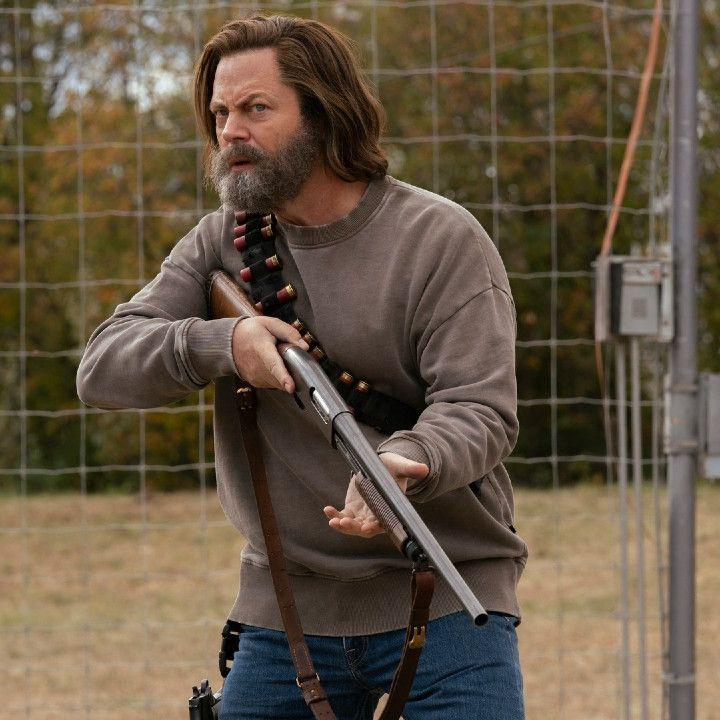
Nick Offerman: The Craftsman of Character and Culture
Introduction: More Than Ron Swanson
Few actors have managed to carve out a persona as distinctive—and enduring—as Nick Offerman. To many audiences, he will always be associated with the deadpan libertarian Ron Swanson from Parks and Recreation. Yet that characterization, while iconic, only scratches the surface of a career that spans acting, writing, woodworking, political commentary, and cultural influence.
In recent years, Offerman has evolved into a figure who bridges entertainment and thoughtful discourse. His performances have become more layered, his public voice more deliberate, and his project choices increasingly reflective of broader societal themes. From Emmy-winning dramatic work to historical political dramas and major film franchises, Offerman’s trajectory illustrates how an actor can transcend typecasting while remaining unmistakably himself.
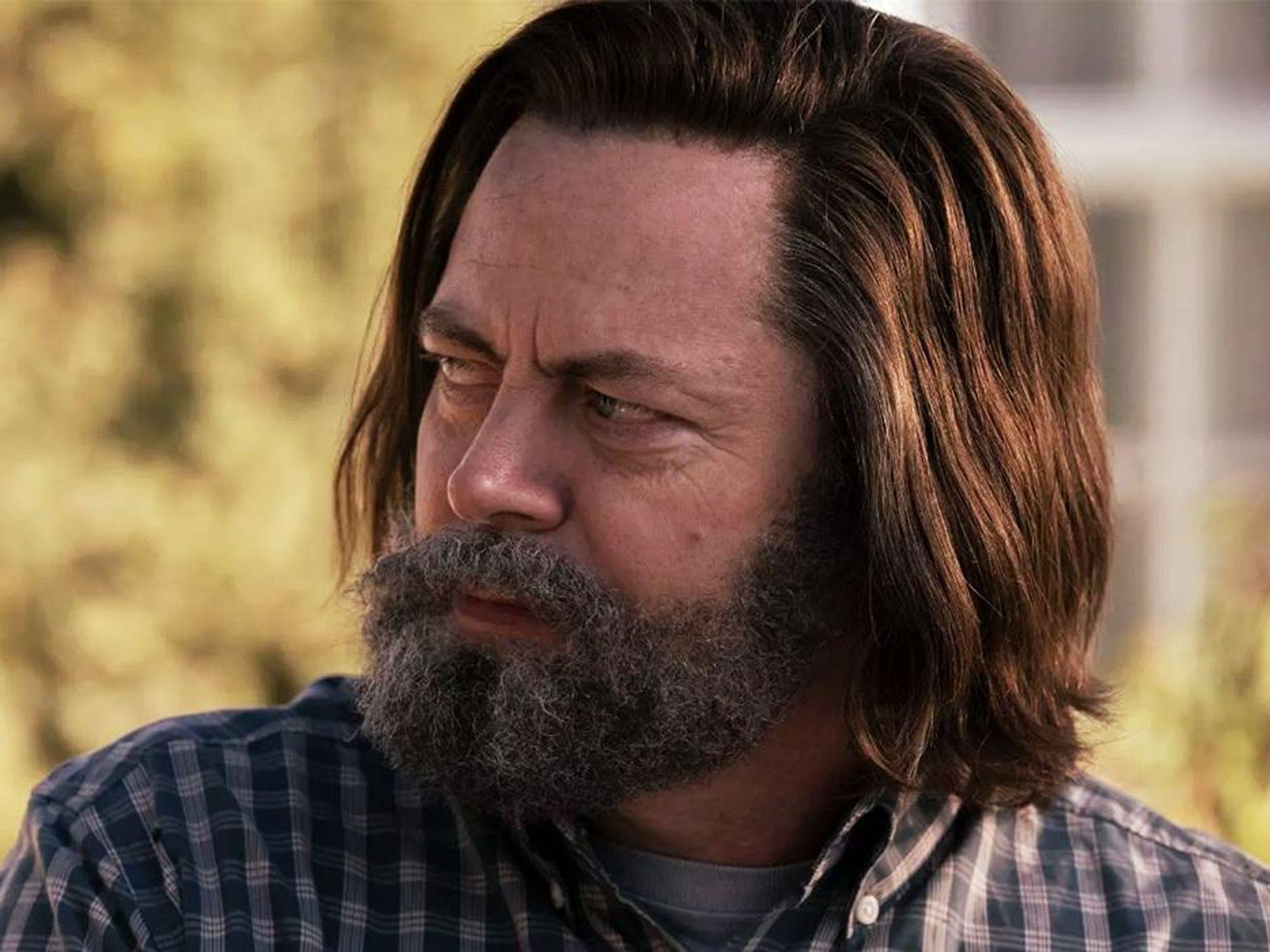
From Stage Roots to Television Breakthrough
Offerman’s career foundation lies in theater, where he developed a disciplined approach to performance and storytelling. Early roles in film and television were often supporting parts, but they sharpened his instincts for timing, tone, and physical presence.
The turning point came with Parks and Recreation, where his portrayal of Ron Swanson became a cultural phenomenon. The character’s stoic masculinity, libertarian philosophy, and obsession with craftsmanship resonated widely. However, what made the role enduring was not just humor—it was emotional precision. Offerman infused Swanson with subtle vulnerability beneath the stoicism.
This role established him as a recognizable figure, but it also posed a challenge: how to evolve beyond a character so dominant in public perception.
Reinvention Through Dramatic Roles
Offerman’s post-Swanson career reflects a deliberate recalibration. Rather than chasing similar comedic roles, he pivoted toward complex, often dramatic performances.
One of the most defining moments came in The Last of Us, where his portrayal of Bill earned critical acclaim and an Emmy Award. The performance showcased a depth that many viewers had not previously associated with him—quiet, restrained, and emotionally resonant.
This shift demonstrated a key aspect of Offerman’s craft: restraint. His acting relies less on overt expression and more on controlled delivery, body language, and subtext.
A New Phase: Historical Drama and Political Reflection
“Death By Lightning” and Political Storytelling
In 2025, Offerman took on one of his most transformative roles in the Netflix limited series Death By Lightning. He portrayed Vice President Chester Arthur, a figure deeply embedded in 19th-century political patronage systems.
The project was not merely historical—it was thematic. The series explores political corruption, reform, and institutional tension during President James Garfield’s administration.
Offerman’s preparation for the role was meticulous. He gained approximately 20 pounds and adopted physical alterations—including oversized muttonchops and restrictive wardrobe elements—to embody Arthur’s demeanor.
He described the physical transformation as integral to performance:
“The discomfort that came from that, it was all the personality that I needed.”
The series also highlights ideological conflict. Arthur represents entrenched political systems, while Garfield advocates reform. Their evolving relationship reflects a broader narrative about compromise and governance.
Offerman’s Political Perspective: Unity Over Division
Beyond performance, Offerman has increasingly engaged in public discourse around politics and society. While promoting Death By Lightning, he articulated a philosophy centered on unity:
“I’m optimistic that we will remember that our neighborhood should be expanded to include the globe.”
This perspective aligns with the themes of the series itself—bridging ideological divides and recognizing shared humanity. His commentary avoids partisan framing, instead emphasizing collective responsibility and expanded worldview.
In a polarized media landscape, this positioning is notable. Offerman does not position himself as a political pundit; rather, he operates as a cultural interpreter, using storytelling to explore societal tensions.
Expanding Into Streaming and Character-Driven Narratives
“Margo’s Got Money Troubles”
Offerman’s role as Jinx in Margo’s Got Money Troubles represents another shift—toward emotionally driven, character-focused storytelling. The series explores unconventional family dynamics, financial struggle, and identity.
His decision to join the project reflects a consistent pattern: prioritizing strong writing and collaborative environments. He described the opportunity as compelling due to the creative team and narrative depth.
Interestingly, Offerman emphasizes relationships over spectacle in his work:
“The relationships are the outfit… the wrestling is a bonus.”
This statement encapsulates his acting philosophy—character dynamics take precedence over genre or surface-level appeal.
Entering the Blockbuster Arena: Elden Ring
Offerman’s career is also intersecting with large-scale cinematic projects. He is part of the ensemble cast for the upcoming Elden Ring film, directed by Alex Garland and scheduled for release in March 2028.
The cast includes notable actors such as:
- Kit Connor
- Ben Whishaw
- Cailee Spaeny
- Jonathan Pryce
While specific character roles have not been disclosed, the project marks Offerman’s entry into high-budget, globally anticipated adaptations. Production began in 2026, signaling a new scale of visibility for his work.
This move reflects an important evolution: Offerman is no longer confined to niche or character-driven projects—he is now part of mainstream blockbuster ecosystems.
Craftsmanship Beyond Acting
A defining aspect of Offerman’s identity is his commitment to craftsmanship—particularly woodworking. This is not a superficial hobby but a core element of his philosophy.
His workshop, often referred to as the Offerman Woodshop, represents a tangible extension of his values: precision, patience, and authenticity. These principles translate directly into his acting style.
In an industry often driven by speed and visibility, Offerman’s approach is notably analog. He prioritizes process over output, and substance over spectacle.
Cultural Impact: Masculinity, Humor, and Authenticity
Offerman occupies a unique cultural space. He embodies a form of masculinity that is both traditional and self-aware—rooted in skills and discipline, yet open to emotional expression.
His roles frequently interrogate:
- Identity and self-reliance
- Emotional restraint versus vulnerability
- The tension between individualism and community
This thematic consistency has made him more than an अभिनेता; he is a cultural symbol representing a recalibrated version of masculinity in modern media.
Future Outlook: A Career Defined by Intentional Choices
Looking ahead, Offerman’s career trajectory suggests continued diversification. With involvement in historical drama, streaming narratives, and blockbuster films, he is positioned across multiple industry segments.
Key trends likely to define his future work include:
- Continued collaboration with high-caliber writers and directors
- Expansion into globally distributed film projects
- Increased engagement with socially relevant storytelling
- Sustained emphasis on character-driven narratives
His participation in projects like Elden Ring indicates strategic positioning within evolving entertainment ecosystems—particularly the convergence of gaming and cinema.
Conclusion: The Quiet Authority of Nick Offerman
Nick Offerman’s career is not defined by rapid reinvention or headline-driven transformation. Instead, it is shaped by consistency, discipline, and intentional evolution.
From comedic icon to dramatic performer, from craftsman to cultural commentator, he has built a body of work that reflects both artistic integrity and cultural awareness.
At a time when celebrity often prioritizes visibility over substance, Offerman represents a counter-model—one grounded in skill, perspective, and deliberate choice.


