

Wollny News: Inside the Evolving World of Michael Wollny and His Trio
A Narrative Feature on Sound, Experimentation, and Artistic Momentum
The latest developments surrounding Michael Wollny reveal a musician operating at the intersection of precision, improvisation, and continuous reinvention. Across albums, collaborations, and live performances, Wollny’s trajectory reflects a deliberate move away from conventional jazz structures toward a more fluid, exploratory approach that challenges both performers and audiences.
Recent coverage of his work—spanning recordings like Ghosts and live appearances at major festivals—confirms a consistent pattern: Wollny is not simply performing music; he is constructing evolving sonic environments in real time.
Reuniting the Trio: A Return with Purpose
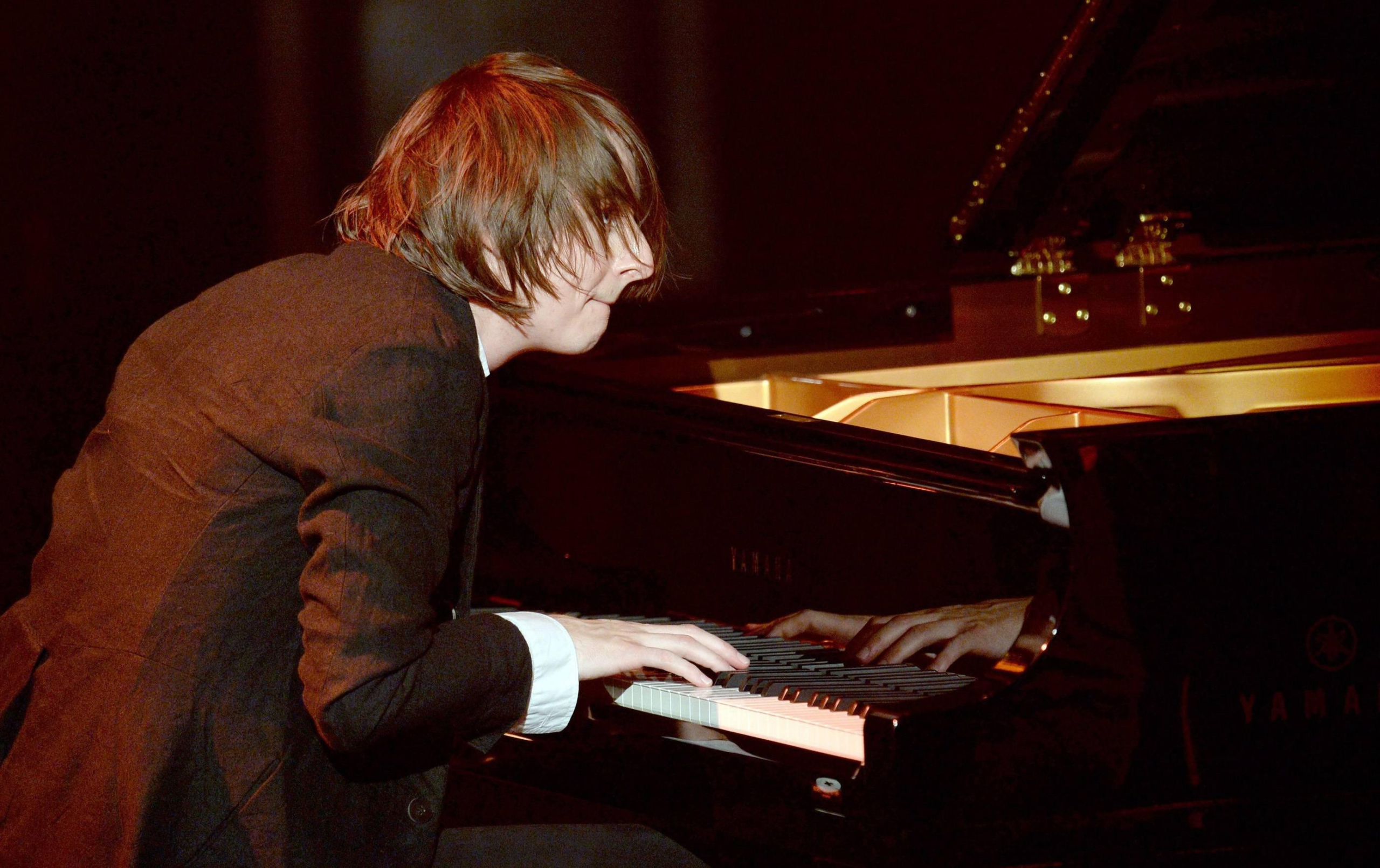
A central development in Wollny-related news is the renewed collaboration with his long-standing trio, featuring Tim Lefebvre on bass and Eric Schaefer on drums. Their reunion for the album Ghosts marks a continuation of the creative chemistry first widely recognized with Weltentraum in 2014.
Rather than revisiting past formulas, Ghosts presents a recalibrated artistic direction. The trio integrates diverse material—from classical compositions like Schubert’s Erlkönig to reinterpretations of works by George Gershwin and Duke Ellington—into a cohesive, often dark and atmospheric soundscape.
The approach is deliberate: familiar melodies are deconstructed and reassembled into layered, sometimes foreboding textures. Each piece functions less as a fixed composition and more as a conceptual framework for improvisation.
The “Ghosts” Album: Reinvention as Method
The Ghosts album itself operates as a case study in reinterpretation. Standard works such as I Loves You Porgy and In A Sentimental Mood are not merely performed—they are refracted through what can be described as a distorted aesthetic lens.
- Rhythmic structures shift unpredictably
- Harmonic frameworks expand into abstraction
- Textural layering replaces linear progression
The trio’s treatment of Erlkönig builds “fevered energy” with a driving, almost rock-influenced momentum, while tracks like Willow’s Song demonstrate restraint through delicate melodic phrasing.
This duality—intensity versus subtlety—has become a defining characteristic of Wollny’s recent output. The music resists categorization, blending classical, jazz, rock, and experimental idioms into a unified expression.
Live Performance: Improvisation Without a Safety Net
If the studio work highlights conceptual innovation, Wollny’s live performances push the boundaries further. Recent concerts demonstrate a decisive shift toward fully improvised structures, often executed without a predefined setlist.
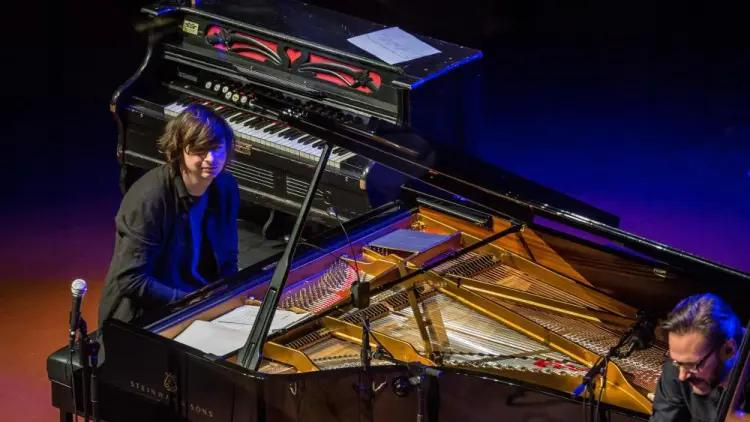
At a major live performance, the trio sustained an uninterrupted hour-long opening sequence, transitioning between musical ideas with minimal cues. According to on-stage commentary, their extensive shared repertoire allows them to “simply plunge in” and discover which pieces emerge organically in the moment.
This method introduces a level of unpredictability rarely seen at this scale. The musicians operate in what can be described as a multi-layered responsive system:
- Immediate reaction to micro-gestures between players
- Fluid tempo modulation executed collectively
- Continuous restructuring of musical narratives
The result is a performance environment where neither the musicians nor the audience can fully anticipate what comes next—yet coherence is maintained throughout.
Audience Experience: From Observation to Participation
One of the most notable aspects of recent Wollny performances is the transformation of the audience’s role. Listeners are not passive recipients; they become implicitly involved in the unfolding process.
At a certain point during extended improvisations, a distinct psychological shift occurs. The audience recognizes that the musicians themselves are navigating uncertainty, yet the outcome remains consistently aligned with the moment’s demands.
This dynamic creates a shared experience defined by:
- Heightened attention and concentration
- Emotional engagement with evolving musical tension
- A sense of collective participation in creation
Such conditions are typically associated with elite improvisational ensembles, placing Wollny’s trio within a narrow category of contemporary performance groups capable of sustaining this level of interaction.
Collaborative Expansion: Crossing Musical Disciplines
Beyond the trio, Wollny’s recent appearances include high-profile collaborations, notably with Kit Armstrong at the London Piano Festival. This pairing introduced a different dimension: the interaction between contrasting musical philosophies.
Armstrong, known for his grounding in classical repertoire, and Wollny, recognized for his exploratory jazz approach, performed an entirely improvised program described as “created in the moment.” The structure relied on pre-agreed “islands” of recognizable material—such as Jerome Kern compositions or references to Liszt and Ligeti—but the transitions between them remained spontaneous.
The performance highlighted:
- Wollny’s mastery of pacing and narrative structure
- Armstrong’s adaptability across stylistic boundaries
- A shared commitment to experimentation
The encore, performed four-hands on a single piano, emphasized mutual respect and collaborative fluidity.
Artistic Identity: A Defined Yet Expanding Language
Across both recordings and live settings, a consistent artistic identity emerges. Wollny’s work is characterized by:
- A hybrid musical vocabulary spanning classical, jazz, and contemporary genres
- Emphasis on texture and atmosphere over traditional form
- Continuous exploration without excess or redundancy
Importantly, this evolution is not random. It reflects accumulated experience and a deliberate effort to refine the balance between structure and freedom.
Even earlier performances hinted at this trajectory, with the trio developing a “fluid” and “free-flowing” approach that blurred boundaries between individual compositions and continuous musical sequences.
Broader Implications: Redefining Contemporary Jazz Performance
The significance of Wollny’s recent activity extends beyond individual releases or concerts. It points to a broader shift in how contemporary jazz is conceptualized and delivered.
Key implications include:
- Erosion of traditional setlists in favor of real-time composition
- Integration of multiple genres into a unified performance language
- Repositioning of the audience as active participants
This model aligns with a wider movement in modern improvised music, where the boundaries between composition and performance continue to dissolve.
Conclusion: A Continuing Evolution
The current wave of Wollny news underscores a clear trajectory: increasing abstraction, deeper collaboration, and a sustained commitment to improvisational integrity. Whether through the layered reinterpretations of Ghosts or the high-intensity spontaneity of live performances, Wollny and his trio are operating at a level that defines contemporary standards in the genre.
Their work demonstrates that innovation in jazz does not require abandoning tradition—it requires reconfiguring it. Each performance, each recording, becomes part of an ongoing process rather than a finished product.
In practical terms, this means there is no fixed endpoint. The music remains in motion, and so does the conversation around it.


